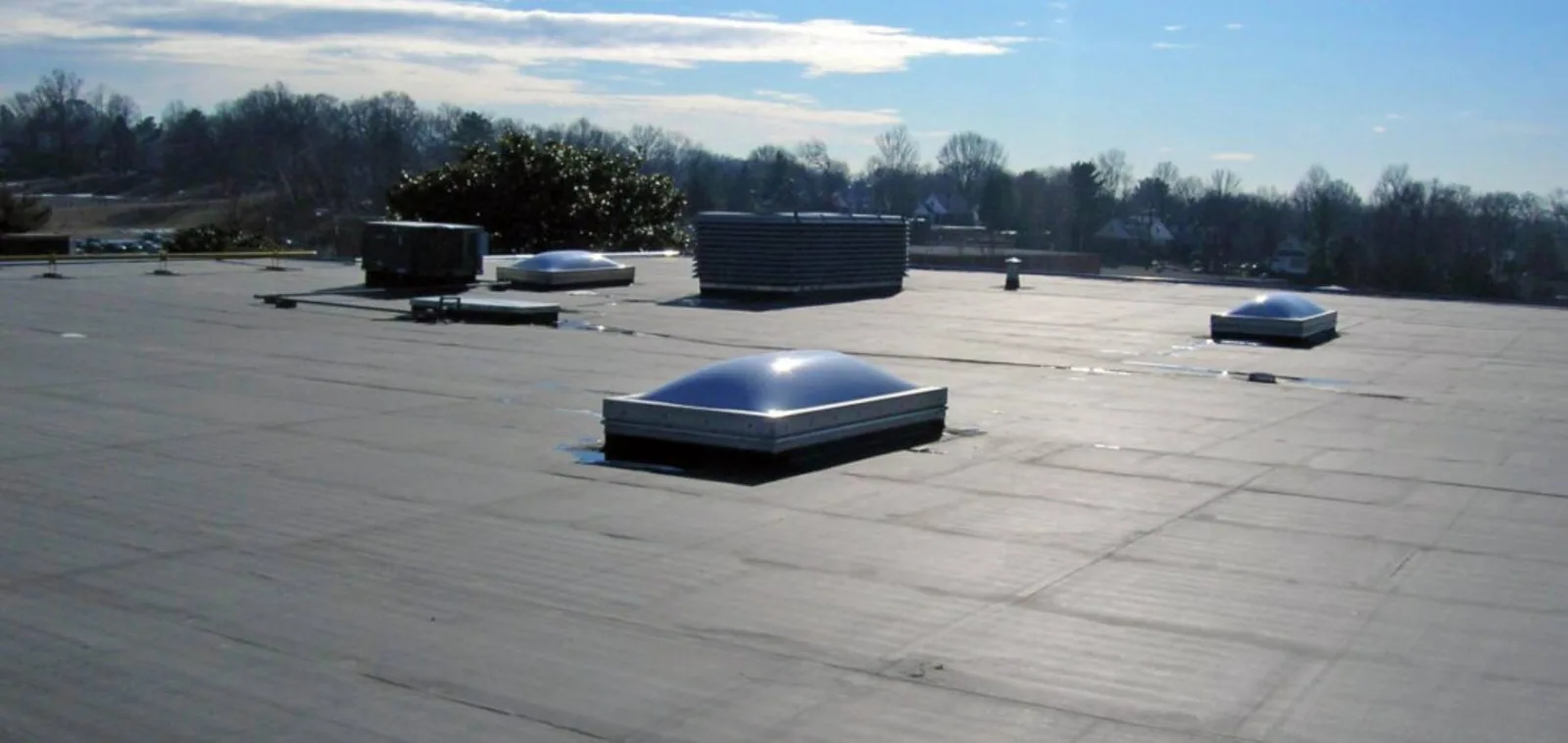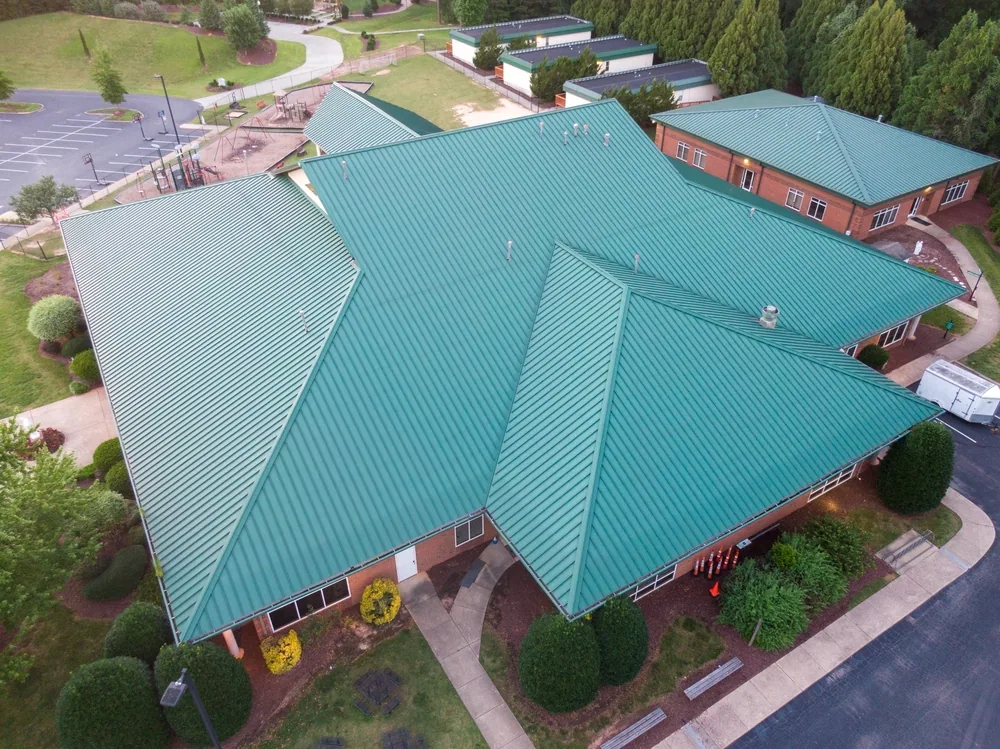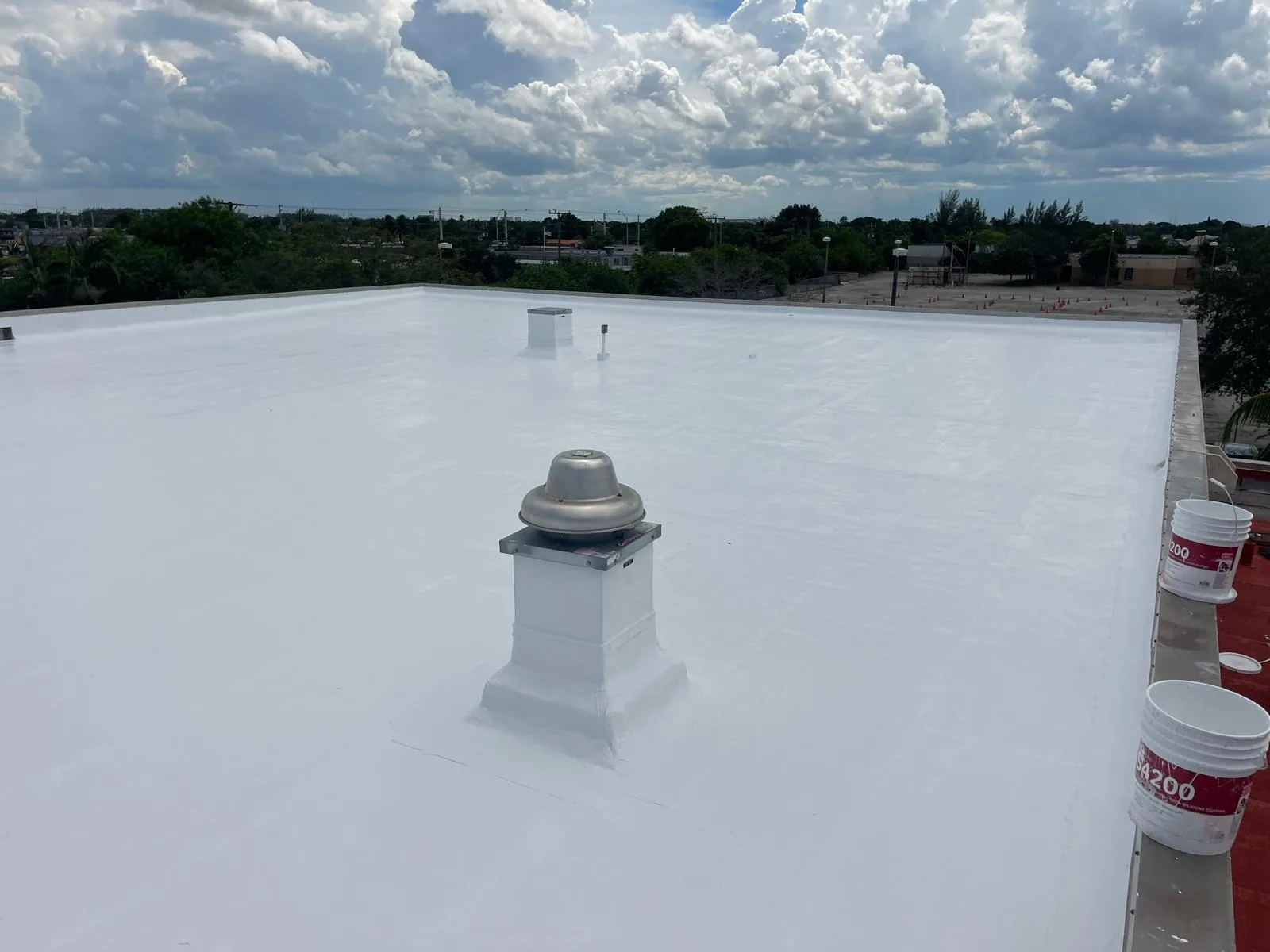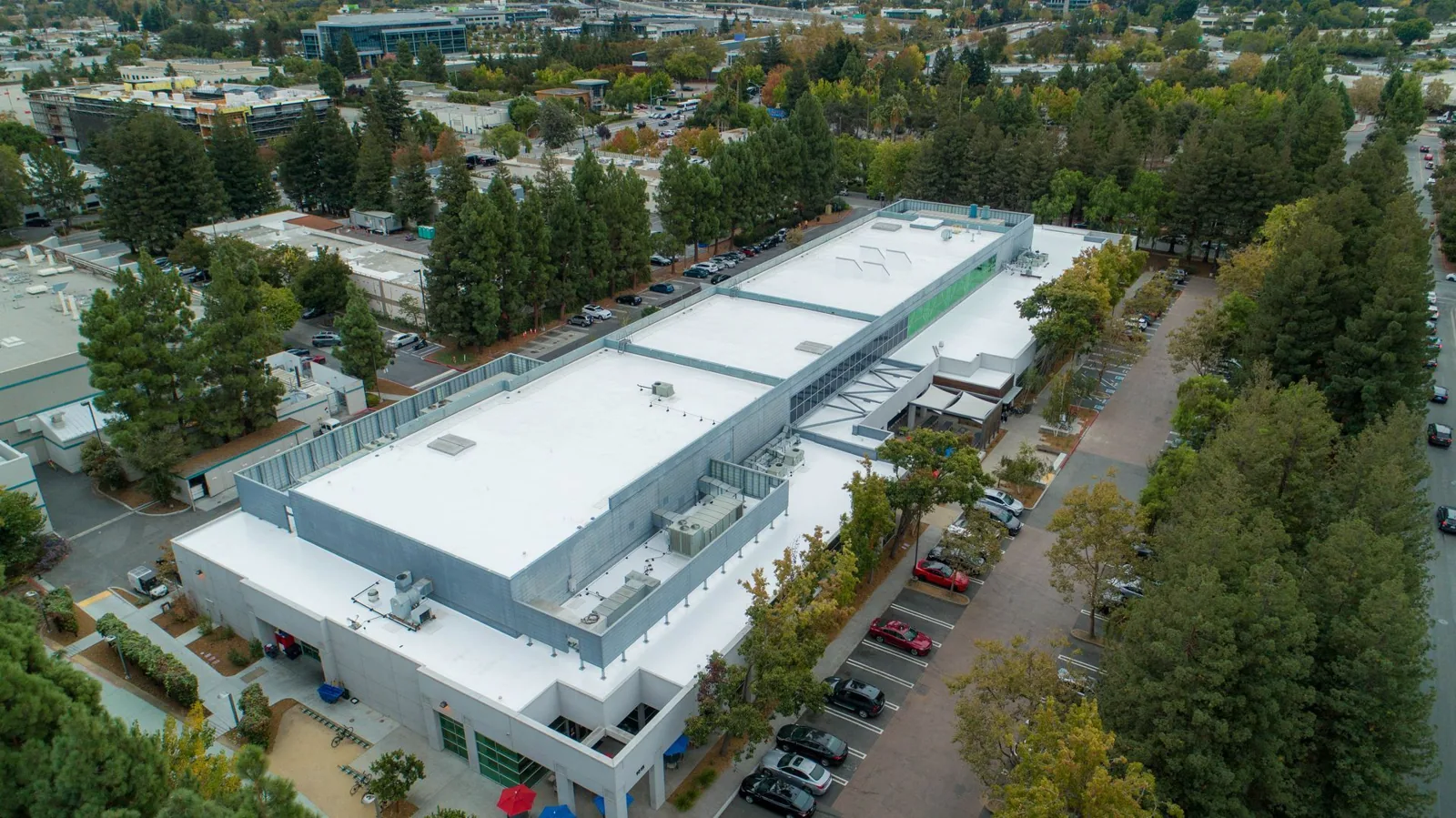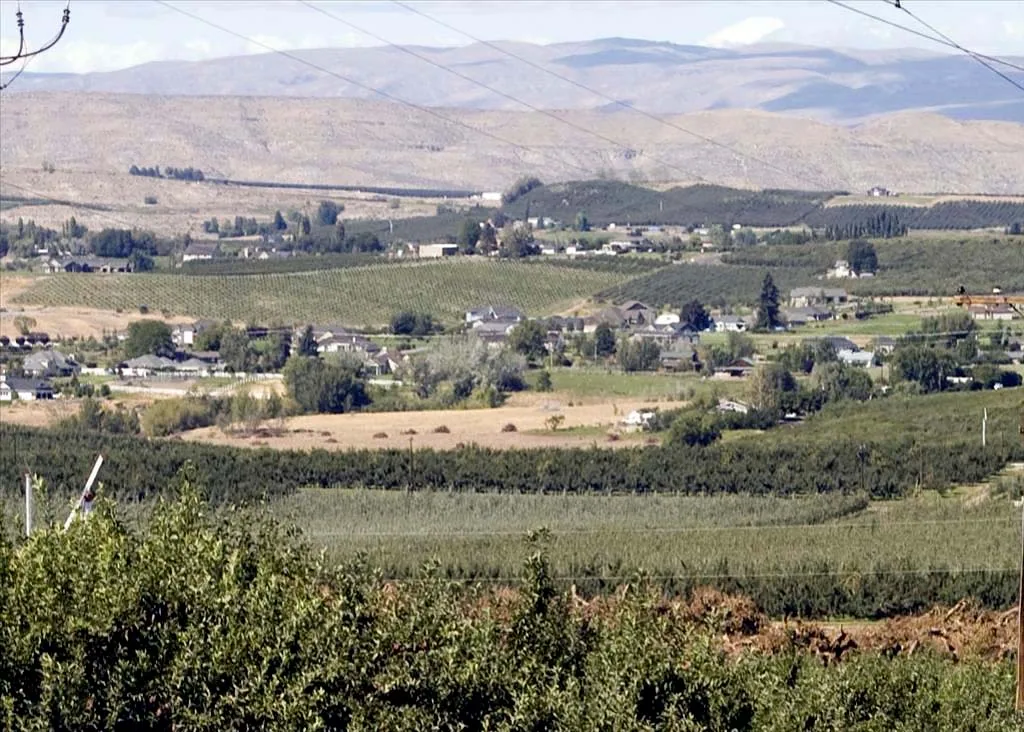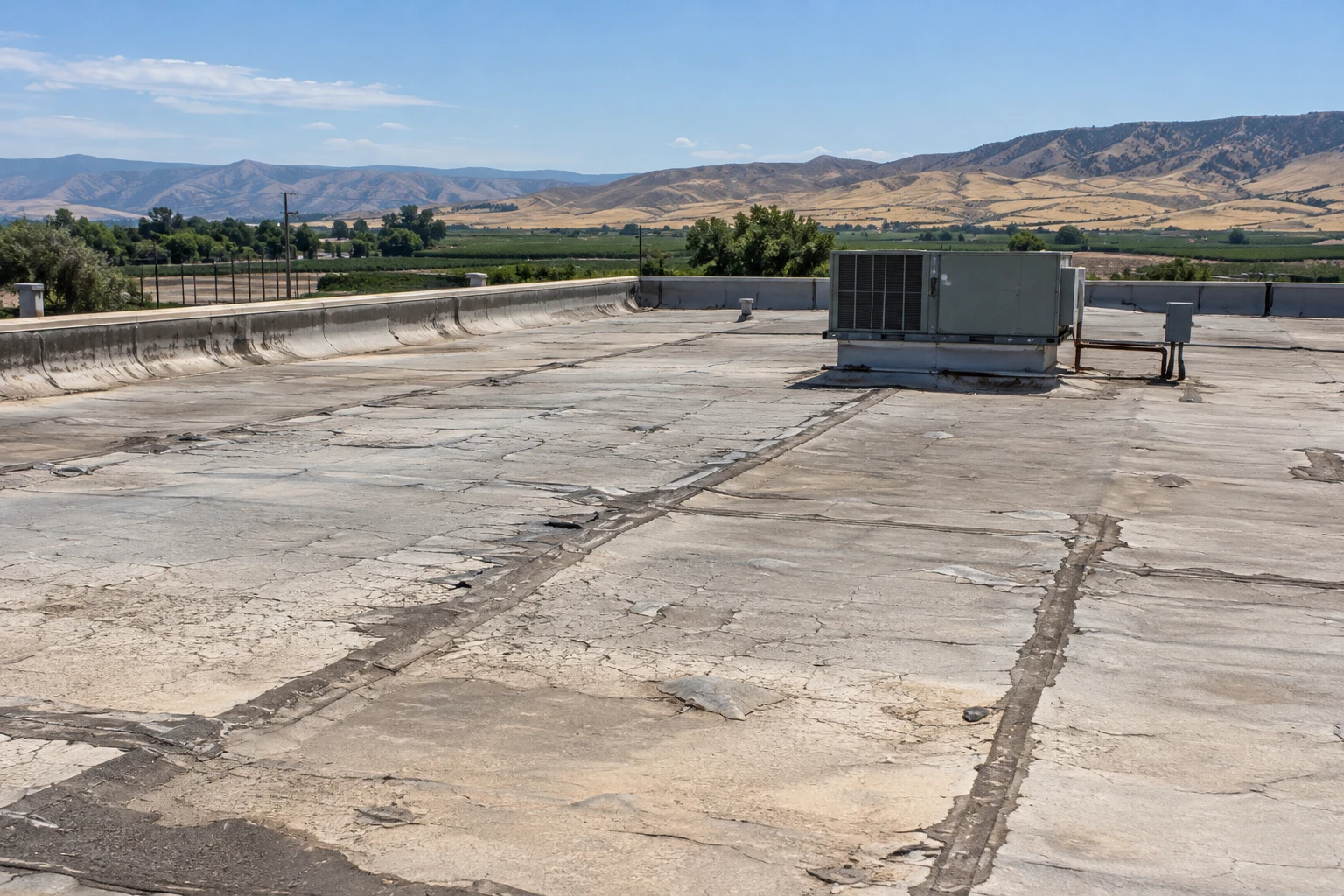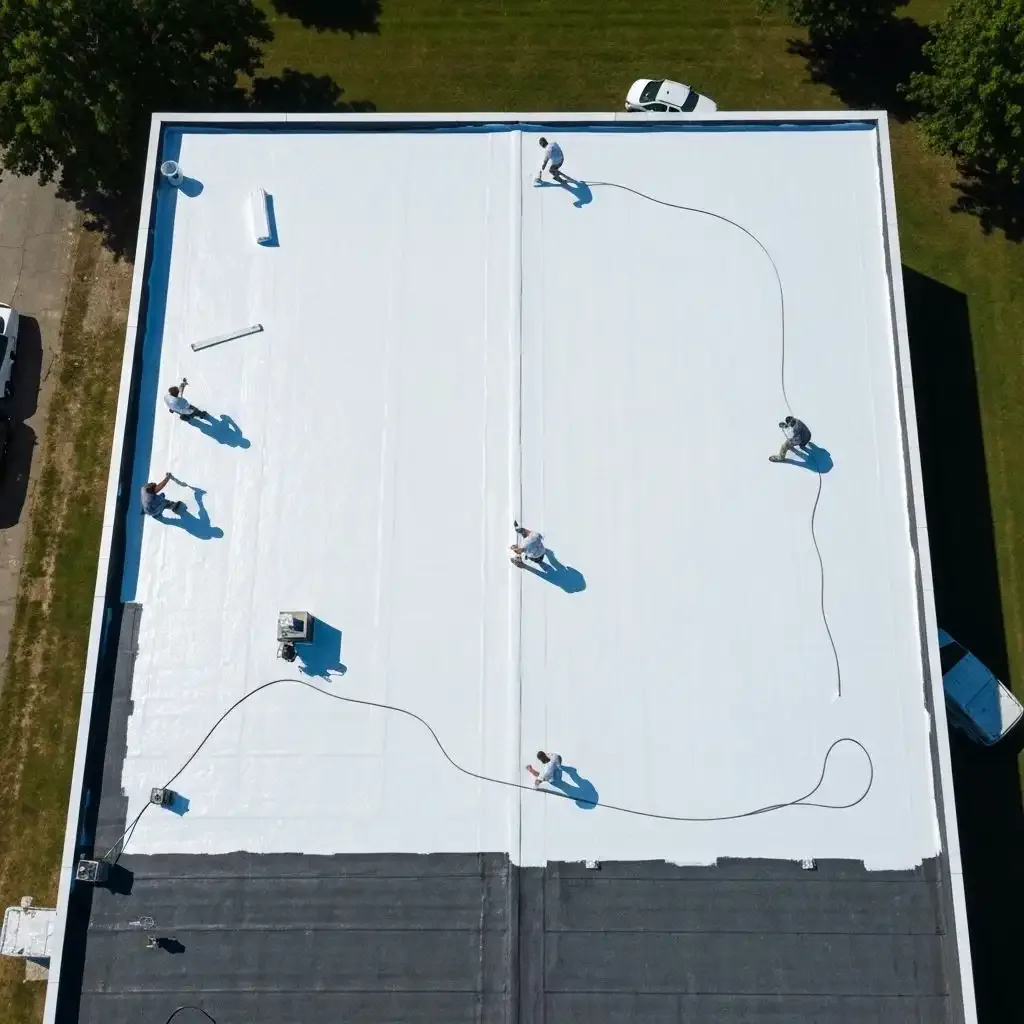
A property manager calls on a 102 F afternoon in July because the roof surface is too hot to touch and the tenant below has stopped trusting the air conditioning. The first question dispatch asks is whether the roof is wet inside, not whether it looks tired. A coating only works on a roof whose insulation and deck are still dry, and in Yakima, WA the afternoon heat cycle, the January freeze and the November gust all test a coating at once. When the answer is yes, a liquid-applied system can add years to a roof without tearing off a single layer. When the answer is no, the coating waits and the wet area comes out first.
Confirm the Roof Is Dry Before Anyone Mixes a Bucket
Coating over trapped moisture is the most expensive mistake on this kind of work, because the liquid seals the water in and the bubbles show up within a season. We start with a hands-on survey, then bring in an infrared moisture survey on a clear evening, and confirm suspect spots with small core cuts. The result is a map that separates dry field from wet field, drawn on the roof plan so the repair crew and the coating crew work from the same sheet.
Wet sections get cut out and rebuilt before the coating goes down. If the wet area covers most of the roof, we say that plainly and recommend replacement instead, since a coating cannot rescue a saturated assembly. Facility teams can help by pulling their leak history and any earlier repair records before the survey day.
Clean the Surface Until the Coating Can Bond
Adhesion is the whole job. Orchard dust, grit and traffic soot leave a film that a coating will not grip, so the roof gets a pressure wash with a cleaner matched to the old surface. We let it dry fully, which in this dry climate often takes only a day.
Then come the details. Every seam, fastener head, cracked sealant joint and patch gets reinforced with fabric and mastic before the field coat goes on. Rusted metal panels are scraped, treated and primed. Skipping this stage is the usual reason a coated roof peels at laps and edges two winters later, so we spend more crew hours here than on the spraying. Where an old coating is already on the roof, a small adhesion test patch tells us whether the new film will grip it or whether the old layer has to come off.
Pick the Coating for the Weather It Will Face
Two families dominate. A silicone coating sheds standing water well and tolerates ponding, which suits flat roofs where the deck sags between supports. An acrylic coating costs less and reflects heat well, but it prefers a roof that drains. Both need a dry day, and both cure slowly in cold weather, so the application window in Yakima runs from late spring through early autumn.
The reflective white finish is an option on any of them. Over a refrigerated building in Selah, compressors already fight the afternoon heat, and Yakima logs about 40 afternoons at or above 90 F, so a reflective surface lowers the load on the cooling plant. We lay out the tradeoffs for your roof type and let the moisture map and the drainage pattern decide. Roofs with many rooftop units and pipe supports get a fabric-reinforced base at each one, because foot traffic around equipment wears a coating faster than open field.
Build the Coat Thick Enough to Survive the Freeze
Yakima records about 19 days a year with highs below freezing and a record low of minus 25 F. A coating that cracks when it is cold lets water in through the crack, then freezes behind it and lifts the film. We apply to the mil thickness the manufacturer's system calls for, in more than one pass, and we measure it in the field rather than estimate it from a bucket count.
Edges and perimeters get extra coat, since wind and ice work there first. After the late-November 2019 gale that gusted to 51 mph in Yakima, any roof with a loose edge detail is a poor candidate until the edge is pinned. We fix the metal first, then coat over it so the new film bonds to something that will not move.
Coat Around the People Below
Liquid-applied work produces odor, and some products produce more than others. Before the day starts we agree with the building team on air-intake locations, which units can shut down, and where tenants should expect noise. Hospitals and medical offices around Yakima Valley Memorial Hospital are the clearest case, but a call center, a school or a packing line has the same need for a plan.
Because coating adds no tear-off, the roof stays closed to the weather the whole time and the building rarely loses a day of operation. Foot traffic on the wet surface is the main hazard, so we mark off access and set paths that protect the cured film. Mechanics who service units on the roof should use those paths, and we post them at the ladder or hatch.
Plan the Recoat and Keep the Records
A coating is a surface that wears and gets renewed, not a permanent skin. We record the system, the thickness and the date, and we schedule a check after the first winter, when freeze-thaw shows any weak laps. We offer an annual look at heat and UV wear if the roof faces south or sits over a hot process area.
Retail owners in Union Gap can use coating to postpone a major capital project, and the records support that choice with dates a lender or an insurer can read.
Commercial Roofing Questions
How long does a coating system extend the life of a commercial roof?
Extra life depends on the condition of the roof underneath and on how the coating is installed, so we name a range only after the survey. A dry, well-bonded roof that gets a full-thickness system and an annual inspection will outlast one that was coated quickly over wet or dirty surfaces. We put the expected renewal interval in your written scope.
Can you coat a roof that has already been patched many times?
Frequently yes, if the patches are sound and the insulation below them is dry. Old patches that are loose, blistered or made from incompatible mastic get cut out and redone first. The moisture map shows which patches hide trouble, and we price the clean-up as its own line so the coating budget stays honest.
What happens if rain or a cold night arrives mid-job?
Wet coating can wash out or cure badly, so we watch the forecast and stop before the sky turns. In Yakima that is usually a short delay, since the climate is dry. We leave the uncured area protected, record the stop point, and resume with a proper lap into the cured edge, which keeps the film continuous.
Will a white coating cut cooling costs at my warehouse?
A reflective surface lowers roof temperature on hot afternoons, which reduces the load on rooftop units and on the space below. The effect is largest on dark membranes over conditioned space. We do not promise a specific dollar figure, because each building differs, but the energy benefit is part of why owners choose reflective finishes.
Is coating worth it on a metal roof with rust at the seams?
On metal that is still structurally sound, yes. We remove loose rust, treat the surface, seal each seam and fastener, and coat the full panel. Metal that has rusted through needs panel replacement first. A short inspection of the fasteners and the underlap tells us which type you have.