The smell reaches the front office before anyone has seen the roof, and the building manager's first message asks whether the crew is using a torch, so dispatch asks the same thing back: which application method does the spec call for? Soprema is a roofing and waterproofing manufacturer whose commercial offering centers on modified bitumen membranes, including self-adhered and cold-applied types, and on liquid-applied resin membranes used for flashings and waterproofing. In Yakima, WA, where tenants, clinics and food buildings sit under flat roofs, the method matters as much as the material.
We install, repair and maintain these categories. Send the specification if you have it, the roof age, the permit's design snow load and the hours when odor or noise would hurt. We will match the method to the building and tell you what each choice costs in schedule and risk.
Choose the Application Method First
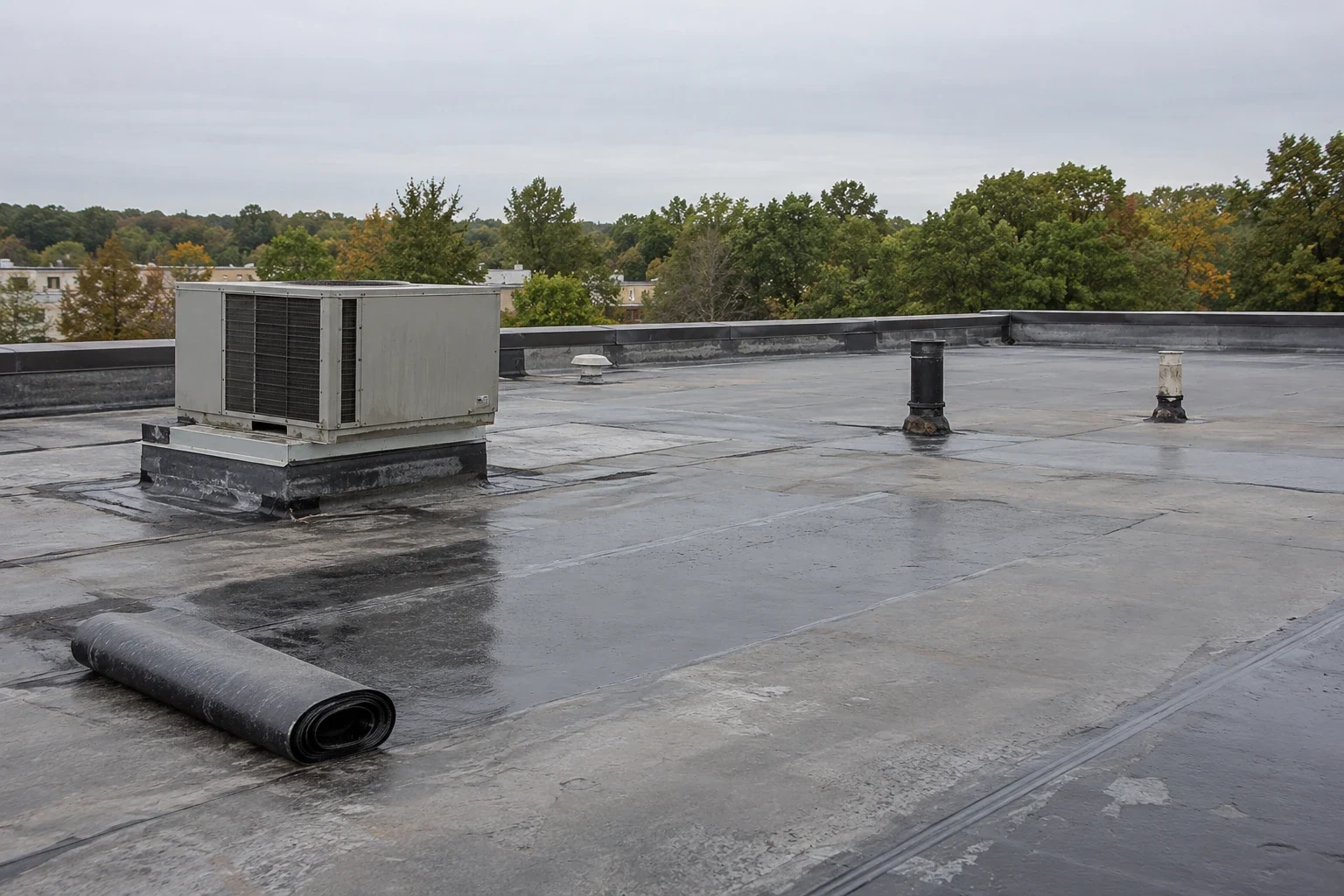
Modified bitumen goes down three common ways. Torch application melts the underside of each roll and bonds it to the roof. It makes a strong bond and needs fire controls. Cold-applied adhesive is brushed or sprayed and avoids flame. Self-adhered rolls have a peel-off backing and stick directly to a primed surface. The last two suit occupied buildings and roofs with combustible materials near the work.
We often choose cold-applied or self-adhered rolls on schools, clinics and food plants, the setting where occupied building reroofing is the norm, and keep the torch for sites where the edges are clear of combustibles. When we do torch, extinguishers stay on the roof and a fire watch continues after the last seam. The same planning applies to any modified bitumen roof, and the choice changes the schedule, the odor and the insurance paperwork.
Build the Layers So the Roof Fails Slowly
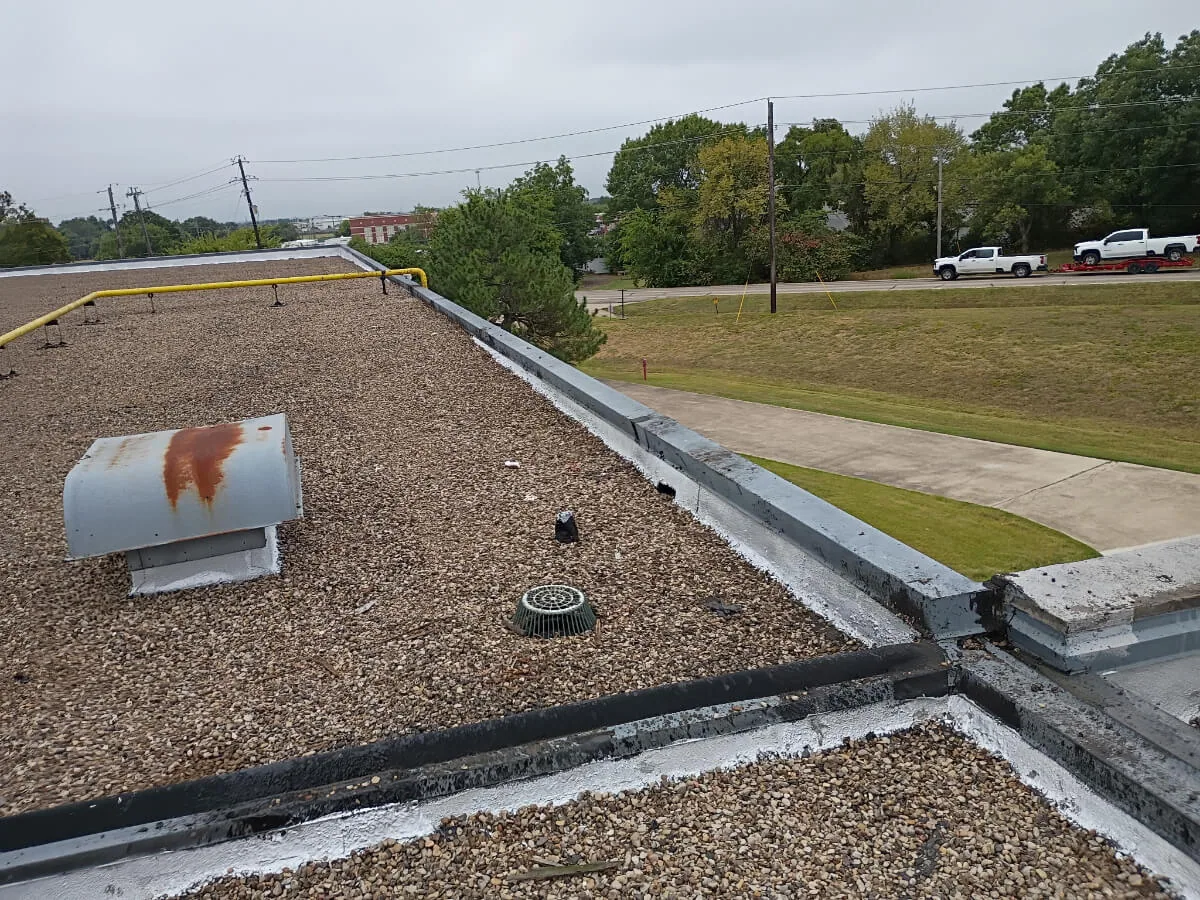
A modified bitumen system uses a base sheet and a cap sheet, sometimes with an extra ply between them. The layers share the load, so a crack in the cap does not always reach the deck. The laps are staggered and the sheets are rolled out with firm pressure so they bond across the whole surface. At the edges, the sheets turn up the wall and are covered by metal flashing or a counterflashing.
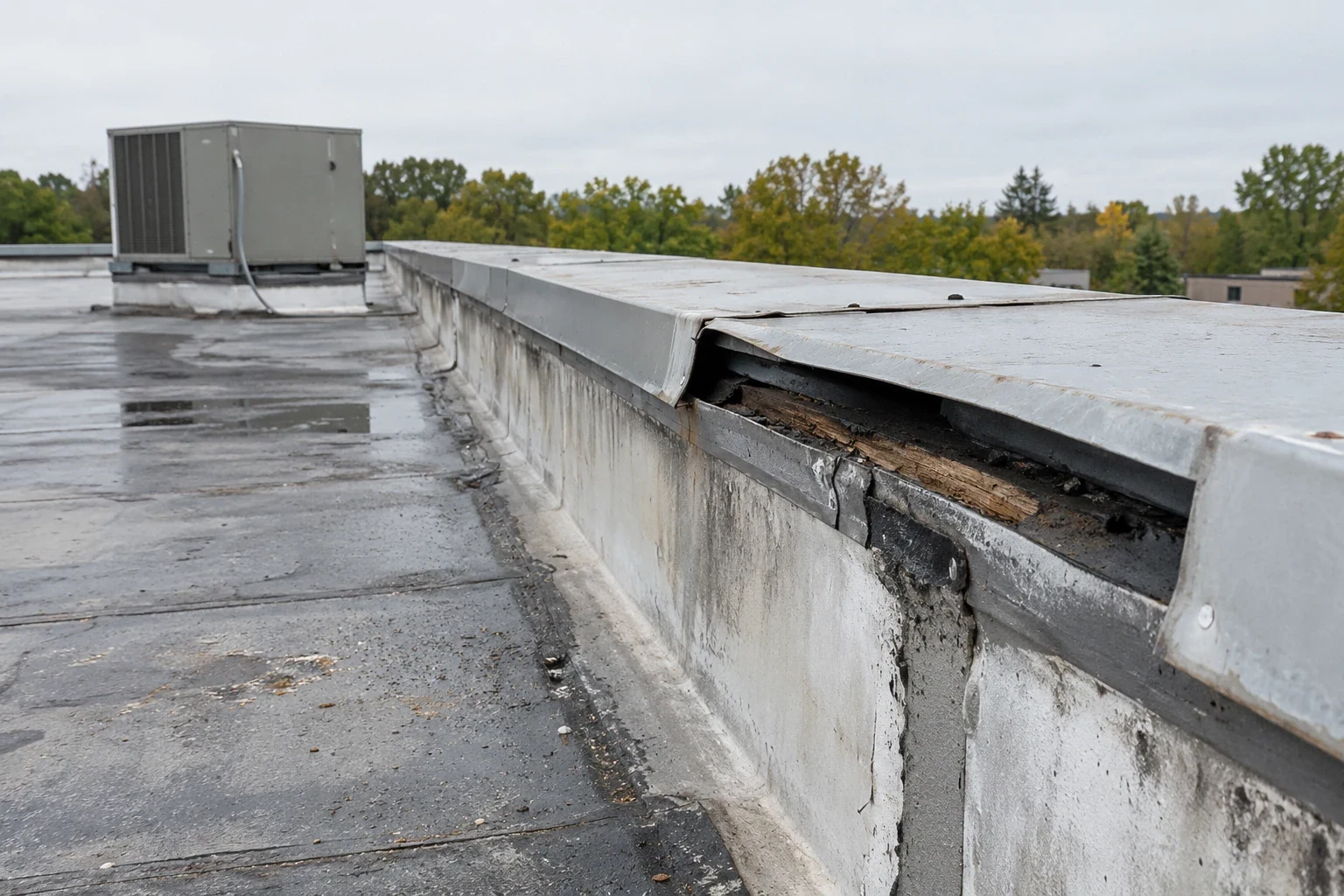
Compared with a built-up roof, a modified system uses fewer plies, and the polymer gives it more stretch. In Yakima, where the record range runs from minus 25 F to 113 F, stretch matters at laps and corners. We probe every lap after installation and mark any open edge for rework before the crew leaves the area. At the top of each wall flashing we check the termination: a bar, a counterflashing or a reglet, each sealed and fastened at the spacing the wall allows. A termination that has lifted lets wind-driven snow behind the sheet, and the next thaw carries it into the wall.
Use Liquid-Applied Resin Where Sheets Cannot Reach
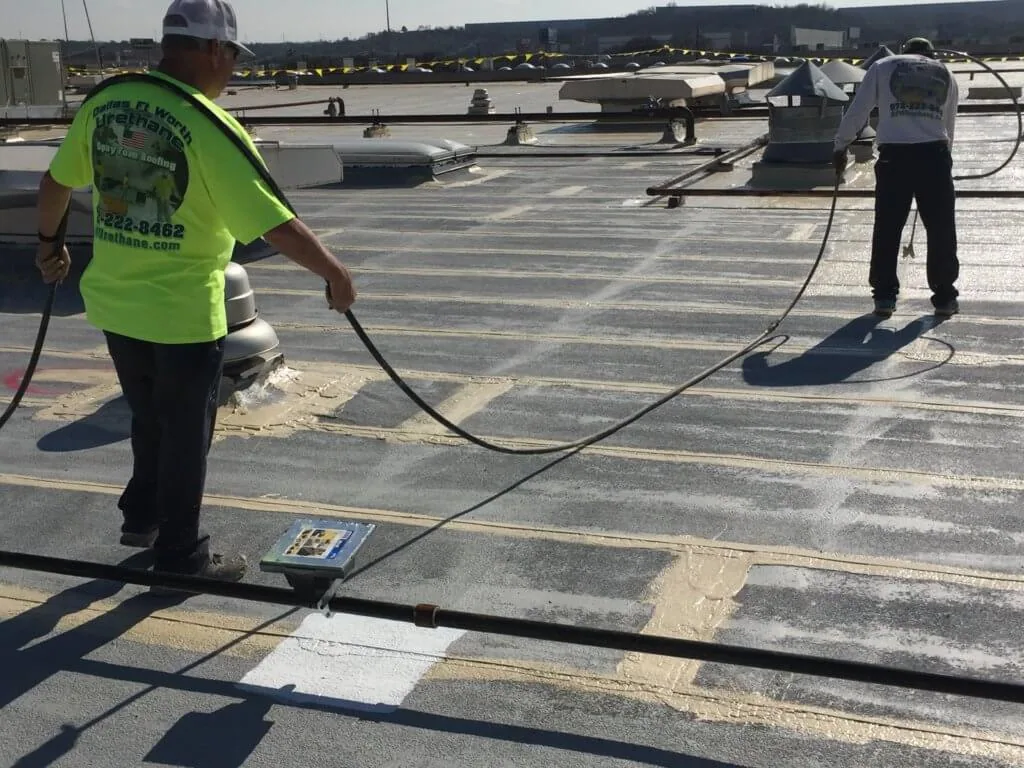
Around a cluster of pipes, a rooftop bracket or an odd curb, no preformed boot fits. A liquid-applied resin flows around the shape and cures into a flexible waterproof layer. It is reinforced with a fabric mat, applied in coats and measured for thickness as it goes on. It needs a clean, dry surface above the dew point, and it cures faster in warm weather than in cold.
We use liquid resin for flashings on both modified bitumen and single-ply roofs, as long as the substrate accepts it. Our notes record the product category, the thickness and the location. We also record the temperature and the dew point on the day, because a cure that was marginal at nine in the morning can explain a failure a year later, and the record lets the next crew match conditions instead of guessing. If the resin fails, it is usually because the substrate was dirty or damp. Repairs begin by cutting back to sound material and cleaning, a step that flashing failure repair depends on.
Time the Install for Dry Days and Mild Temperatures
Bituminous products need dry surfaces and moderate temperatures. Adhesives have minimum cure temperatures, and self-adhered backings stick poorly to cold or dusty decks. Winter snow, mostly in December and January, leaves spring and fall as the best windows, and summer afternoons above 90 F soften membranes and make footing delicate.
We read the forecast the evening before and check the deck that morning. Valley gales like the one in late November 2019 turn loose rolls into sails, so we secure them and keep material from sailing. If weather turns, we dry in the open section with a temporary seal. A building in Granger gets the same treatment as one in Yakima, and for a school, summer break is the natural window because the classrooms are quiet.
Check Weight and Drifts Before Winter
A layered bituminous roof, plus insulation and any ballast, adds weight, and the combined load has to fit the parcel's design snow load on the permit. The February 2019 red tag on a South Third Avenue commercial building shows what a loaded structure can do.
A steel blade strips the granules and exposes the asphalt, so the clearing is done with plastic tools and a protective layer stays down. Drifts build at parapets and at taller walls. Next to the bituminous and thermoplastic systems from GAF and the insulation-led assemblies from Johns Manville, the difference is method and detail, and the snow plan is the same for all: clear carefully, check the deck, inspect the laps in spring.
Commercial Roofing Questions
Is a torch ever necessary on a modified bitumen roof?
No. Cold-applied and self-adhered options exist for most roofs and avoid open flame. Torch application gives a very strong bond and is useful on open roofs with no combustibles near the edges. We select the method based on the building, the insurer's rules and the schedule.
How can I limit odor during a bituminous roof install?
Choose cold-applied or self-adhered products, locate every air intake and close or cover them during the smelliest steps. We schedule the work for hours when the space below is least occupied and monitor wind direction. Tell us who in the building is sensitive to odor, and we adjust the plan.
What is the difference between SBS and APP modified bitumen?
SBS adds rubber for flexibility, which helps in cold and at laps. APP adds plastic for stability in heat. Both are layered on a roof with a reinforcing mat. We pick based on exposure, traffic and equipment heat, and sometimes use each on different parts of the same roof, with APP near hot exhaust and SBS across the open field.
Can liquid-applied flashing be used on any roof?
It works on many substrates if they are clean, dry and compatible. Some materials need a primer, and some do not accept resin at all. We test a small patch and check adhesion before committing to a full detail. The result is a flexible, joint-free flashing that suits odd shapes.
How long can a modified bitumen roof go between inspections?
Twice a year is a sound rhythm, spring and fall, plus a visit after any major storm. The laps, flashings and granule surface change slowly, and an inspection catches trouble before water enters. We log each visit so the trend is visible over several years. A lap that shows a hairline gap in April and a wider one in October tells us the joint is moving, and we can reseal it before winter instead of after the first leak. The spring visit also clears gravel, leaves and fruit debris from drains and checks every edge metal fastener.