A cold snap arrives in Granger, the thermometer drops toward the minus 25 F record that Yakima, WA set, and a building manager calls because a roof seam now sits open a quarter inch. Dispatch asks when the temperature fell, because a roof that opens overnight in the cold has contracted harder than its attachments allowed. About 19 days a year in Yakima never rise above freezing, and the range between the coldest night and the hottest afternoon runs from minus 25 F to 113 F. Granger, with 3,624 residents in 2020, once counted a tile and brick company and a cider mill among its industries, and it now sits within the Yakima Valley AVA that includes the lower valley. Whatever a building holds today, its roof lives with that range.
Follow the Contraction Back to the Weak Seam
A membrane shrinks as it gets cold, and any seam, lap or flashing that was installed under tension has to give somewhere. The weak point opens first, and it is usually a fastened seam, a corner with a stressed flashing or a joint where two different materials meet. That opening is small in January and larger by August.
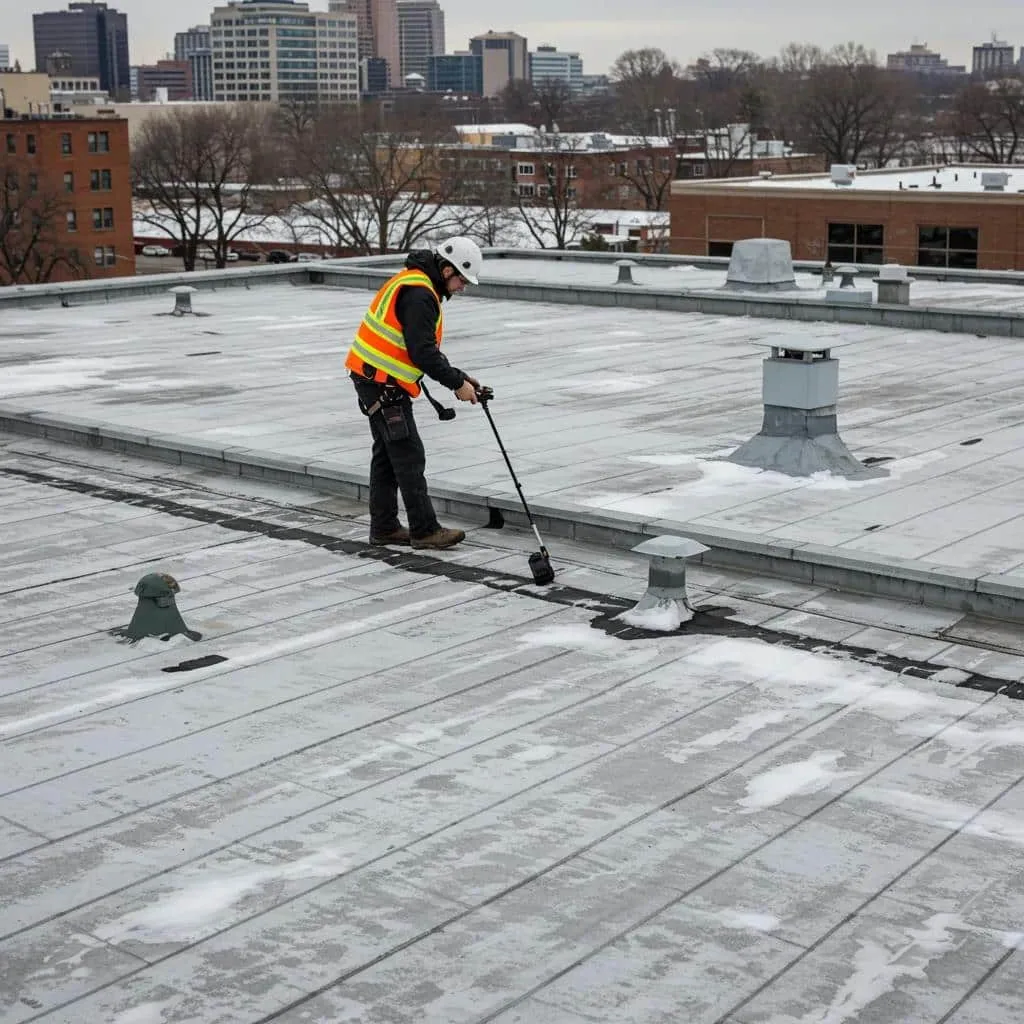
We check these spots after a hard cold: perimeter flashings, curb corners, drain flanges and seams near rooftop equipment. A seam failure repair starts with cleaning and drying the area, which in cold weather means warming the surface and using materials rated for low temperatures. Where an open seam is minor, a welded or tape-sealed patch handles it. Where the whole membrane has become brittle, we recommend a larger scope. Cold work needs the right materials, and we hold repairs to temporary dry-in when the surface is too cold for a permanent bond. Keep foot traffic off the open seam, tell dispatch which rooms sit below it, and move anything sensitive out of the way until the temporary patch is on.
Look Past Old Industry Names to the Roof You Have
Granger historically had a tile and brick company and a cider mill among its industries. Those names belong to the town's past, and a building that once housed one may now be something else entirely. What decides the roof work is the layers, the deck and the drainage, not the former use. A brick or tile past says nothing about the membrane overhead, and a former mill floor can carry a modern single-ply roof as easily as any other.
So we ask the owner for what is known and then verify by looking: how many layers are on the roof, what the deck is made of, where the insulation sits and whether any area has been patched over a previous repair. Old roofs often carry layers of different materials, and what looks like a single membrane may be several. A core sample tells us what is underneath. If the layers are dry, a recover may save money. If they hold moisture, removal of the wet section is the right step. The roof condition report puts this in writing with photographs.
Pick a Membrane That Takes the Swing
The valley's daily swing and its run of 90 F afternoons favor membranes that flex without cracking and reflect heat. An EPDM roof stays flexible in cold and handles movement well, and its seams are taped or glued with a bond that tolerates the swing. TPO has reflective white surfaces and heat-welded seams. Modified bitumen adds layers that resist foot traffic and punctures.
We choose by what the building needs. A roof with frequent foot traffic from service technicians favors a tougher surface. A building that wants lower cooling cost favors a reflective one. A roof with many penetrations favors a system that details well around them. Modified bitumen remains a solid choice where torch rules and building use allow. We give owners a short comparison of expected life, maintenance and cost drivers for each option, along with the time of year that suits each installation best, so the order can be placed early.
Check Insulation Before Choosing the Repair
Insulation controls both energy cost and moisture. Washington's current energy code took effect on March 15, 2024, with commercial provisions in WAC 51-11C, so a reroof today may need added insulation to meet the current requirement, which changes both cost and the details at parapets, doors and curbs.
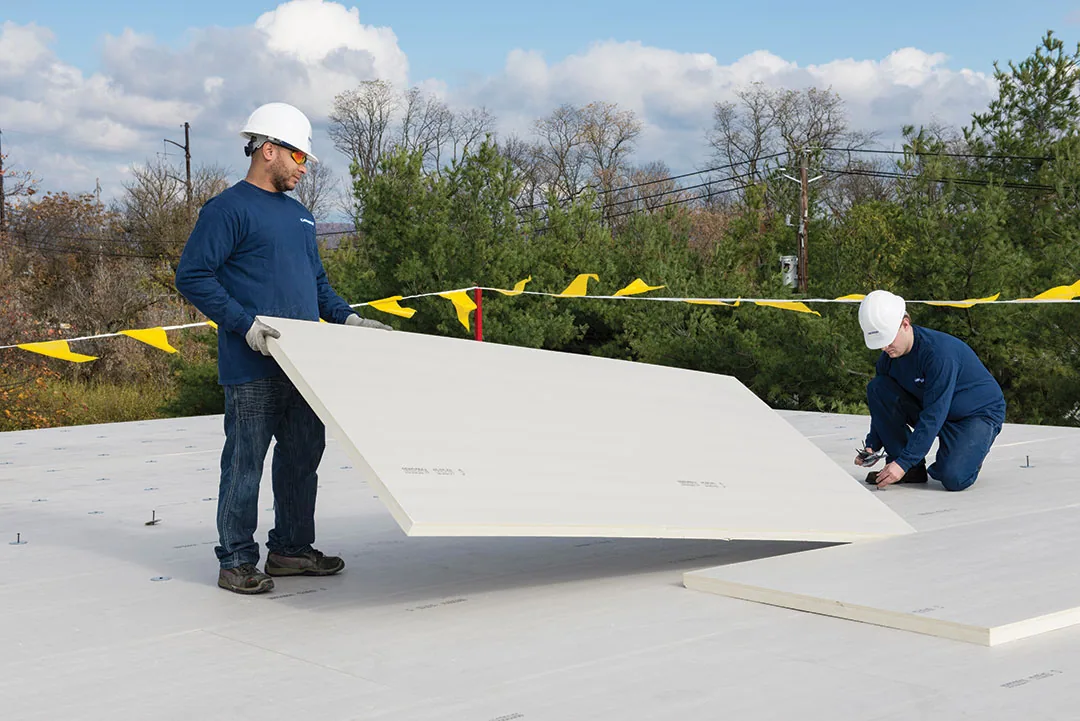
When the roof goes back on, a cover board over the insulation protects it from foot traffic and hail, and adds a firm base for the membrane. We discuss roof insulation and cover board choices early, because they affect height at edges and door thresholds. For an existing roof, a moisture scan separates dry insulation from wet. Dry areas stay; wet areas come out. This keeps cost tied to what has failed, and it prevents a new membrane from covering a problem.
Prepare for Winter With a Short Fall Checklist
Drains must be open, scuppers clear and flashings tight before the first storm. We walk roofs in October with exactly that list.
If heavy snow comes, stay off the roof, and watch interior ceilings and doors for signs of deflection. We clear with plastic tools and leave a protective layer, since steel cuts flat membrane. Owners with property in Zillah or Sunnyside can have their buildings inspected on the same visit, which helps when several roofs need attention before winter. Our flashing failure repair work in October tends to prevent the leaks that appear in February.
If you know what the building held in the past, tell us, but expect us to verify by coring. Former uses sometimes left abandoned penetrations, capped pipes or old curbs, and those are worth finding before a new roof covers them.
Commercial Roofing Questions
Our roof seam opened during a freeze. Do we need to wait for warm weather to fix it?
Not for a temporary measure. We can dry the area, warm the surface and install a cold-rated patch or sealant to keep water out. The permanent repair, such as a heat-welded patch, works best in milder temperatures, so we schedule it for the first workable window. Tell us where the seam sits and send a photograph, and we will say which temporary method fits your membrane.
How can we tell if our roof insulation has gotten wet?
Signs include a spongy feel underfoot, blisters in the membrane, stains on the ceiling below and heating bills that climb without explanation. A definitive answer comes from an infrared scan at dusk and a few core samples. We mark wet areas on a roof plan so the repair removes only what is saturated, and the plan gives you a reference for future inspections.
Which is better for our building, EPDM or TPO?
Each has strengths. EPDM is flexible in the cold and has a long record on low-slope roofs, but it is black unless coated, which raises heat load. TPO is white and reflective, with welded seams that are strong when done right. We ask about equipment traffic, exhaust, existing insulation and energy goals, then recommend one and explain why. If the budget points toward one, we show what changes with the other.
What does it mean when a flashing is described as failed?
It means the strip of material that seals the roof at a wall, curb or pipe has split, pulled away or lost its seal. Water follows the gap into the wall or the deck. We cut out the old flashing, check the substrate, install new base flashing, and seal the top edge with counterflashing or a termination bar. Failed flashings are common leak sources and are usually a repair, not a reason to replace the roof.