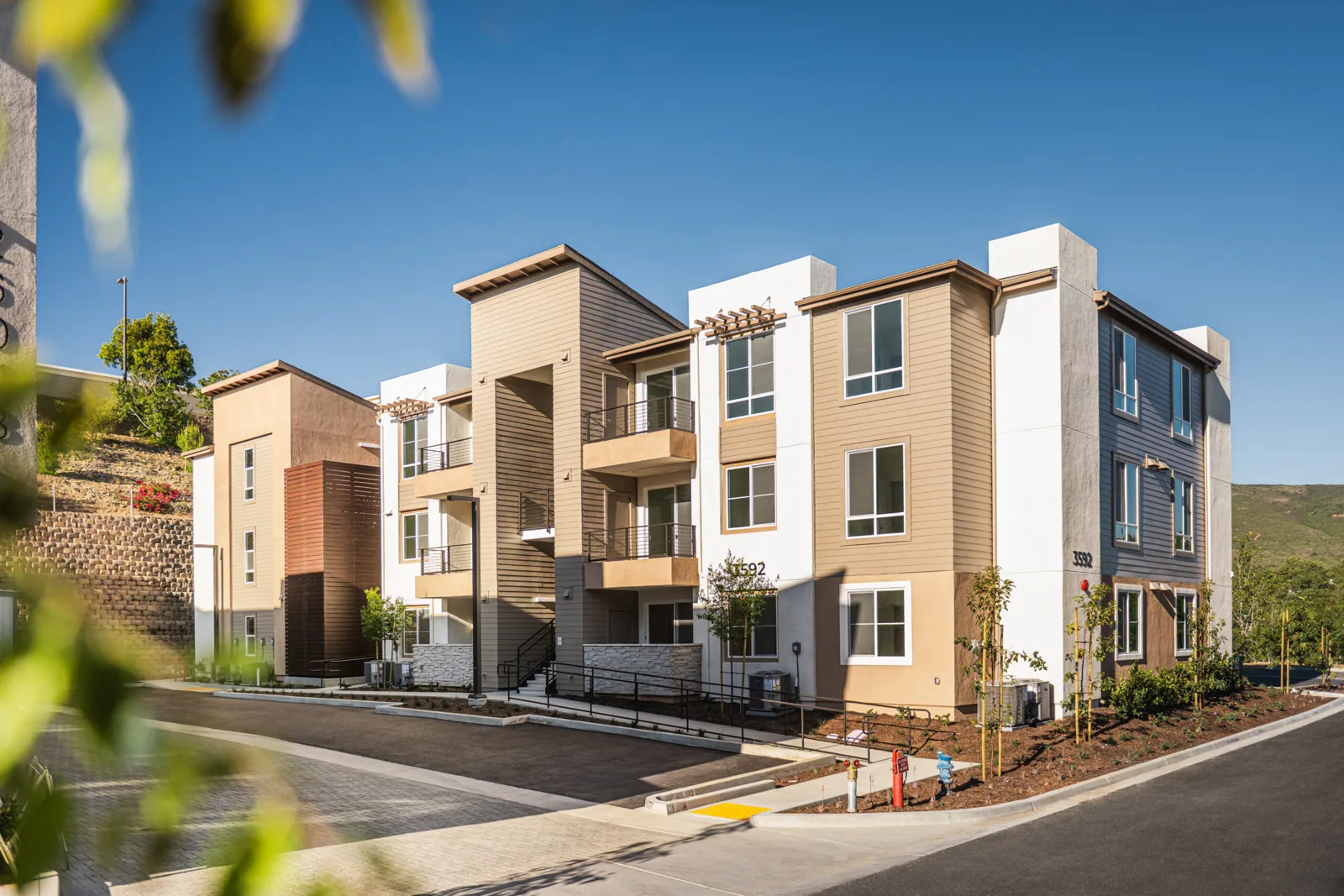
A property manager calls dispatch after a gale because a trim piece over a second-floor balcony is flapping, and the first question we ask is which units sit beneath it. Late November 2019 brought a 52 mph gust to Terrace Heights, and an apartment building with long eaves, balcony covers and flat sections takes wind at every edge. Tell residents to stay clear of the balcony, move furniture away from the wall and leave the roof alone.
Send the building address, the unit map if you have it and the units that cannot be moved. We sequence the first visit from that list.
Read the Roofs in the Growth Areas
Terrace Heights grew from 6,937 residents in 2010 to 9,244 in 2020, Summitview from 967 to 2,066 and Moxee from 821 in 2000 to 4,326 in 2020. Growth brings newer roofs to these areas, and newer roofs have a first-years profile: sealant that shrinks, fasteners that back out and drains set a shade high. The newer a roof is, the more its early problems sit in the details.
One walk after the first full summer pays for itself. It fixes the starting condition on paper, catches workmanship errors while the installer still answers for them and leaves the owner a dated record to hold against any later warranty question. Work in Terrace Heights, Summitview and Moxee follows the same sequence.
Growth also changes the crew calendar. When several buildings go up in the same years, they reach their first repair needs in the same years, and owners who plan together can order material and crew once. We offer to schedule a cluster of baseline walks across a complex in a single week, so the owner sees every roof graded on the same scale and can budget the next five years from one report.
Check Eaves, Trim and Balcony Covers After Every Gale
County design wind speed is 110, and the record gust in Yakima is 69 mph from May 1985. Long eaves, deep gable returns and balcony covers give wind a surface to lift. A trim piece that rattles in a gust loosens its fasteners over a season, and a cover that lifts admits rain into the wall below it.
After a gale, look from the ground. A crooked trim line, a gapped fascia or a cover that sits off its posts needs a call before the next rain. We bring fasteners and sealant, tighten the run and log the repair against the unit map.
Wind finds the same weak points on any building: edge metal, trim, vent hoods and satellite mounts. Small parts fail first and quietly. A vent hood with a cracked seal lets rain reach the attic well before a ceiling shows it, so hoods, chimney caps and dish mounts get checked along the edge.
Keep Residents Off the Roof and Out of the Drift Zone
Snow in the valley falls mostly in December and January, about two feet in a typical year. Snow slides off steep sections onto flat ones, and it drifts against walls where gables meet low roofs. Each parcel carries its own design load, from 20 psf up past 200, and a building above 70 psf needed an engineer. Do not shovel flat membrane sections. Officials who red-tagged a South Third Avenue building in February 2019 also cautioned that shoveling flat membrane sections can cause leaks. Plastic tools do the clearing, and a protective layer stays on. Heat leaks through the roof and melts the snow, the water runs to the cold eave and freezes there, and the dam holds more water against the shingles or flashing. Better attic ventilation and insulation fix the cause. We clear the dam by hand with plastic tools only when water is already entering, and we flag the cause for the owner.
Trace Valleys, Decks and Low-Slope Sections
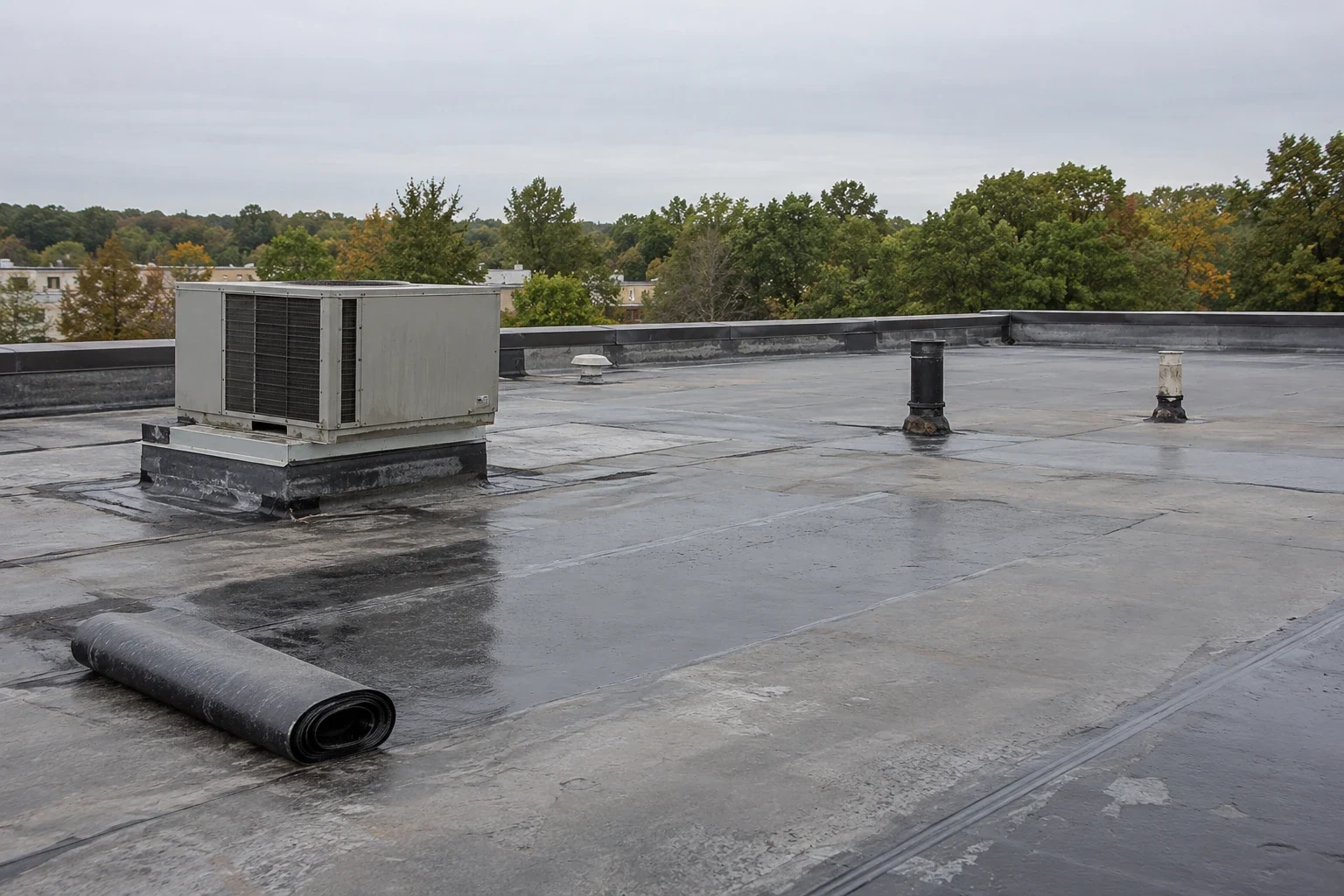
Where a pitched gable runs into a flat deck, the junction is a flashing detail with two jobs, and either one can fail. Valleys collect debris, ice forms in them overnight and meltwater has to find a drain. A flat section over a stairwell or balcony drains slowly if a scupper sits high.
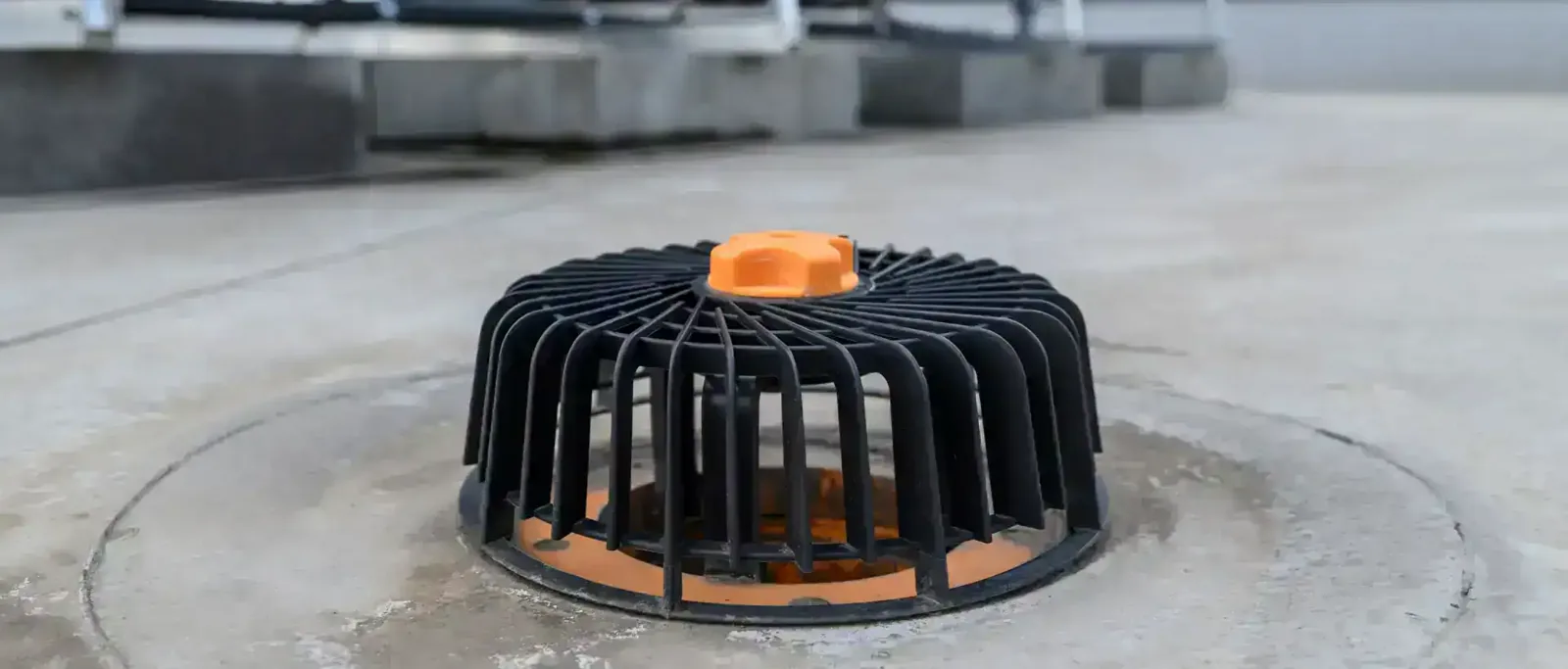
We trace each valley and low-slope section on the first walk and check base flashing, counterflashing and the drain at the low end. Clearing drains and scuppers each fall heads off most of the winter calls. Balcony floors get a water test, because the floor of one balcony is the ceiling of the patio below.
Notify Residents Before the Crew Arrives
Residents live under these roofs at every hour, and every complaint lands on the manager's desk. Our occupied building reroofing plan sends a notice more than a week ahead, repeats it the evening before, names the days and hours and gives a phone line that a person picks up. Loud tasks happen mid-morning. Balconies get covers where work sits above them.
Move-outs give a window. An empty unit beneath an open section carries less risk, and the manager can line up turn dates with the roof phases. Each section on the plan is tied to the units beneath it.
Pets, windows and smoke detectors earn a line in the notice. Crew members are told not to enter units, and any entry into an apartment is arranged through the manager with a named escort. Residents who work nights get a note about the quiet hours, so the schedule respects sleep.
Satellite dishes and string lights on balconies add holes and loads to roofs and railings. A short rule sheet for residents, sent with the notice, keeps new penetrations off the roof and names the person to ask before drilling.
Compare the Paths and Close With a Record
A dry roof with sound seams may suit a recover. Layers matter, because the code limits how many a roof may carry. The code editions adopted statewide on March 15, 2024 change insulation on a new assembly. At closeout the manager gets a roof map, a photo set and a penetration log. The same file serves a hotel or a senior living community, and a property management company that runs many buildings can adopt a single format across them.
Commercial Roofing Questions
A trim piece is loose after a windstorm. How urgent is it?
Call before the next rain. A loose trim run admits water into the wall, and the repair is cheap before it does. Tell residents to stay clear of the area, and send a photo and the unit numbers below so we plan the fix.
How much notice do residents receive before roofing starts?
Residents hear about the work ten days out and again the evening before. The notice lists the days, the hours and a phone contact, and it says what to clear from balconies and parking areas.
Why inspect a roof that was built recently?
Early problems sit in the details: sealant shrinkage, fastener backout and high drains. A baseline walk after the first summer finds them while the installer is still responsible and gives the owner a record for later claims.
Is a third roof layer allowed on a building that already has two?
Rarely. The building code caps the number of roof layers, and we count them on the first walk. A building at the cap needs a tear-off, and a building with one layer may take a recover if it is dry.
What if a vacant unit leaks unseen?
Build a spring check into the vacancy routine, including a water test of balconies and decks. An empty unit can leak for weeks unseen, and a check costs little beside a rotted wall.