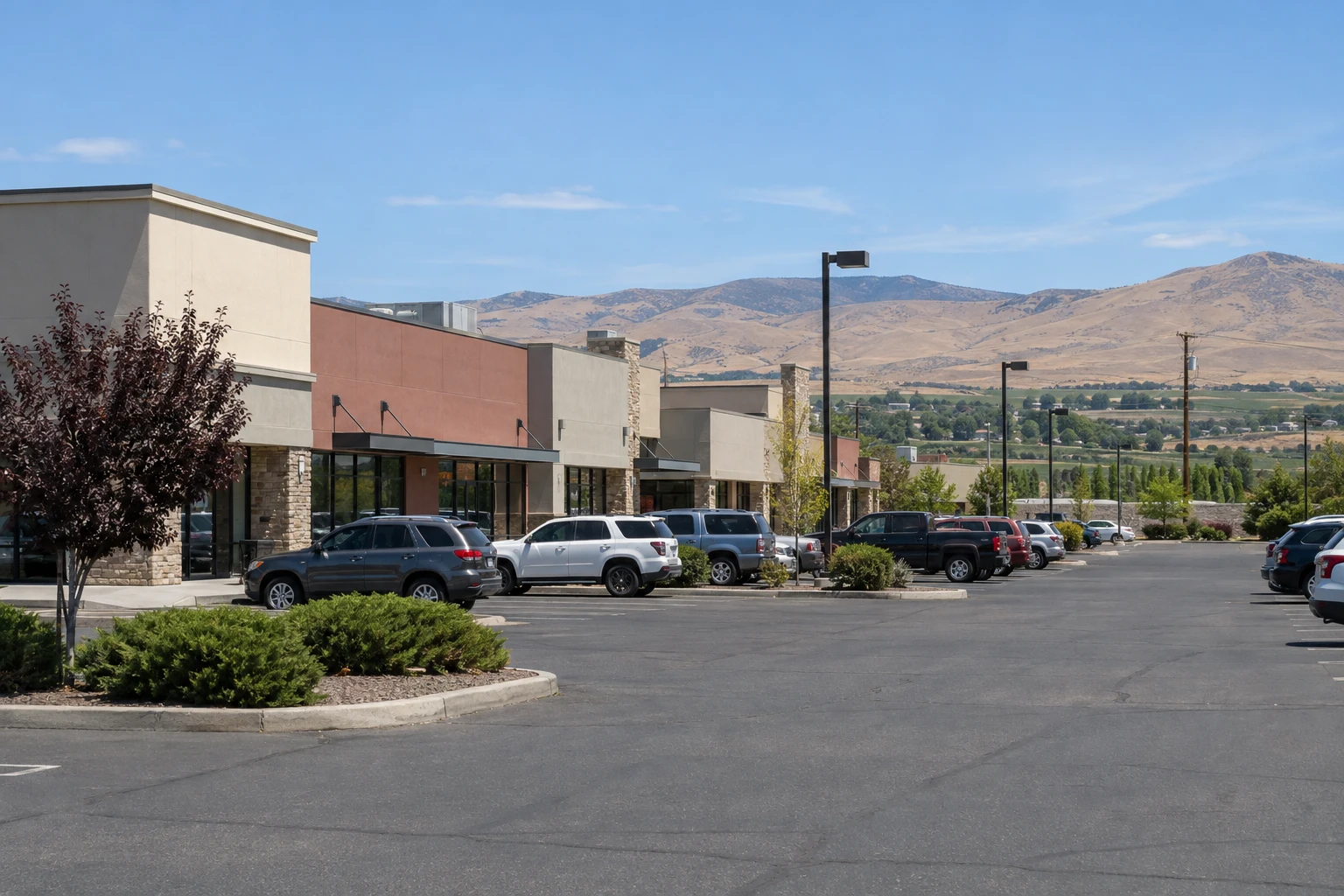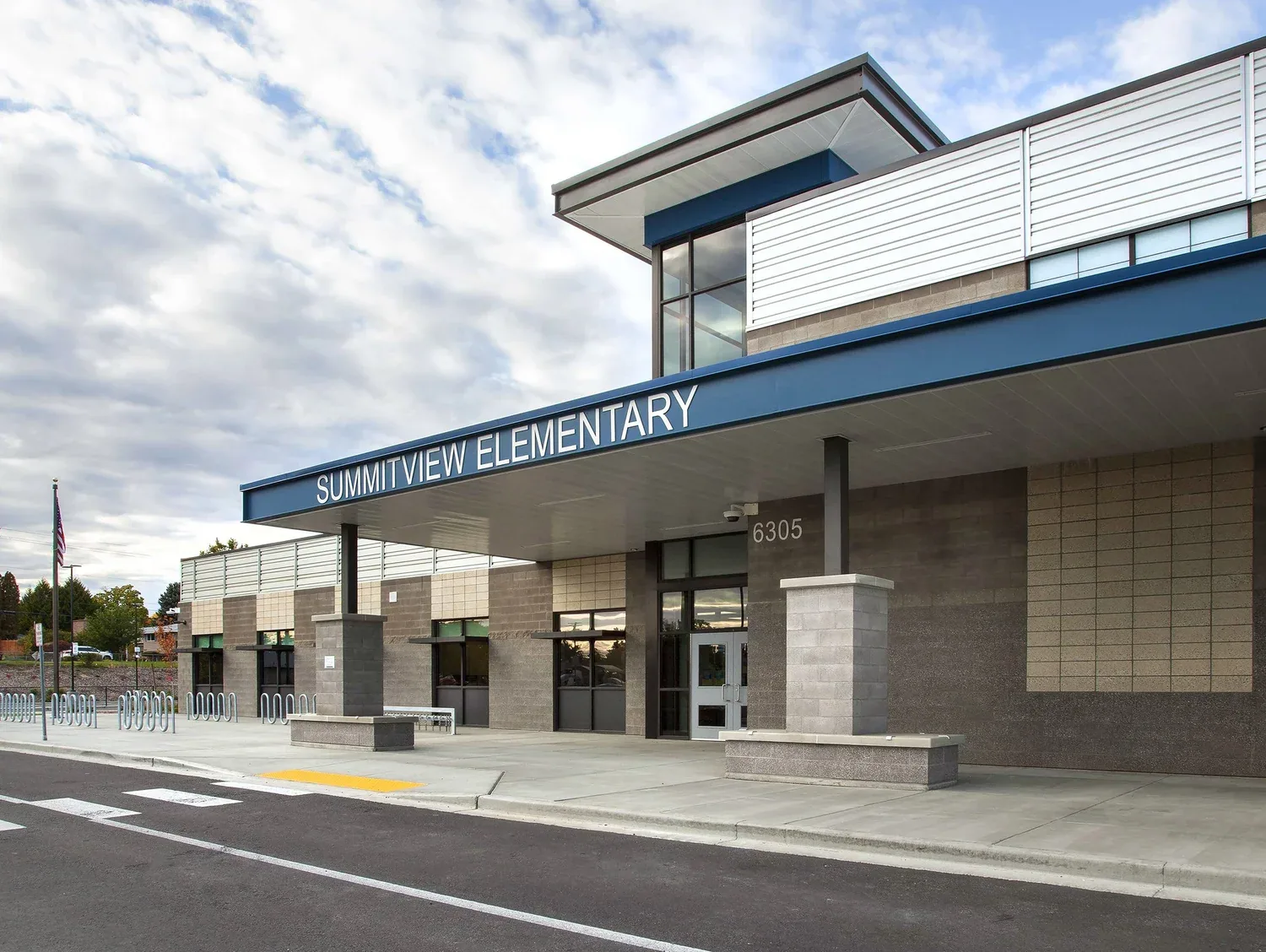
A December snow in Summitview brings one kind of call: the manager of a small commercial building says the drift behind the rooftop unit is knee deep and asks if that is normal. Dispatch answers with a question about the load. What does the permit say the roof was designed for, and where does the snow pile deepest? Summitview is a census-designated place of 2.6 square miles that grew from 967 residents in 2010 to 2,066 in 2020, uses ZIP code 98908 and sits at about 1,355 feet elevation. With population doubling in a decade, the question for any building owner here is whether the roof has kept up with the way the building is used now. Adding a unit, a vent or a storage rack changes how a roof carries weight, drains water and sheds snow.
Count What Has Been Added to the Roof Since the Drawings
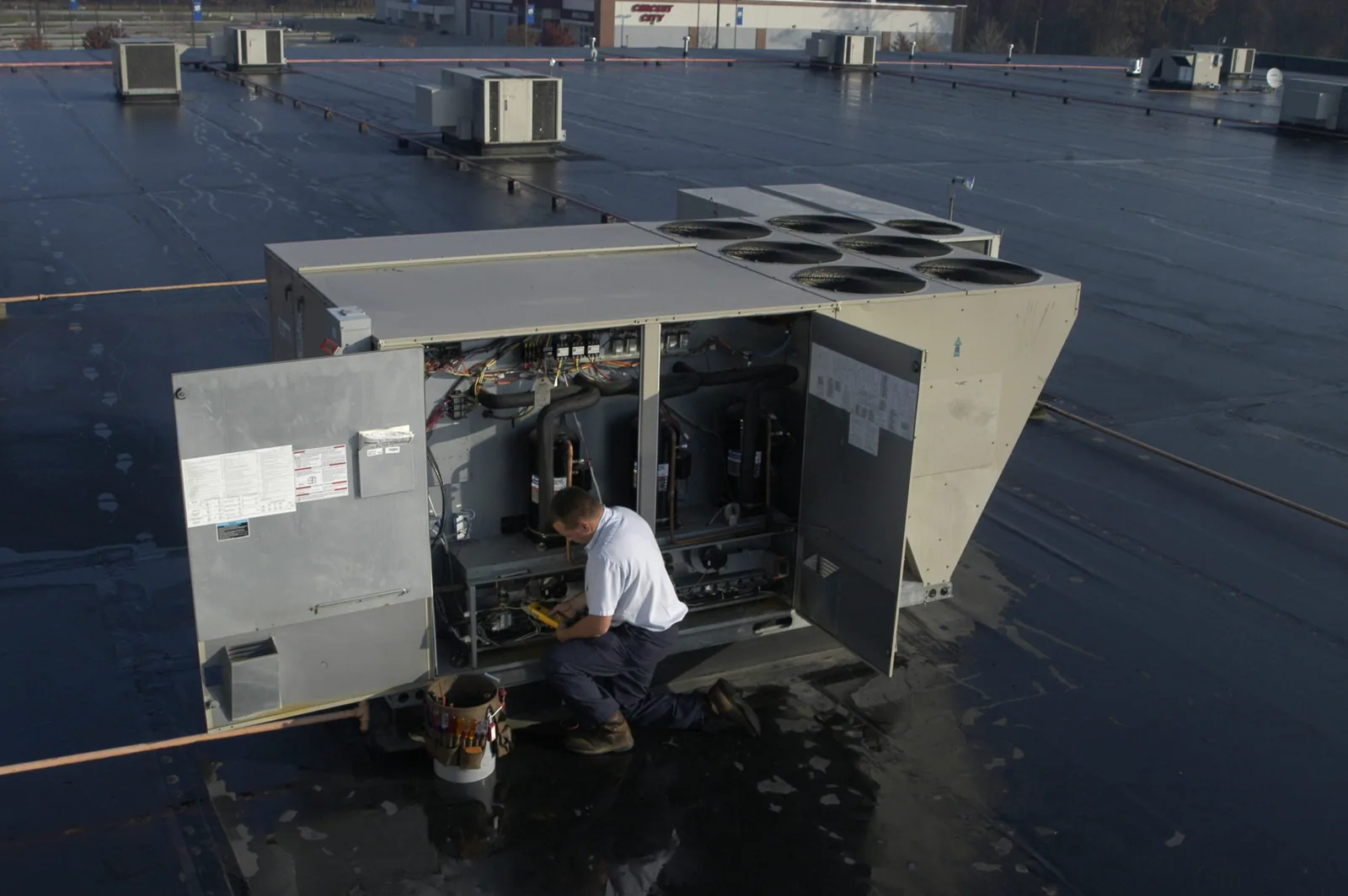
Original drawings show the roof as it was designed. Years later, a tenant adds a rooftop condenser, a plumber runs a new vent, an electrician mounts a conduit run across the surface. Each addition adds weight, creates a new penetration and changes where snow drifts and water flows.
We begin a visit by comparing the roof to the drawings if you have them, or building a simple plan from what we see if you do not. We mark every unit, curb, pipe and conduit, check how each is flashed and look for drift pockets behind them. A conduit laid directly on the membrane can wear through it under foot traffic and thermal movement, and a unit set on bare membrane can punch through under its own weight. Walk pads, curb flashing and raised supports solve most of these without a major project. We raise and flash equipment on rooftop equipment curbs and supports so the load sits on the structure and the membrane stays whole.
Plan for the Winter Snow and a Parcel-Specific Load
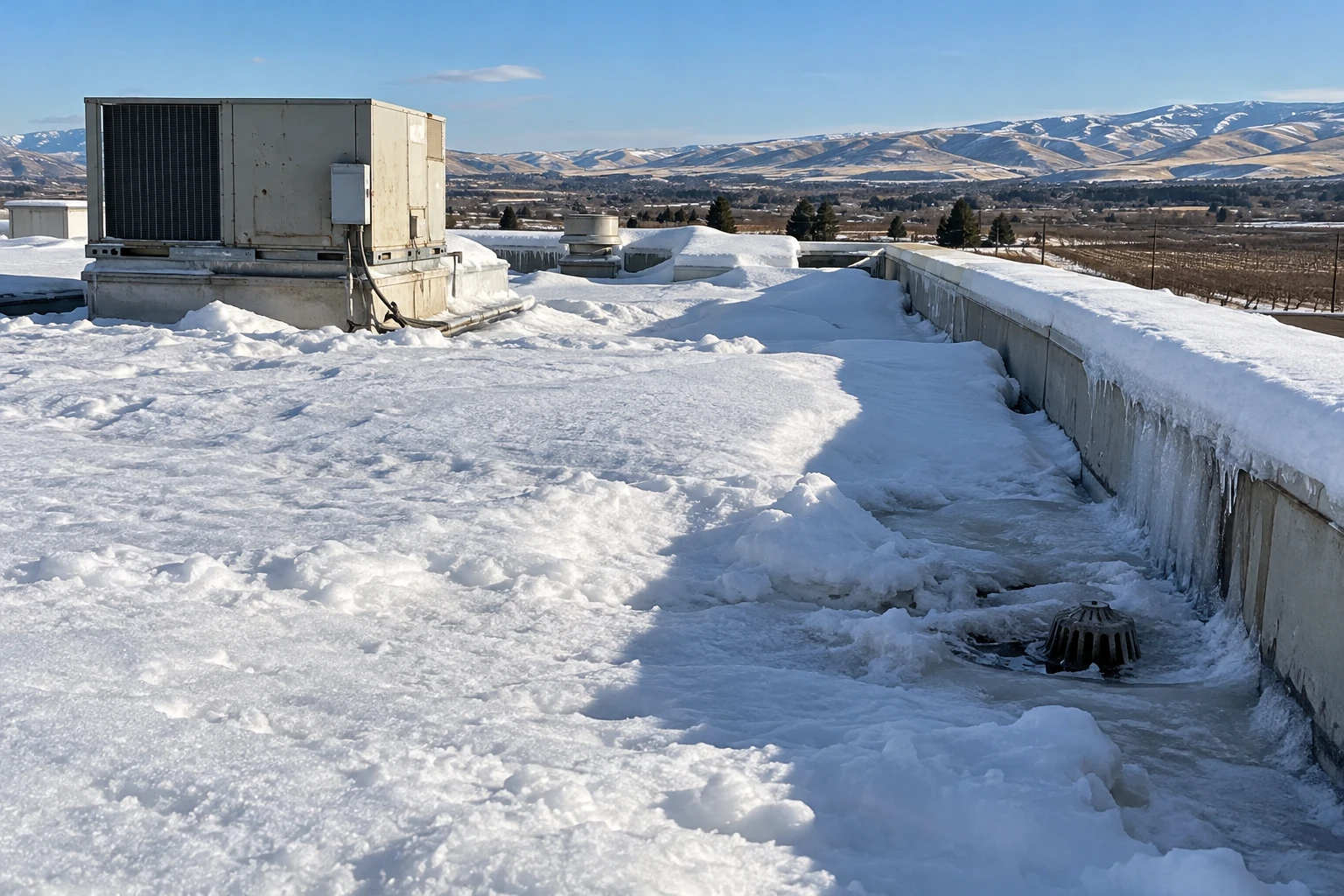
Summitview sees its snow mostly in December and January, and an engineer joins the conversation once a parcel's design load passes 70 psf. A small commercial building in Summitview has a design load of its own, and that figure should sit in your files with the other building documents.
When snow builds up, we look for the drift pile first: against a parapet, behind a penthouse, at a step-down between two roof levels. Deflection checks come next. We look for ceilings that sag, doors that stick, and cracks that open at the top of an interior wall. Roof clearing, if needed, uses plastic tools and a protective snow layer, since steel shovels cut flat membrane. After the thaw, snow and ice damage shows up as punctures, split seams and displaced flashing, and we walk the roof to find them.
Keep Water Moving Off a Small Roof
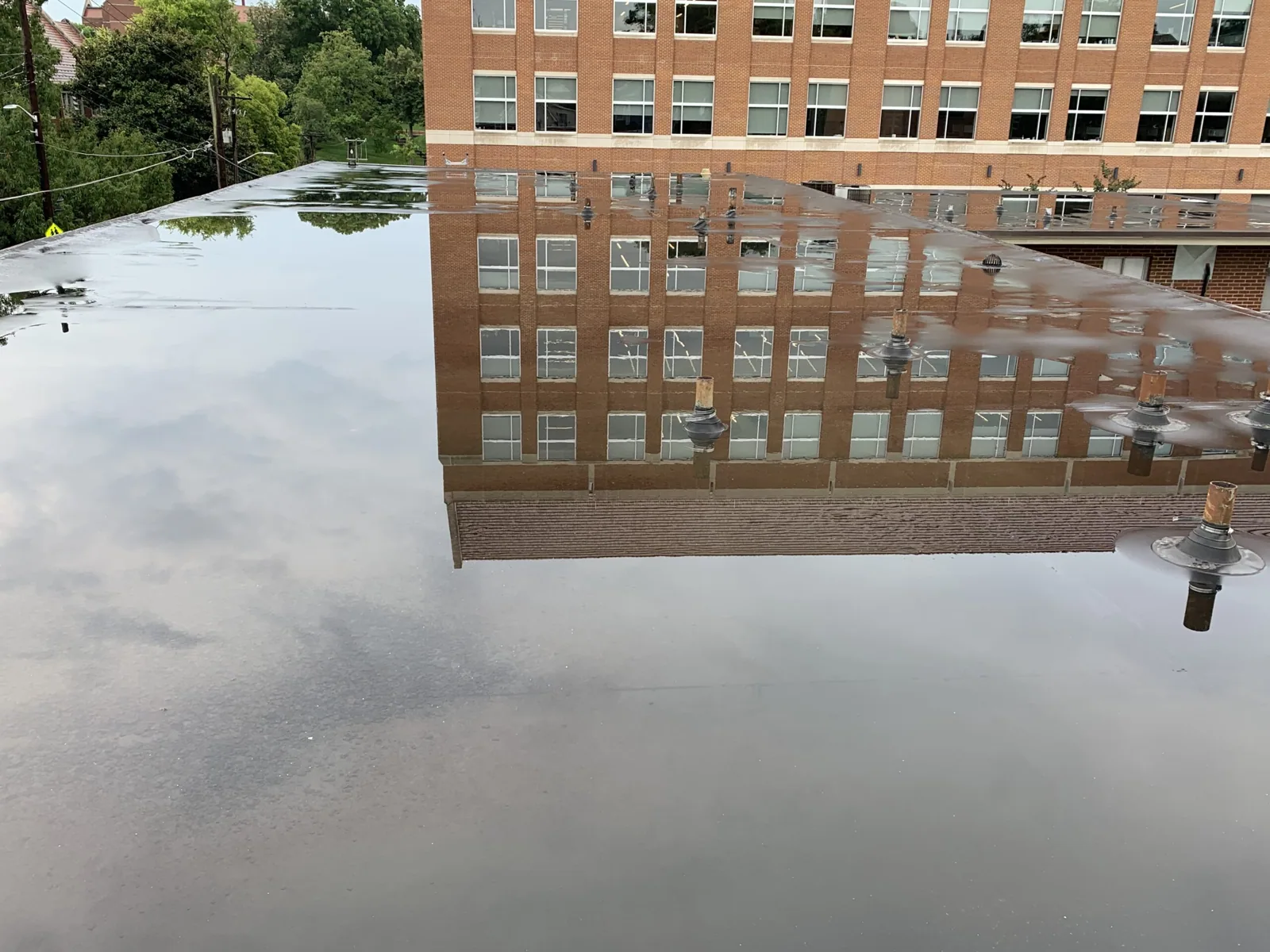
On a small low-slope roof there is little room for water to go wrong, but little room also means a single clogged drain can hold water over the whole surface. Ponding adds weight and degrades the membrane, and in winter the ponded water freezes and expands in the seams.
We check every drain and scupper, look at the slope with a level or a hose test, and note ponding areas that remain after 48 hours. Often a cleaned drain, a new strainer or a tapered insulation patch at a low spot solves it. A recurring ponding area can point to deck deflection, which needs a structural look. A ponding water repair addresses the low spot as well as the surface, since patching over a pond without fixing the slope returns the problem. For owners of a small property, a written drainage note in the maintenance file is useful when contractors change.
Choose a System That Fits a Smaller Building
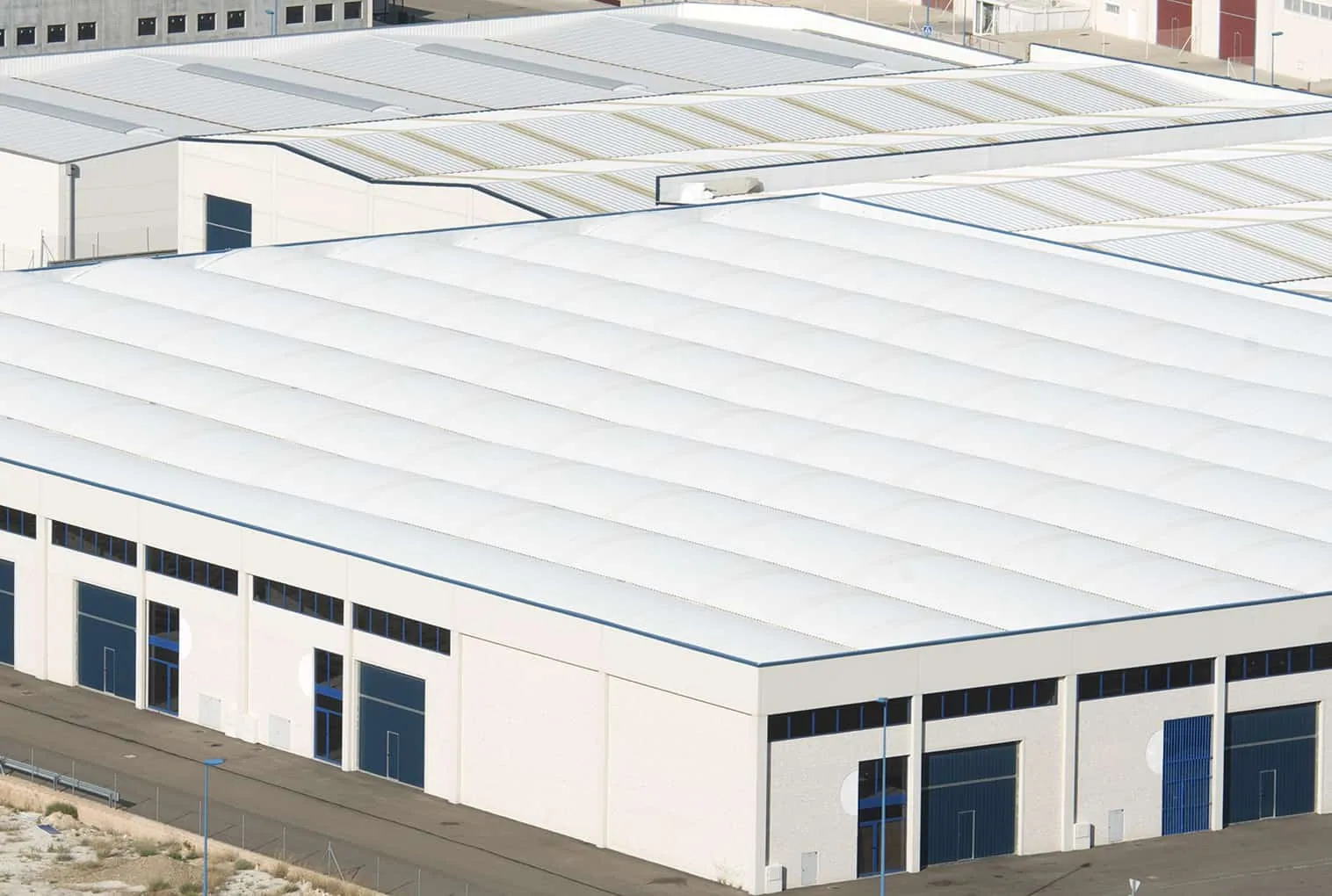
A single-ply membrane suits many small commercial roofs because it installs quickly and handles rooftop equipment well. A TPO roof is a common choice for its reflective surface and heat-welded seams, while EPDM and PVC have their own strengths. Metal retrofit suits a building whose existing low-slope roof has repeated leaks and enough structure to carry a slope.
The best system depends on the building: how much foot traffic the roof gets, what the exhaust vents deposit, how much insulation the energy code needs and how long the owner plans to keep the property. Washington's code editions in force since March 15, 2024 carry the commercial energy provisions in WAC 51-11C. We confirm the insulation requirement with the permit office before pricing, so the bid matches the requirement. We list two or three options with differences in cost, expected life and disruption.
Coordinate With Nearby Properties
Summitview is one of the census-designated places in Yakima County, and an owner with a second building in West Valley or Gleed can have both inspected on one visit. A joint trip saves a mobilization, and a shared maintenance schedule keeps each building on a regular cycle. For a plan that reaches across several buildings, we compile one summary with a table of condition grades.
Emergency response works the same for a single small building as for a large portfolio. Call the first-hour line, give the address and what you see, and a crew heads out to make the roof watertight. The permanent repair follows when weather and materials allow, and an ongoing preventive maintenance plan keeps those calls rare. Wind matters too: edge metal that has loosened over the years is the first thing a gale like the November 2019 windstorm finds.
Commercial Roofing Questions
A tenant wants to mount new equipment on our Summitview roof. What should we require first?
Ask for the unit weight, footprint and curb or support plan before anything goes up. We check that the structure can carry the added load with snow on top, set the curb so the roofer can flash it, and add walk protection along the route to the unit. The tenant's mechanical contractor should schedule the set after the curb flashing is done. A short written approval keeps the roof warranty and your records tidy.
How can we tell if drifted snow is dangerous or just inconvenient?
Look inside before you look outside. A bowed ceiling, a door that suddenly sticks or a new crack at the top of a wall points to deflection, and that is an emergency worth a call. If the interior looks normal and the snow depth is moderate, the roof is probably carrying it. Send photos of the drifts and the design load from your permit if you have it, and we will advise on clearing.
Is a roof recover cheaper than replacement for a building this size?
Often, but only when the existing insulation is dry and the deck is sound. A recover avoids tear-off and disposal, and the building stays in use. We confirm dryness with moisture scans and cores, and check how many layers the structure and code allow. If the scan shows wet areas, we remove them first. Recover and replacement both get a price, set next to each other, so you see the savings before deciding.
What does a written roof condition report cost us in time?
A small building takes a few hours on site. We walk the roof, photograph defects, take moisture readings and look at the interior ceiling. The written report follows with photographs, defect locations, repair priorities and remaining service life estimates. Having it on file helps with budgets, lenders and insurers. For several buildings, we group the visits so you receive reports in one batch.