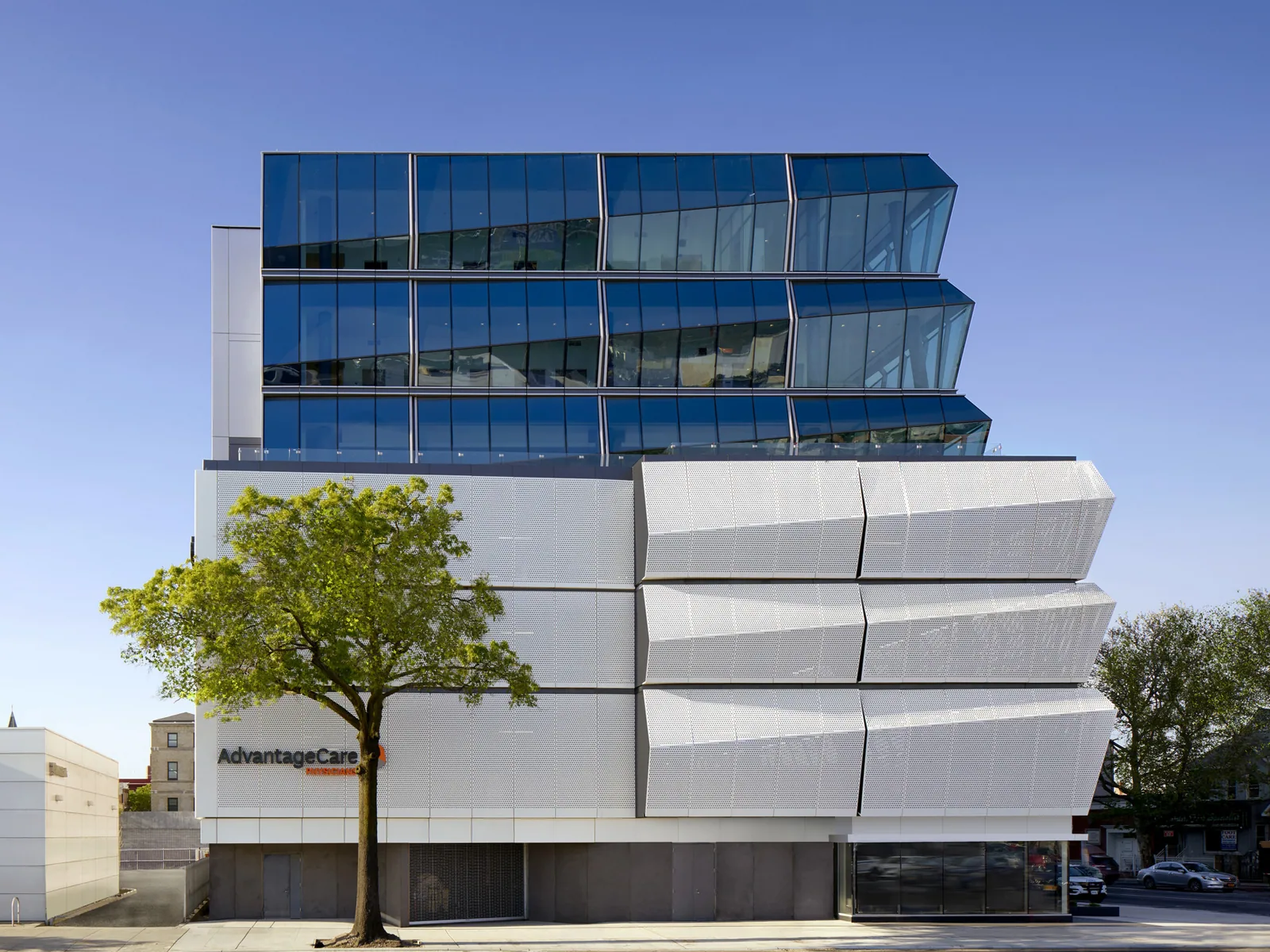
A practice administrator calls just after the first patients leave on a January afternoon, because a ceiling panel in an exam room has begun to sag under a wet spot, and dispatch asks which rooms must stay closed until it is dry. A medical office roof protects more than a floor of desks. Exam rooms hold supplies, imaging rooms hold equipment, and a leak raises questions about contamination that an ordinary office does not face. Yakima, WA winters bring snow in December and January, and the afternoons of summer pass 90 F about 40 times a year.
We repair, recover and replace roofs on clinics and medical office buildings, with attention to odor, noise, dust and patient privacy. Bring the building address, the roof age if known, the permit drawings with the design snow load and the schedule of clinic hours, and tell us which rooms cannot be closed.
Close the Affected Rooms and Document the Damage
When water enters a medical space, the first step is inside, not on the roof. Move supplies, cover equipment and close the room until the ceiling is dry and inspected. Photograph the stain and note the time, the weather and the room number, because the roofer, the insurer and the infection-control lead will each ask for those three details, and a phone photo taken at the moment of discovery is worth more than a description written a week later. Wet ceiling tile and insulation can grow mold if left in place, and a medical tenant usually has rules about what must be replaced. Your infection-control lead decides how the room reopens.
On the roof side, we find the entry point, install a temporary seal and plan the permanent repair for dry weather. Our leak repair notes record the location, the likely cause and the room below, so the clinic's file shows what happened and when it was fixed.
Pick Systems With Low Odor and Little Dust
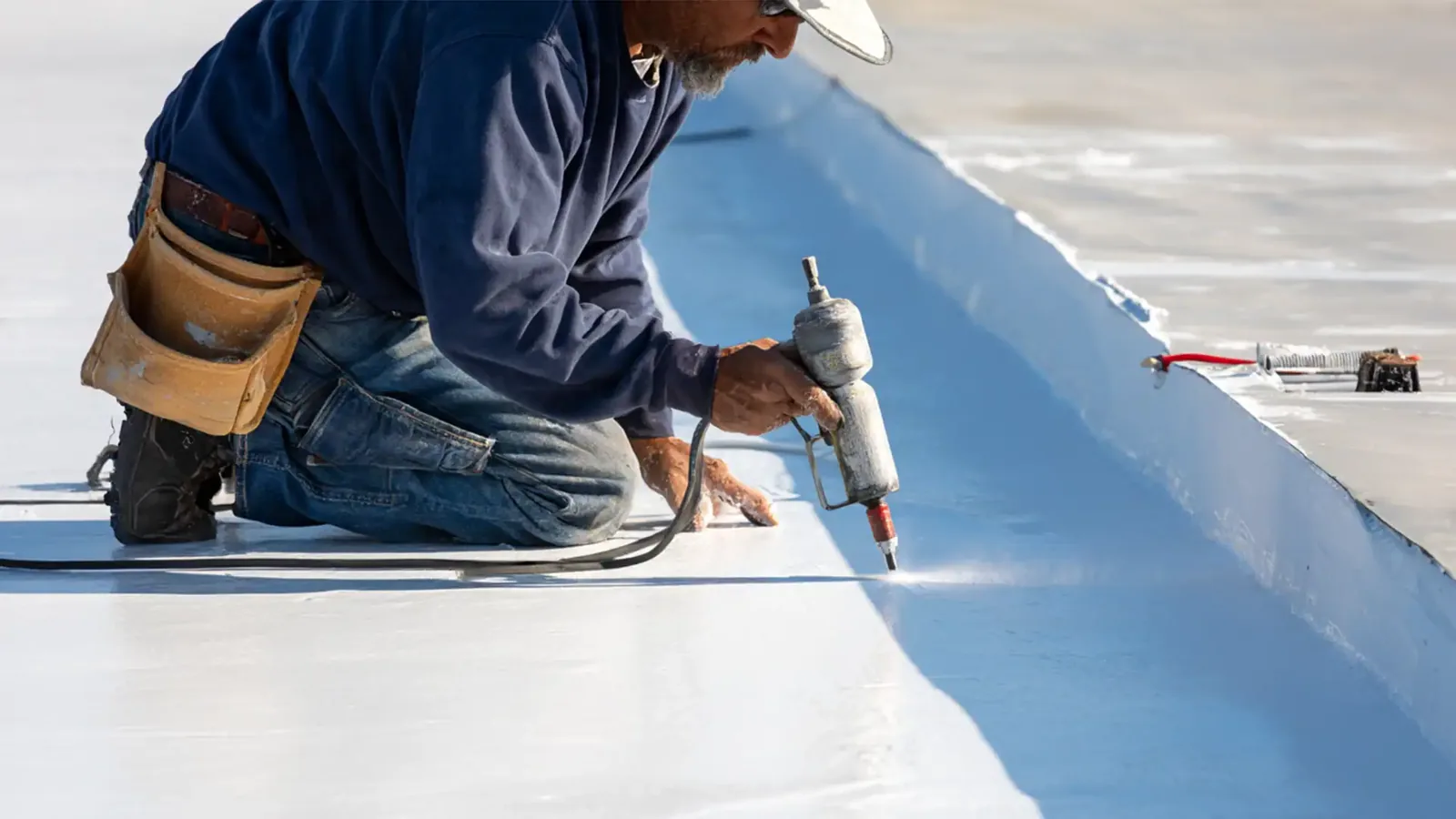
Patients with asthma, cancer treatment or surgery recovery are sensitive to fumes. Hot asphalt and strong adhesives can pull odor into an air intake, so we favor systems with little smell. A fused TPO or PVC sheet, with hot-air welded seams, gives off less than hot-mopped asphalt, and mechanically fastened or low-odor adhesive installs further reduce it.
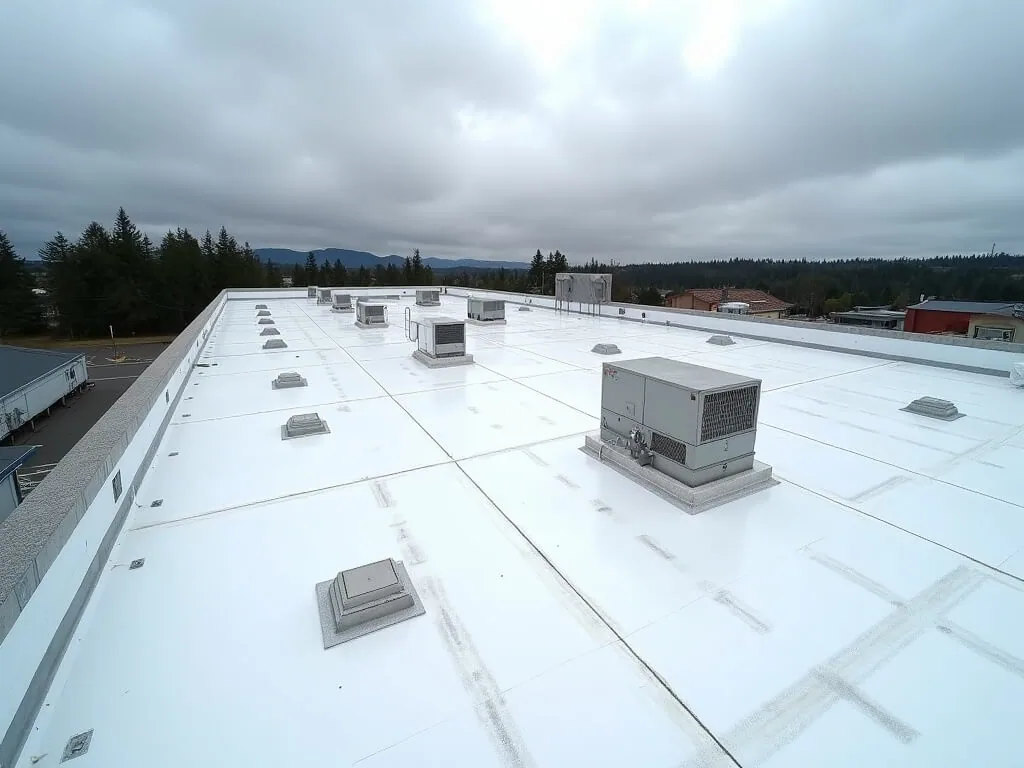
We locate every air intake and exhaust on the roof before any work starts. During sensitive hours, intakes are covered or dampers closed, with the facility team's help. Dust is controlled by sealing penetrations before tear-off and using vacuum cutters where possible. For a clinic with a surgical or sterile procedure room, we agree in advance on which days the roof stays untouched.
Schedule Around Patient Hours and Procedures
A medical office has a rhythm: morning intake, procedure blocks, lunch, afternoon appointments. We map the loud and dusty tasks onto the quietest blocks, often early morning or after the last appointment. Weekend work suits some practices, though many keep Saturday hours. We confirm the calendar with the practice manager and give a written schedule for each week.
Noise matters in rooms where a provider needs to hear a patient or a monitor. Drilling and impact tools can go to the hours when those rooms are idle, and we ask the practice manager to flag any monitor, dictation room or phone bank where a steady hum would matter more than an occasional bang. A quiet hour agreed in writing is easier to hold than one promised on the phone. Hoisting and staging happen away from the patient entrance and the parking area closest to it, and a flagger or a barrier keeps foot traffic clear of the lift. Wheelchair routes and ambulance-style drop-offs stay open, and we walk those routes with your office manager before the first delivery arrives so nothing blocks them. A medical building near Toppenish or Sunnyside, where Astria Health runs facilities, follows the same pattern as one in Yakima: patient hours set the schedule.
Keep Access Open and Snow Loads in Check
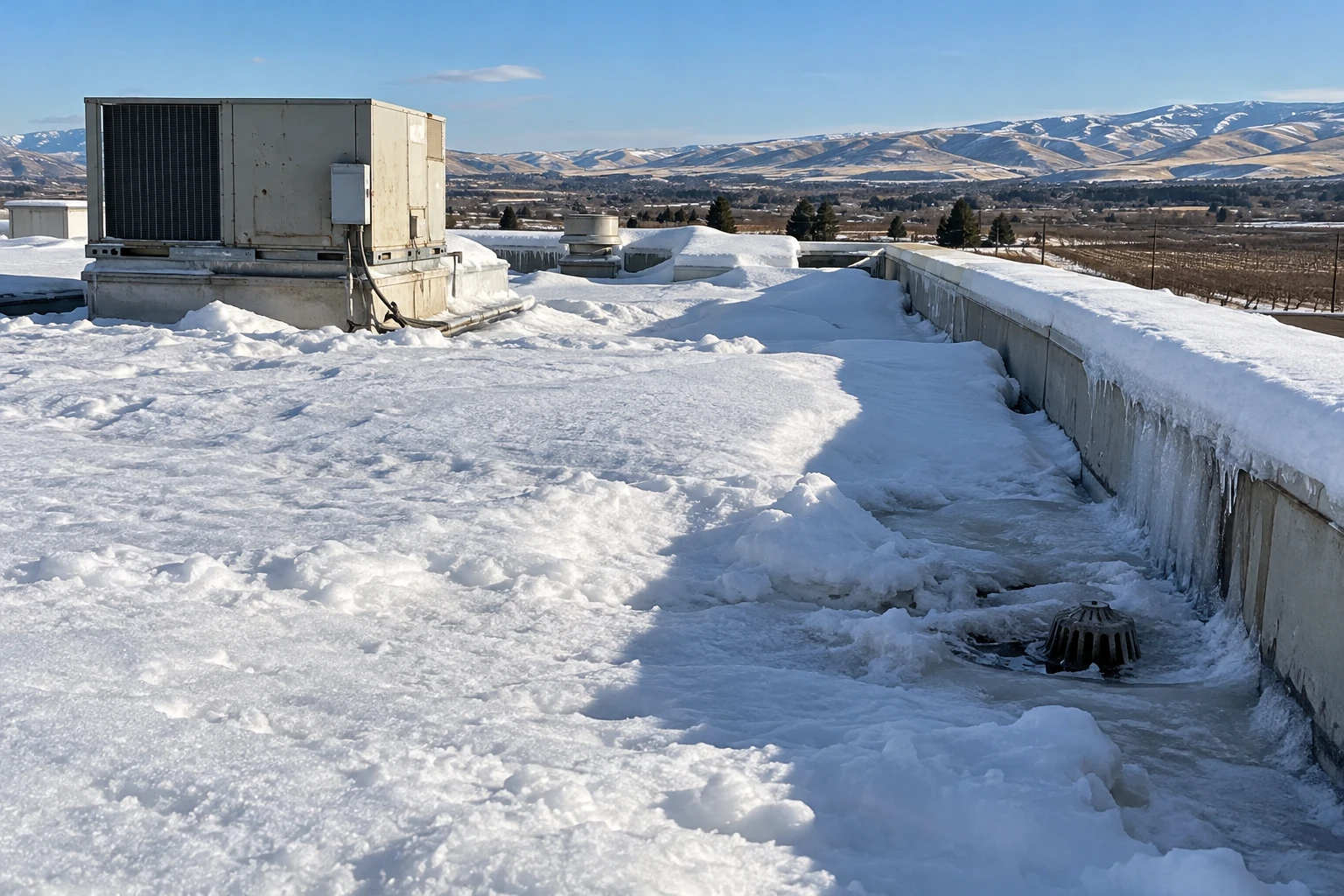
Design snow load is set parcel by parcel, so the permit drawings come first. A medical office on a corner lot may have snow sliding off a parapet toward a walkway. After the February 2019 snow, a commercial building on South Third Avenue in Yakima was red-tagged over a bulging wall, and officials warned that shoveling flat membrane roofs causes leaks. For a building with patients on foot, a falling slab of snow is a safety issue too.
We clear with plastic tools, protect walkways with cones or barriers and leave a protective layer on the membrane. Inside, we ask staff to report door sticking, ceiling cracks or sagging panels. If any appear, we call the structural engineer before the roof is loaded further. The repairs after snow and ice for a clinic start with the structure and then move to the membrane.
Place the Clinic in the Valley's Healthcare Network
Yakima Valley Memorial Hospital sits at the center of a healthcare cluster that includes Astria Health facilities. Astria runs facilities in Yakima, Sunnyside and Toppenish and employs about 1,200 people. A clinic in that network works to appointment calendars, and a week lost to a failed roof pushes every patient on those calendars.
For that reason we encourage owners to schedule inspections on a calendar and to keep a condition report. A hospital campus follows stricter rules, and an office building follows looser ones; a clinic falls between. The report places your roof on that scale, lists every penetration and drain, and records the repair history, so a lender, an insurer or a buyer can read the building's condition without a new survey.
Commercial Roofing Questions
How do you keep fumes out of our exam rooms during reroofing?
We pick low-odor systems, locate every air intake and exhaust, and cover or close intakes during any step that gives off a smell. Your facilities team coordinates damper settings. We also schedule the work for hours when affected rooms are empty, and we monitor wind direction on the day, since a shift can carry fumes toward an intake.
What should we do with supplies and equipment under a leak?
Move them out of the room if you can, or cover them with plastic and clear the area. Do not use equipment that has been splashed until a technician checks it. Call us with the room location and the time, and we trace the entry point from above while your team handles the interior.
Can a medical office roof be replaced without closing the practice?
In most cases yes, because the work is exterior. The loud and smelly steps are timed for quiet blocks, and sensitive procedures are scheduled around the roof calendar. We share a weekly plan so the practice can move appointments if a task shifts. A few days of closure might still be wise for the noisiest tear-off, and we tell you which days when we send the schedule, so the practice can decide with the calendar in front of it.
Are there extra rules for roofs over imaging or sterile rooms?
Often. Imaging equipment is sensitive to vibration and moisture, and sterile areas need dust control. We ask for the room list, set up extra protection under those zones and avoid heavy work over them during procedures. If the roof is old, we may schedule the repair before the rooms are used.
Which records help when an insurer asks about a roof leak at our clinic?
Photos of the stain and the roof, the date and time, the weather, our written findings and the repair invoice. We prepare a short report that links cause to damage, with a roof sketch. Keep it with the clinic's incident log. Our insurance claim documentation follows that format.