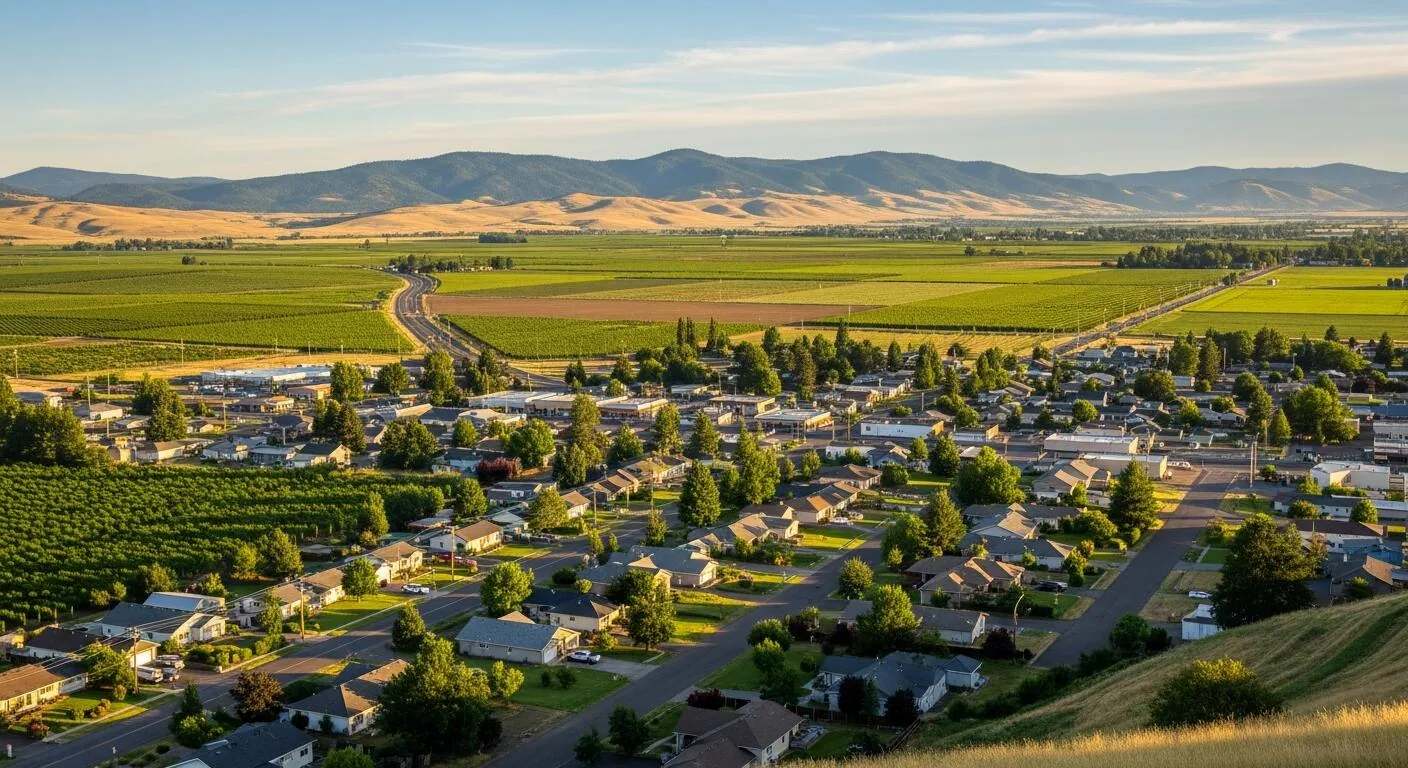
Outlook is a census-designated place with 317 residents in 2020, set along Interstate 82 and U.S. Route 12 about 4 miles west of Sunnyside. The snow figures here are Yakima's, and an Outlook roof should be checked against its own parcel load. In February 2019 a snow load partially collapsed the roof of an Outlook home, a reminder that the weight on a roof is a real structural matter. When someone calls about a sagging ceiling or a sticking door after a heavy snow, dispatch does not ask about the leak first. It asks who is inside, whether the sag is growing and what the building was designed to carry. We repair, recover, coat and replace flat and metal roofs, and we answer around the clock, holidays included.
Treat Snow as Weight Before Treating It as Water
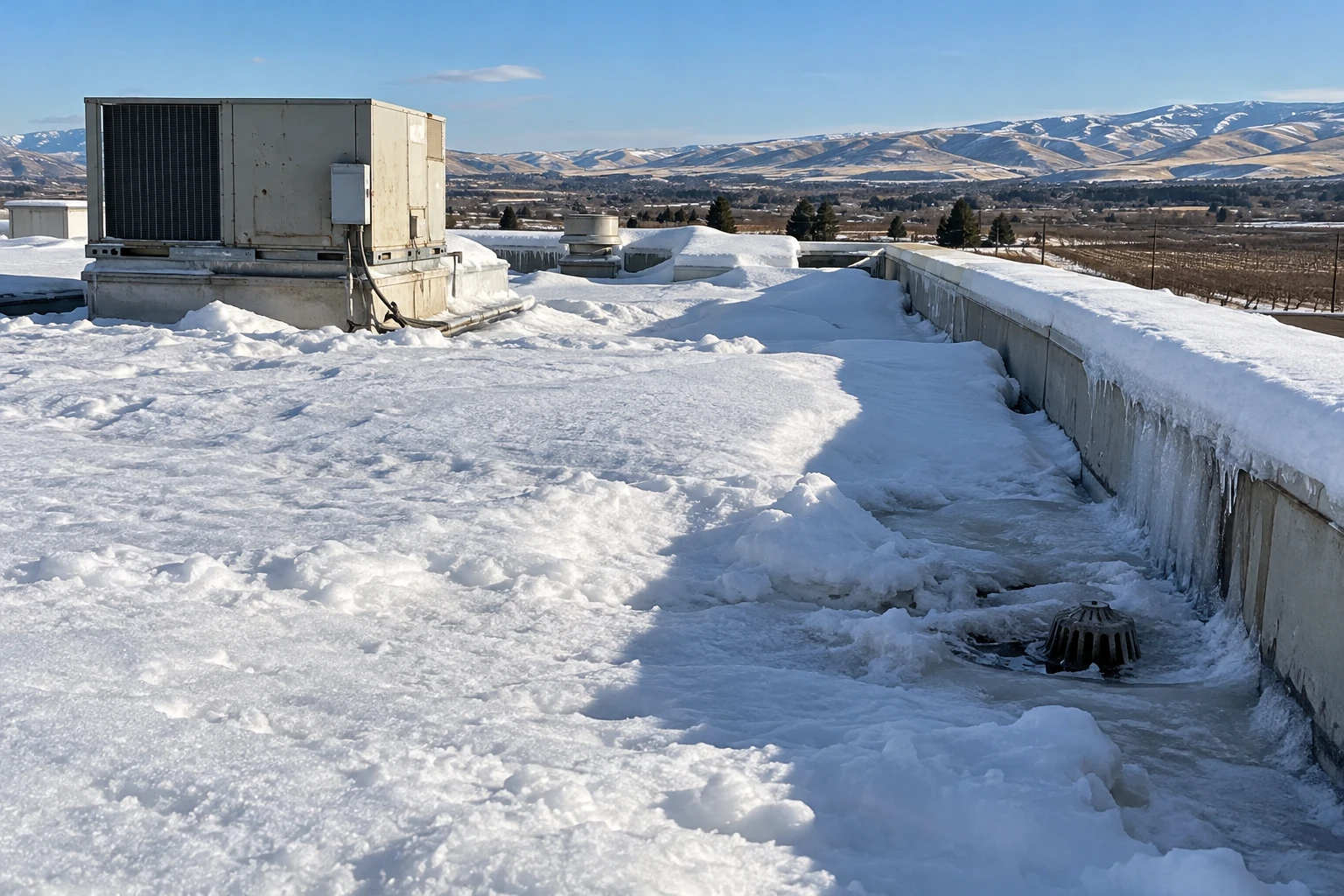
Outlook's snow comes mostly in December and January, and each building answers to the design load on its own permit. Wet snow and packed drifts weigh far more than light powder, and a few warm days followed by a freeze can turn a manageable cover into an ice-bound load. The depth alone tells little. The density and the pattern of drifts matter.
We start with the design value on the permit or drawings, then estimate the actual load from depth and density. The deepest drifts form beside parapets, penthouses and any wall that rises over a lower roof, and those spots carry the most weight per square foot. A snow and ice damage call begins with the load, and the membrane comes second.
Rain on snow is the worst case. Water poured onto a snowpack adds weight faster than any storm total suggests, and a mild day in the middle of a cold spell can raise the load on a flat roof by a wide margin. We watch the forecast with that in mind and phone our contacts when the pattern looks bad.
Watch for the Signs That a Roof Is Carrying Too Much
A roof under strain gives warnings. Doors and windows that stick, new cracks in drywall or masonry, a ceiling that sags between supports, a bulging wall or a popping sound from the structure are all reasons to clear the area. The same month that partly collapsed an Outlook home's roof, February 2019, also put a red tag on a Yakima commercial building after a wall bulged on South Third Avenue.
If a building shows those signs, the owner should call a structural engineer and keep people away from the affected area. No crew of ours goes onto a roof that may not hold it. After the engineer clears the structure, the snow comes off in a planned order and the deck and membrane are inspected for damage that the load caused.
Rooftop equipment is part of the picture. Mechanical units, ducts and supports concentrate weight in small footprints, and drifts form around them. A unit added since the original design goes to the engineer, since the building may carry a different load than the drawings show.
Remove Snow in a Sequence That Protects the Structure
Clearing snow from a roof can go wrong if the order is wrong. Starting in the middle of the field can leave a heavy drift pressing on an unsupported edge, so the first passes go to the deepest drifts, from the drift edge inward and downhill, with an eye on the structure for any movement.
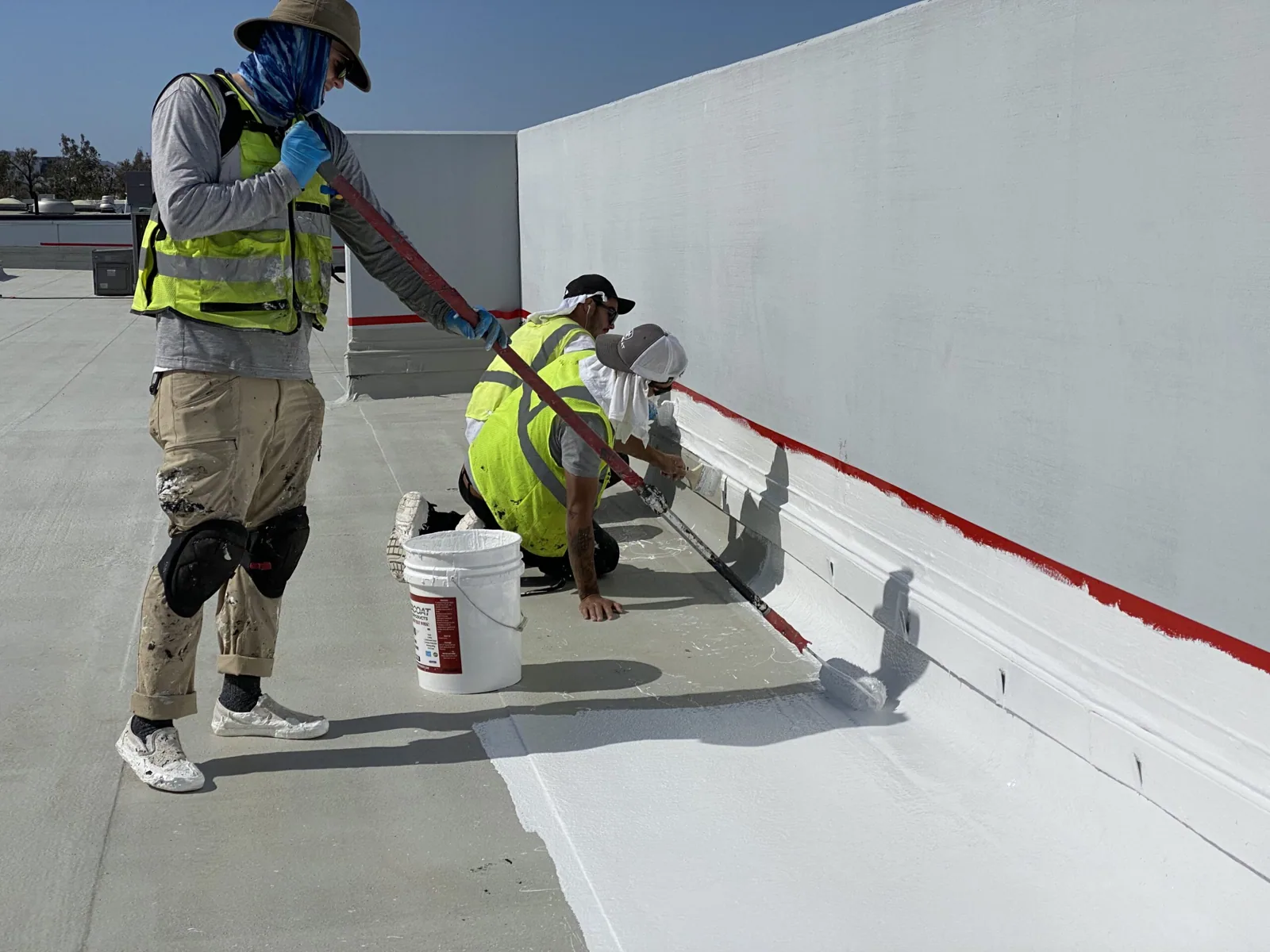
Tools are plastic, because steel blades cut membranes, and a layer of snow stays on the surface. Workers stay tied off and away from the roof edge. Our emergency roof repair crews handle this work on any day of the year, and the callback log records what was removed and what was found.
Access is part of the plan. Snow and ice hide skylights, open drains and low parapets, and a fall through a skylight or off an edge is as dangerous as the load. We probe ahead of our footing, flag every opening and use tie-off points we have tested, and we keep the crew small enough to keep their weight off the deepest areas.
Inspect for Damage After the Load Comes Off
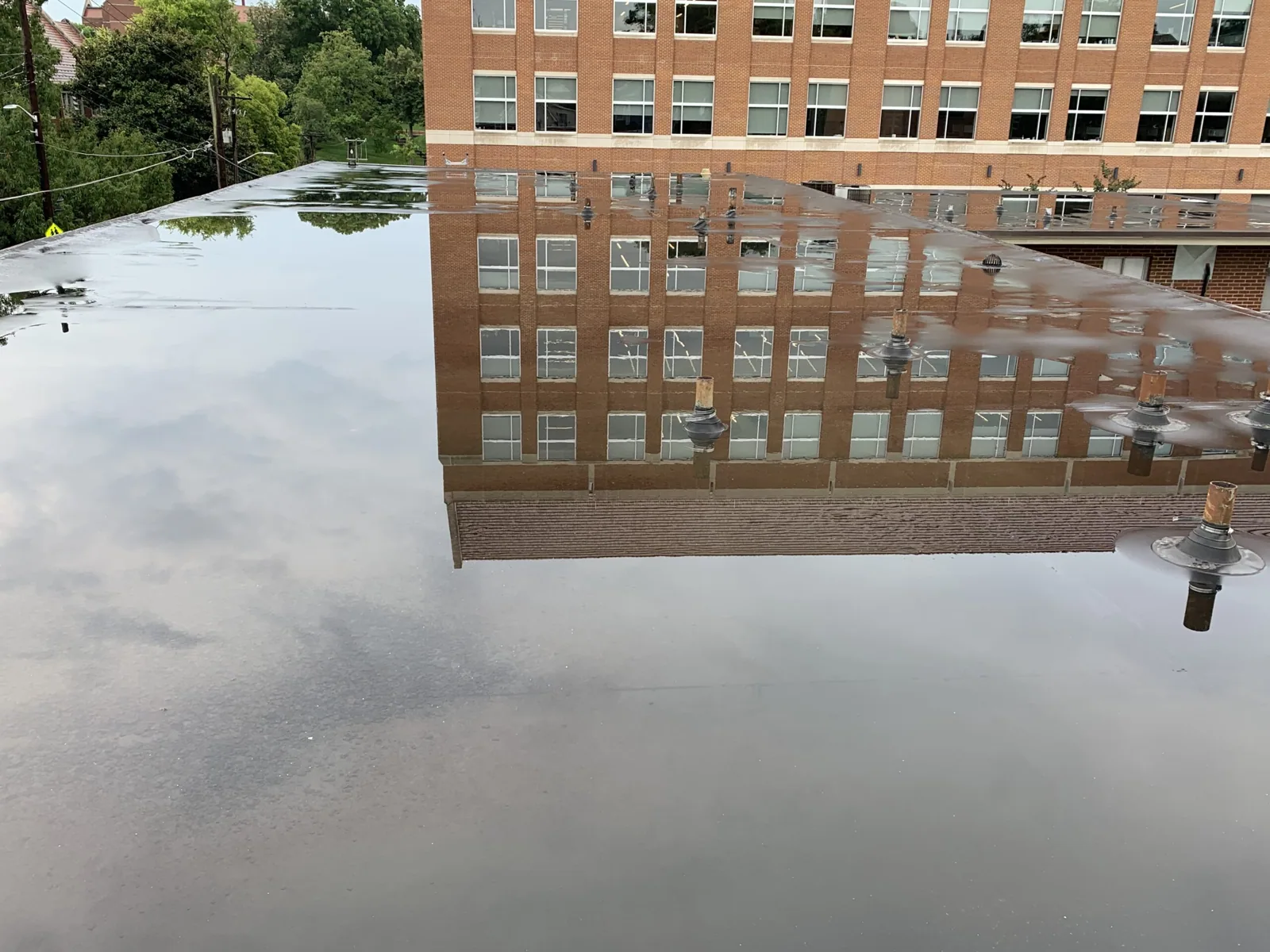
Once the snow is gone, the roof is measured. A level and a string line show where it has sagged, and the readings are compared with the drawings. Deflection that recovers is acceptable within limits, and deflection that stays calls for an engineer. Lasting dips hold water, so ponding is the next problem to address.
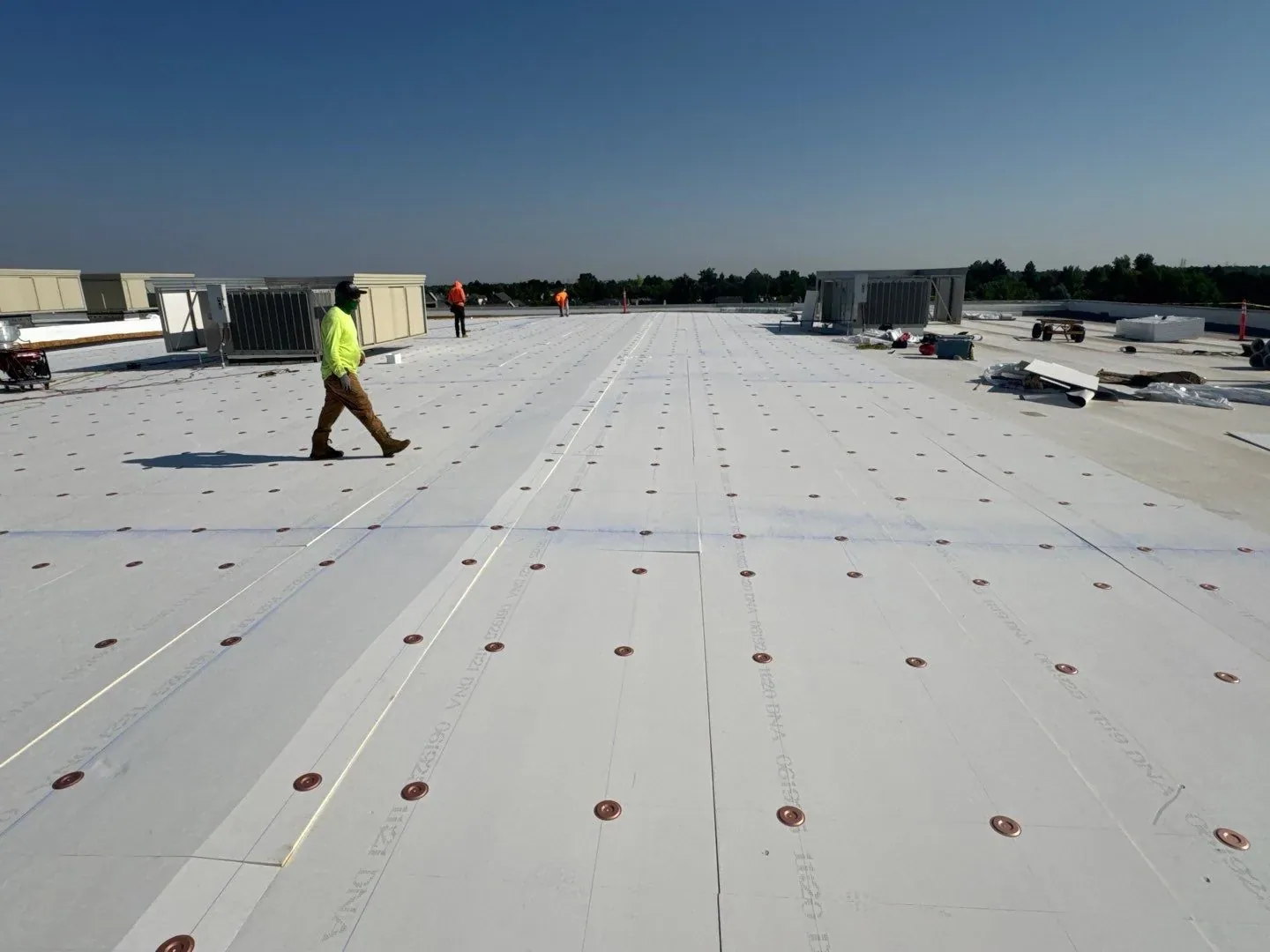
We also look at the membrane and its details. Heavy drifts compress insulation, split seams at parapets and crack flashing at step-downs. We probe every seam, check each termination and map the wet areas. The ponding water repair options range from a new drain to a tapered build-up, and the right one follows the measurements.
Documentation closes the job. We photograph the sag, record the readings, list the repairs and note the date of the storm and the clearing. If the loss goes to an insurer, those records show what happened and when, and they support the permanent repair.
Plan the Work Around the Corridor and the Calendar
Outlook lies on I-82 and U.S. 12, so access is direct for crews and for deliveries. Winter weather can still close a stretch, and we plan for it. Large projects go on the calendar for late spring through early autumn, when adhesives and coatings cure and the roof is dry. We also pin edges before the fall gales, since the late-November 2019 windstorm reached 53 mph in nearby Sunnyside.
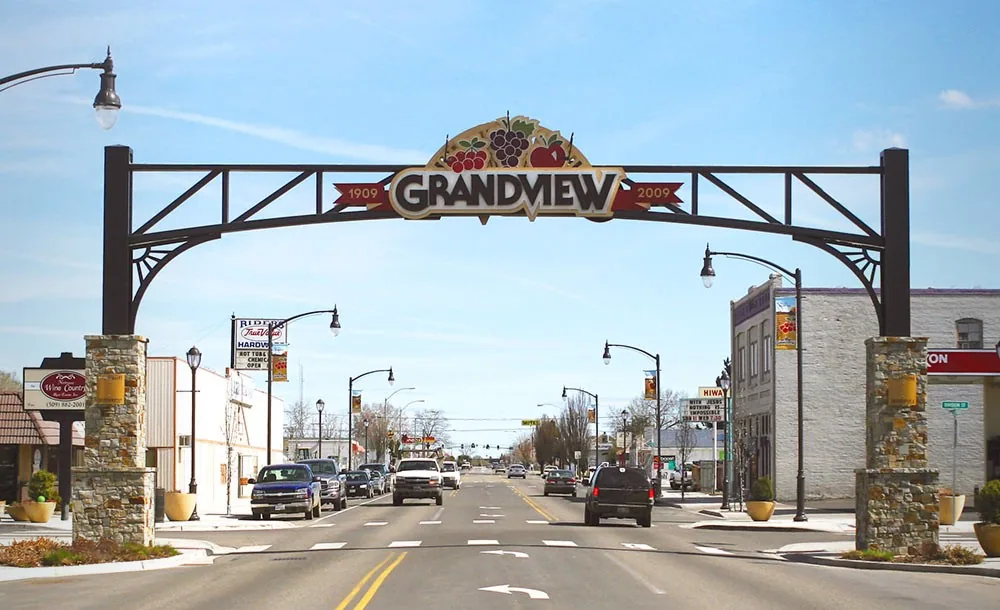
Owners with several buildings across the lower valley can combine them under one schedule. Under a maintenance program the roof is seen twice a year, in early autumn and again after spring melt, with a dated report from each visit. A neighbor such as Grandview fits the same route.
Code can shape the repair. Washington's code editions in force since March 2024 mean a substantial reroof may need to meet current insulation and structural provisions. We confirm the requirements early and put them in the proposal.
Commercial Roofing Questions
How much snow can a flat commercial roof hold?
The building's design value, found on the permit or drawings, sets the limit, and it varies by parcel in Yakima County. Depth alone does not tell you the weight, because density changes it. We estimate the load from depth, density and drift pattern and compare it with the design number.
A door in our building started sticking after the storm. Is that serious?
It can be. A sticking door may mean the frame has shifted under load. Clear the area, keep people out and call us and a structural engineer. Do not climb on the roof to check. We will arrange access once it is judged safe.
Should we shovel the roof ourselves to be safe?
Not unless trained crews do it with proper fall protection. Steel tools cut the membrane, and a person on a loaded roof is at risk. If the load is a concern, call, and we will send a crew that clears in sequence with plastic tools.
Can a roof recover from a heavy snow year without repair?
Sometimes. If the deck rebounds, the seams are tight and the flashing is intact, a good inspection may find nothing to repair. We still check, because damage often shows up only after the thaw.
What if a roof has already partly collapsed?
Keep everyone out and call emergency services if anyone may be hurt. Then call a structural engineer. We can dry in the opening once the structure is declared safe to work near. The records from that day matter for insurance, so photograph from a safe distance.