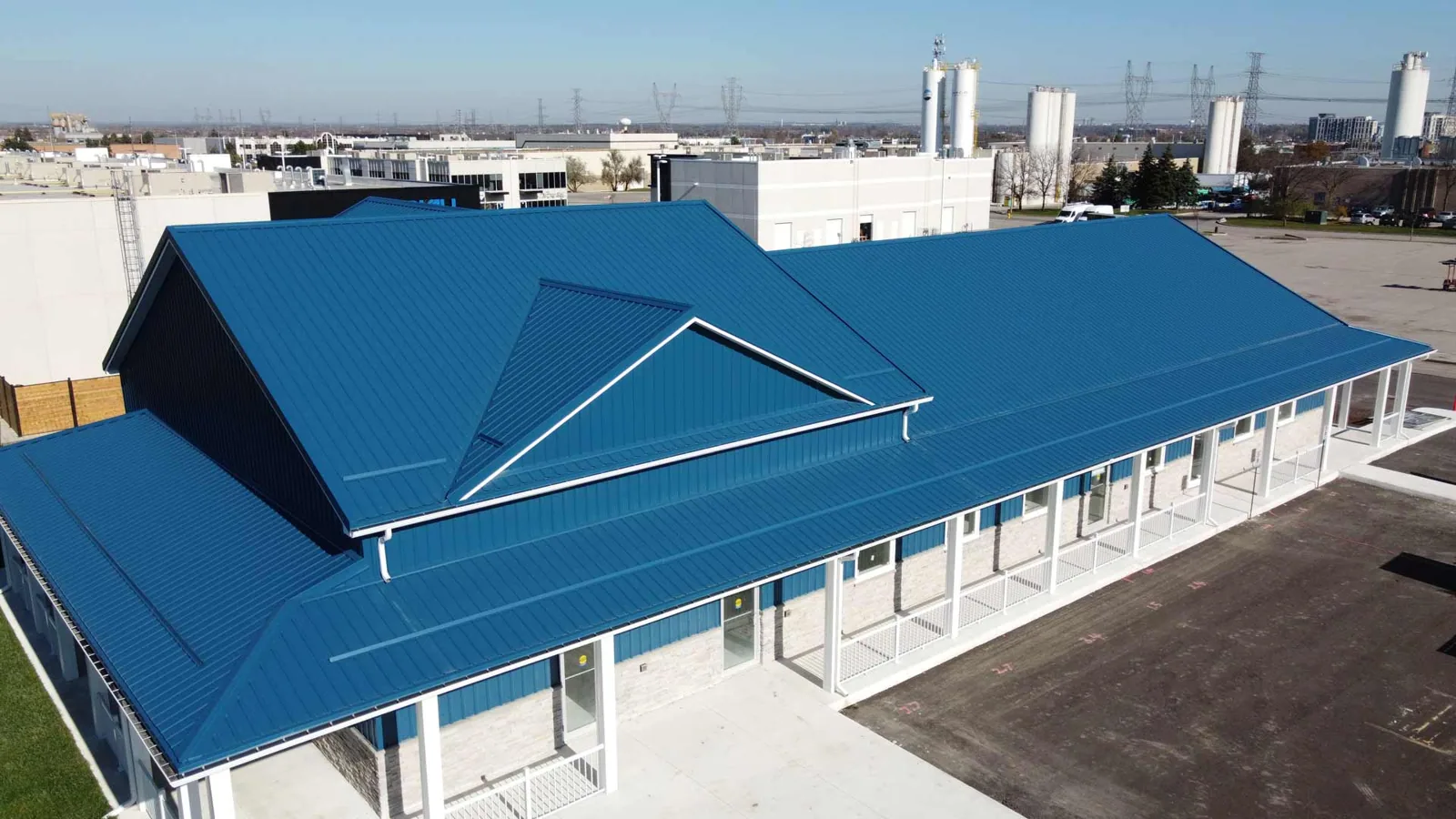
A building manager calls after a January afternoon warm enough to start a slide, because a sheet of snow ran off a metal roof with a bang and landed across the customer entrance, and dispatch asks whether the roof has snow guards. Standing seam is a metal panel system whose seams stand up above the flat of the panel and are locked together, with concealed clips holding each panel to the deck. No fasteners pierce the surface, which removes the most common leak path on metal roofs. In Yakima, WA, where the county lists snow loads from 20 psf to well over 200 psf, that clip-and-seam design is also why the roof can flex and still keep its weather barrier.
We install standing seam on new construction and replacement, and we repair existing roofs. Before you call, find the panel profile, the gauge if you know it, and where snow slides or ice dams form. That tells us whether the roof needs retention, repair or a bigger plan.
Let the Panels Move on Their Clips
A long metal panel grows in the afternoon heat and shrinks overnight, and in Yakima the temperature swing can be large. Highs of 90 F or more arrive about 40 afternoons a year, the record was 113 F on June 29, 2021, and the low on record is minus 25 F. A fixed panel under that cycle would tear itself loose. Standing seam panels instead ride on clips that let them slide, and the seam closes over the clips without gripping the panel too tightly.
That movement has to stay free. If a panel is fastened through its face near a penetration or a curb, it cannot slide, and it works the seam open. We look for trapped panels, oil-canned flats and worn clips during every inspection. Where a rooftop unit's curb is boxed in with fasteners, we rebuild the curb with a floating flashing, and our penetration flashing details leave room for the panel to move.
Hold the Snow or Release It on Purpose
Metal sheds snow faster than membrane, which is helpful until the slide lands on a person or a car. Snow guards, bars or rails break the sheet of snow into small pieces that melt slowly instead of dropping all at once. We set them in rows above doors, walkways and loading areas, and we size the spacing to the roof pitch and the load. The guards fasten to the seam with clamps, which avoids drilling through the panel.
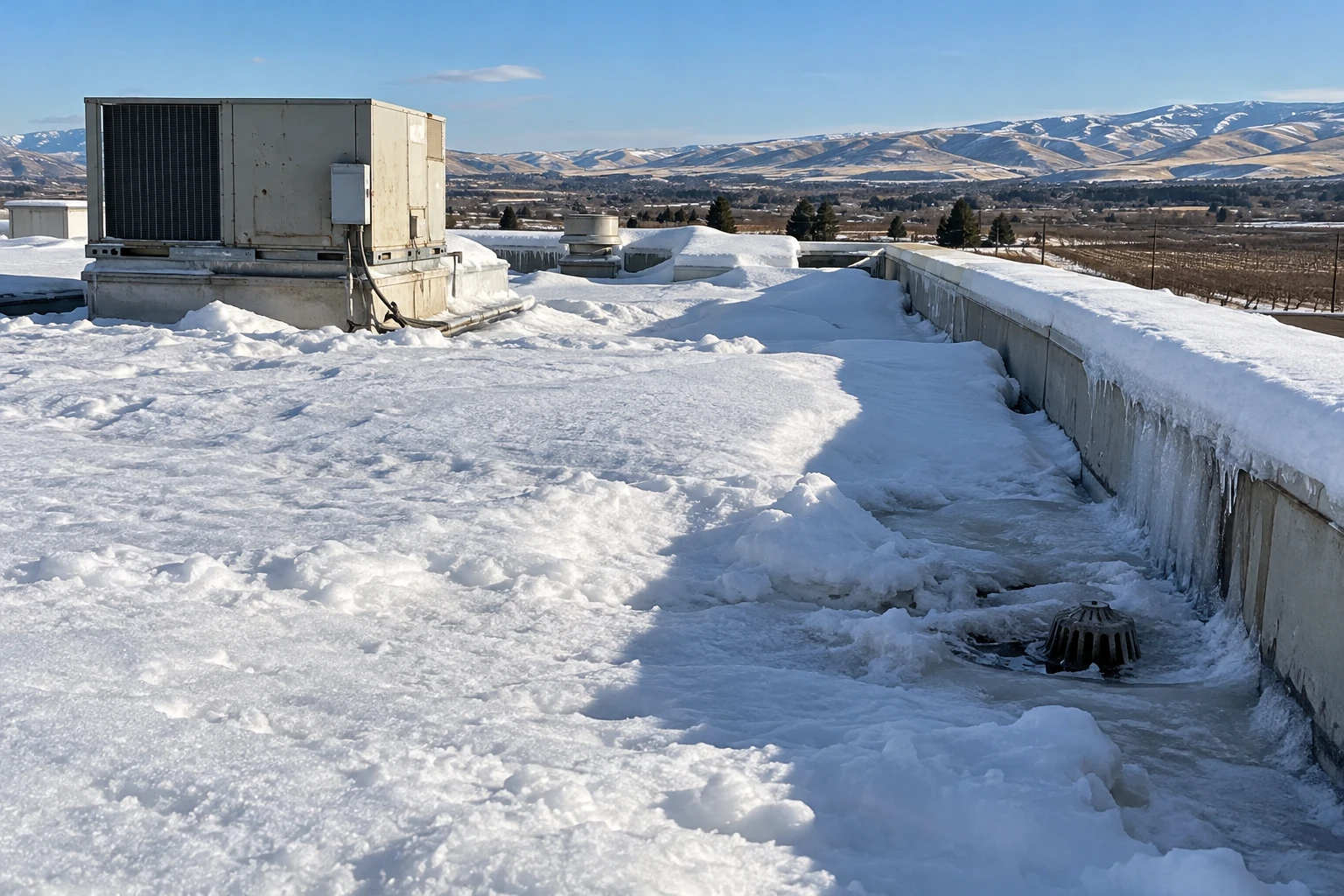
Eaves and valleys collect the slide. A valley that fills with compacted snow and ice can overflow and back water under the edge. The February 2019 red tag on a South Third Avenue building involved a flat roof, and a pitched metal roof has its own risk, since drifted snow can still load a low section. We check the structure's design load and walk the eaves for ice buildup before and after storms. Our snow and ice repairs often start at the valleys.
Check the Edges After Every Gale
The county designs to a wind speed of 110, and Sunnyside saw 53 mph in the 2019 pre-Thanksgiving storm. Metal roofs are light, so the clips and the edge details carry the uplift. At eaves, rakes and corners, we use closer clip spacing and heavier trim. A gust that lifts a rake flashing can peel the first panel, and the next gust takes more.
After any strong wind, walk the ground around the building and look for trim lying in the lot, panels that look wavy and fasteners backing out of the trim. Our edge metal work covers re-securing trim, replacing deformed pieces and sealing the laps. A trim piece that has lifted once will lift again if only the sealant is replaced, so we address the fasteners and the cleats too.
Match the Panel to the Building
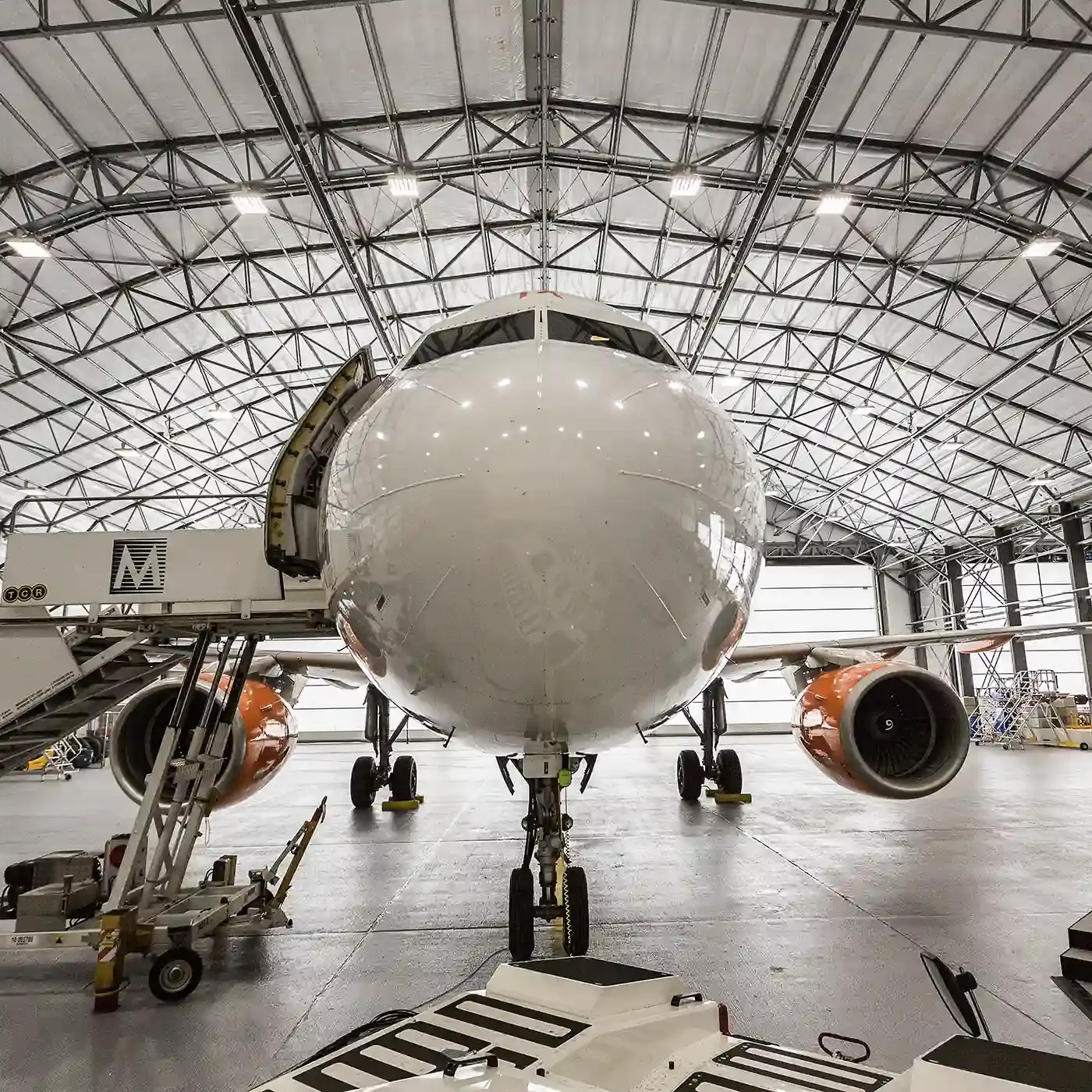
Standing seam suits large, simple roof planes and low maintenance. A hangar at the Yakima Air Terminal, where McAllister Field covers about 825 acres, is the kind of wide-span building where long metal panels make sense, and a winery production building near Zillah may want a metal roof for its look and its quick drainage. A processing plant with many rooftop penetrations is a harder fit, because every penetration is a place the panels must be cut and flashed.
Panel gauge, coating and clip type change with the building. Thicker panels resist denting from hail and foot traffic. A factory-applied coating holds color and resists chalking. We ask about the use of the building, the number of curbs, the roof slope and the snow zone before we recommend a profile. For an airport hangar, the hangar roof design also includes door headers and deflection around the large opening.
Repair Seams, Clips and Coatings Before They Spread
Standing seam fails slowly. A seam that was not closed fully leaks at the lap. A clip that has slipped causes a panel to buckle. Scratches in the coating let rust begin at an exposed edge. We find these on a walk of the roof, mark each one, and repair in order of urgency: leaks first, then loose trim, then the finish.
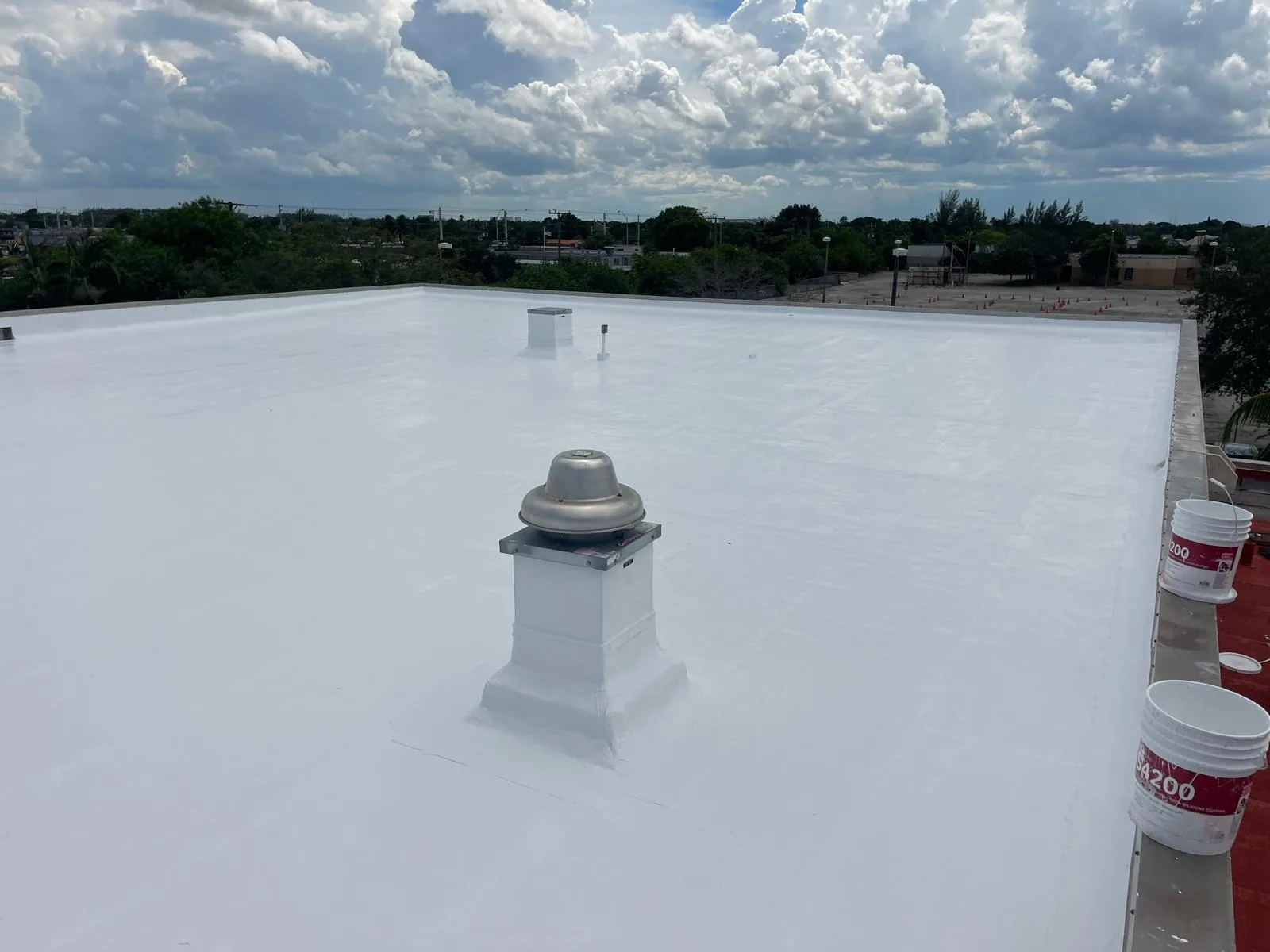
When the paint has chalked and rust is spreading at the seams, a fluid-applied coating such as a silicone coating can restore the surface without replacing panels, provided the seams are tight and the metal is sound. If the panels are exposed-fastener rather than standing seam, a metal retrofit is a different path. We confirm the type before we price.
Commercial Roofing Questions
Do I need snow guards on a standing seam roof above a parking lot?
Yes if the roof is pitched and the eave sits above people or vehicles. Snow on metal slides as a single sheet, and a sudden release can injure someone or crush a car. Guards hold the snow and let it melt in place. We space them from the pitch and the snow load, and we clamp them to the seam so the panel is not drilled.
What causes the wavy look called oil canning on my metal roof?
It is a visual distortion in the flat of the panel, caused by stress from manufacturing, installation or restricted movement. It rarely means a leak. If the panel is trapped by a fastener or clip, the waviness may point to a seam under strain. We check clip freedom and, if the movement is limited, correct the trap.
Can a standing seam roof be installed over my existing roof at a Union Gap retail building?
Sometimes, using a framing system or sub-purlins that sit over the old roof. The added weight, the existing deck and the snow load all have to be checked. We confirm that the old roof is dry and that insulation fits within the new assembly. If the roof is saturated, it has to be removed first.
How do I find the source of a leak on a roof with no exposed fasteners?
Leaks on standing seam usually come from a penetration, a trim lap, a damaged seam or a clip failure, not from the field of the panel. We test from the roof side with water and inspect curbs, rake trim and valleys first. Photos from inside, with the time of the leak and the weather, help us narrow the zone.
How long should the finish on a metal roof last in Yakima's sun?
A factory-applied coating usually lasts many years, though chalking and fade show up first on the south and west faces. Scratches and cut edges are the points to watch. A wash and a touch-up where the coating has worn keeps rust from starting, and a coating system extends the finish when it has aged.