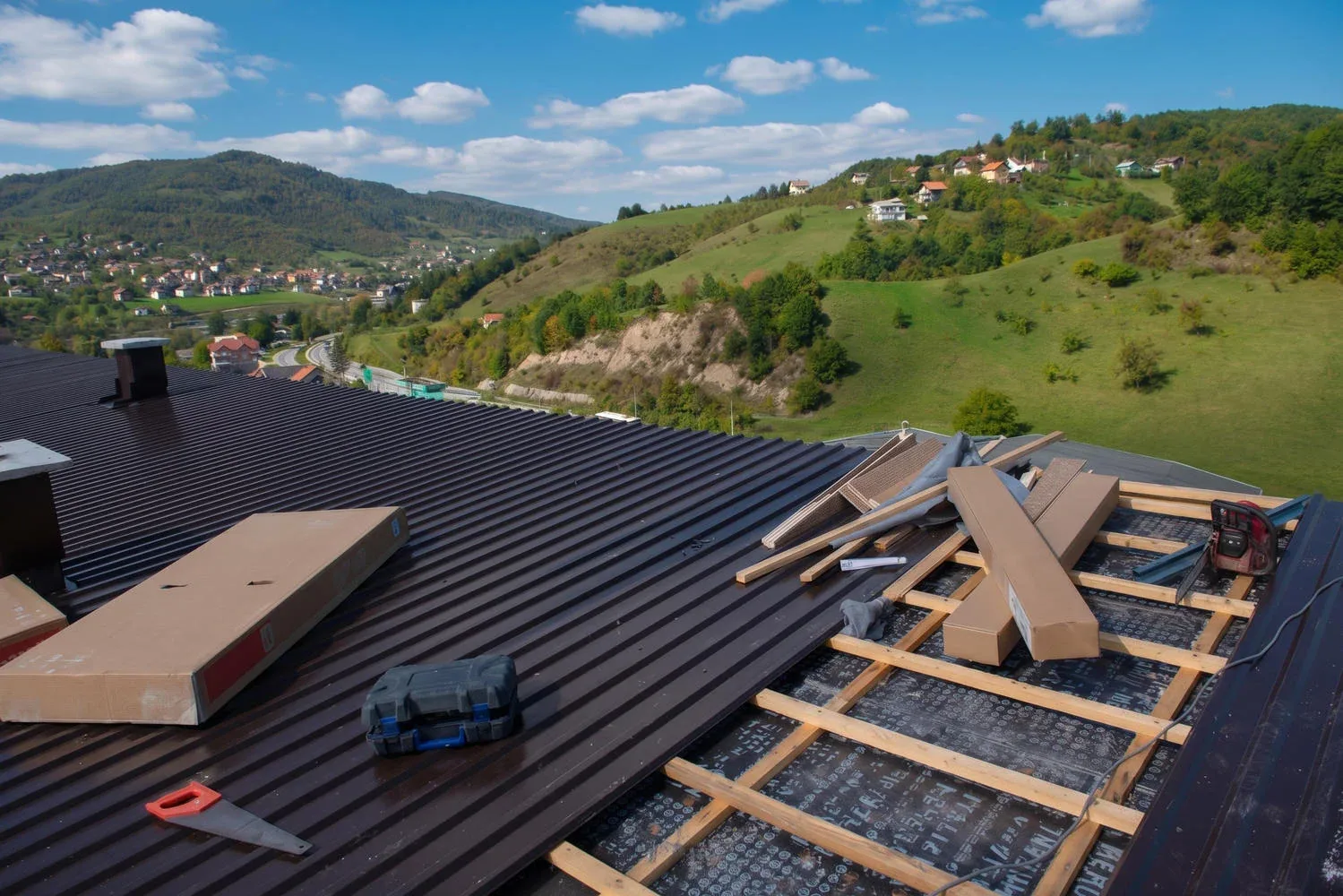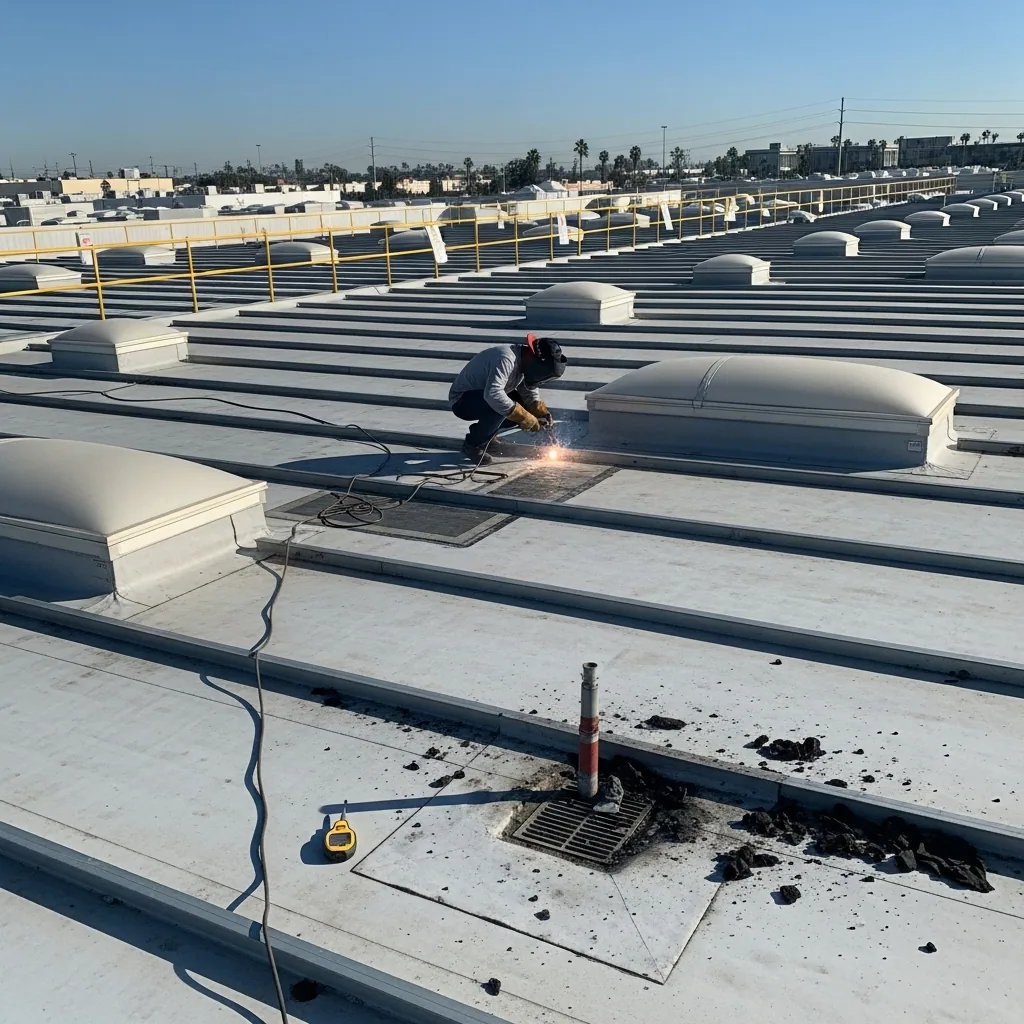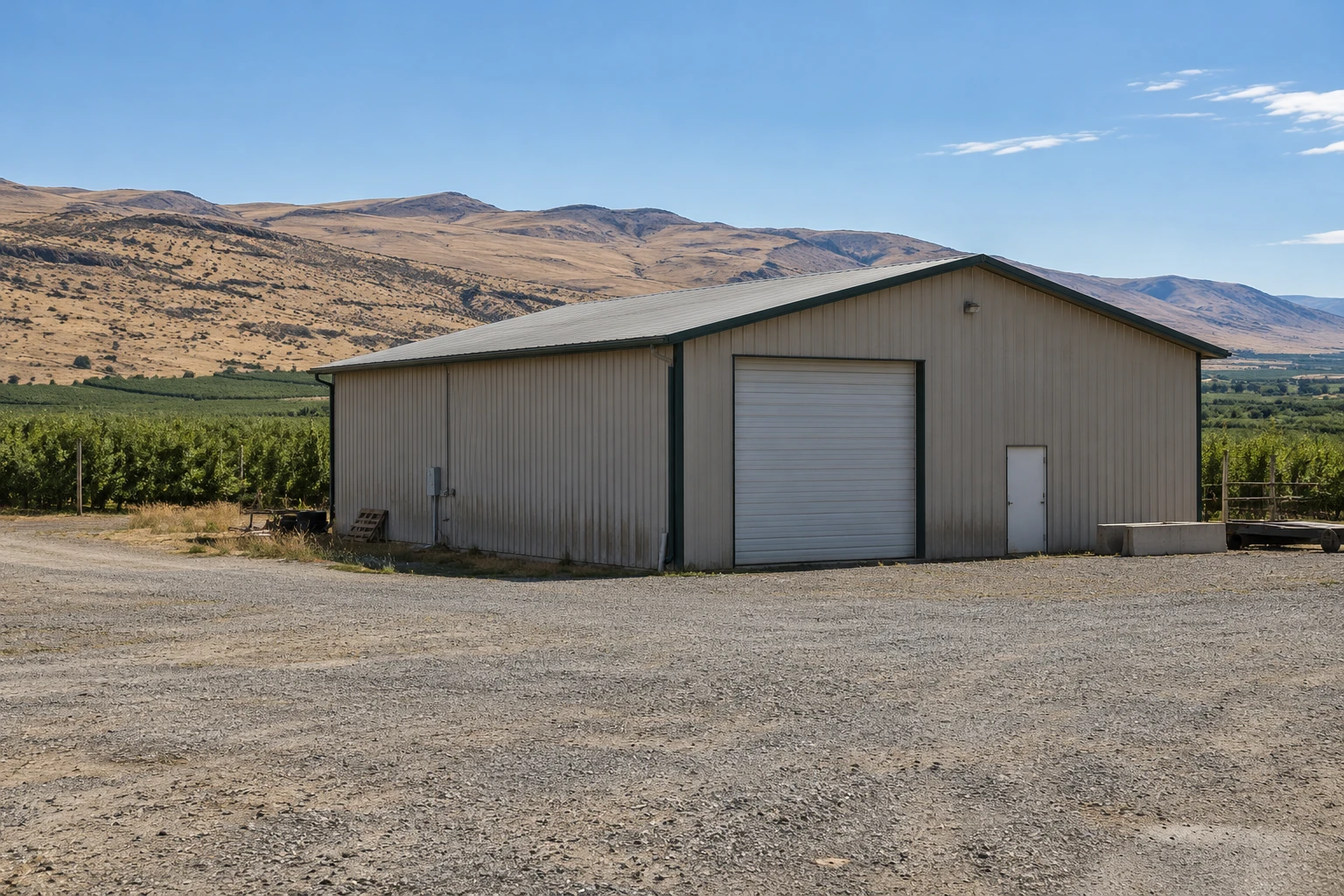
A late-autumn gust is usually what starts the call from Brownstown. A manager walks out after the wind drops, sees a curl of loose edge metal on a farm building, and phones to ask whether it can wait for the weekend. The first question dispatch asks is how far the metal has lifted, because a gust-lifted edge that is still tight at the fasteners is a different job from one that has peeled back a full panel. Brownstown is a loosely knit farming community on the Yakama Nation Reservation, set roughly midway between Wapato and White Swan. Wind there crosses open ground with little to slow it. Leave the loose piece alone, keep people away from the edge, and send photos from the ground.
We repair, coat, recover and replace low-slope and metal commercial roofs across the valley, and we answer storm calls around the clock, holidays included.
Read the Gust Damage Before the Next Front
Gusts logged at Yakima and Sunnyside in the November 2019 storm were recorded in those towns, yet they describe the kind of wind the whole lower valley sees, and the county designs for a wind speed of 110. A roof on open farm ground feels that wind at its edges and corners first. The membrane rarely fails in the field of the roof. It fails where it is pinned down least: the perimeter, the parapet cap, the gutter hem and the ridge.
On a first visit we run a hand along every edge, check the fasteners at the metal, look for a lifted seam or a bulged cover strip, and note whether the damage is on one face or all four. A single face usually points to one gust direction, which tells us where to reinforce. If you suspect wind damage, photograph the edge from the ground, note the date of the gust, and keep staff clear until the crew arrives.
Match the Roof Plan to the Building's Work
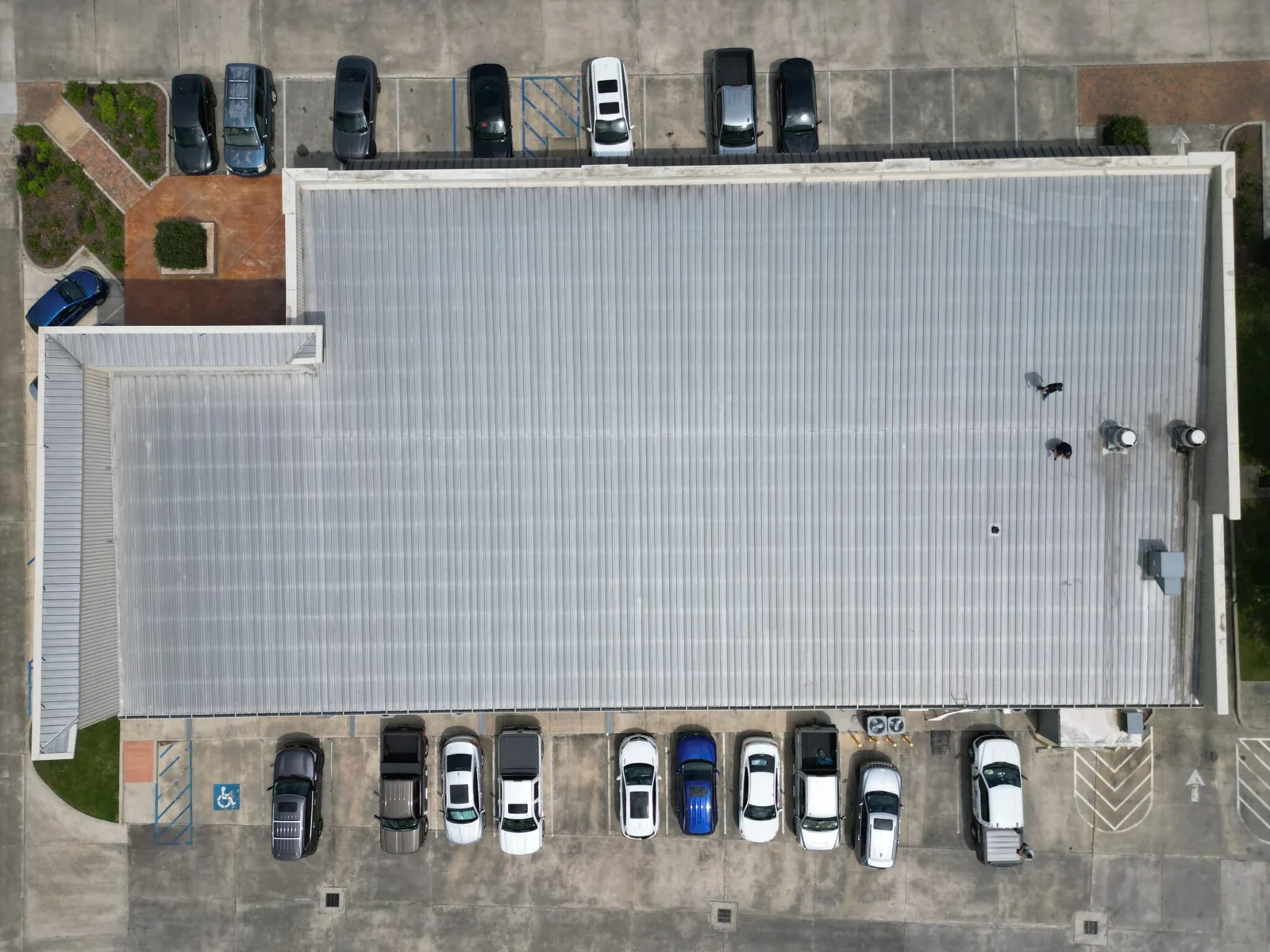
The valley's economy runs on apples, peaches, pears, cherries and hops, and the region produced about 77 percent of the hops grown in the United States as of 2011. A Brownstown owner may run a packing shed, a storage building, a shop, an equipment barn or an office that supports farm operations. We do not assume which one; we ask. A roof over a cooled room has to keep moisture out of cold insulation, a roof over a dry shop mostly has to shed water and resist wind, and a roof over an office has to hold an even temperature for the people below.
The answer to that question sets the system and the order of work. A fruit operation cannot lose a cooled room in the middle of harvest, so the heavy work waits for the weeks it sits idle. Tell us what the building stores, what runs under the roof and when the busy weeks fall, and we plan the visit around that calendar. A written commercial roof inspection gives you the condition of each roof before you commit a season's budget to one of them.
Plan for the Afternoon Heat Cycle on Open Roofs
Summer is a different call. Yakima reaches 90 F or more on about 40 afternoons a year and 100 F or more on about 6, the record is 113 F from June 29, 2021, and nights cool quickly after a hot day. A farm building with a dark, unshaded membrane takes the full afternoon load, then contracts overnight, and that day-night swing keeps working every seam and flashing a little looser.
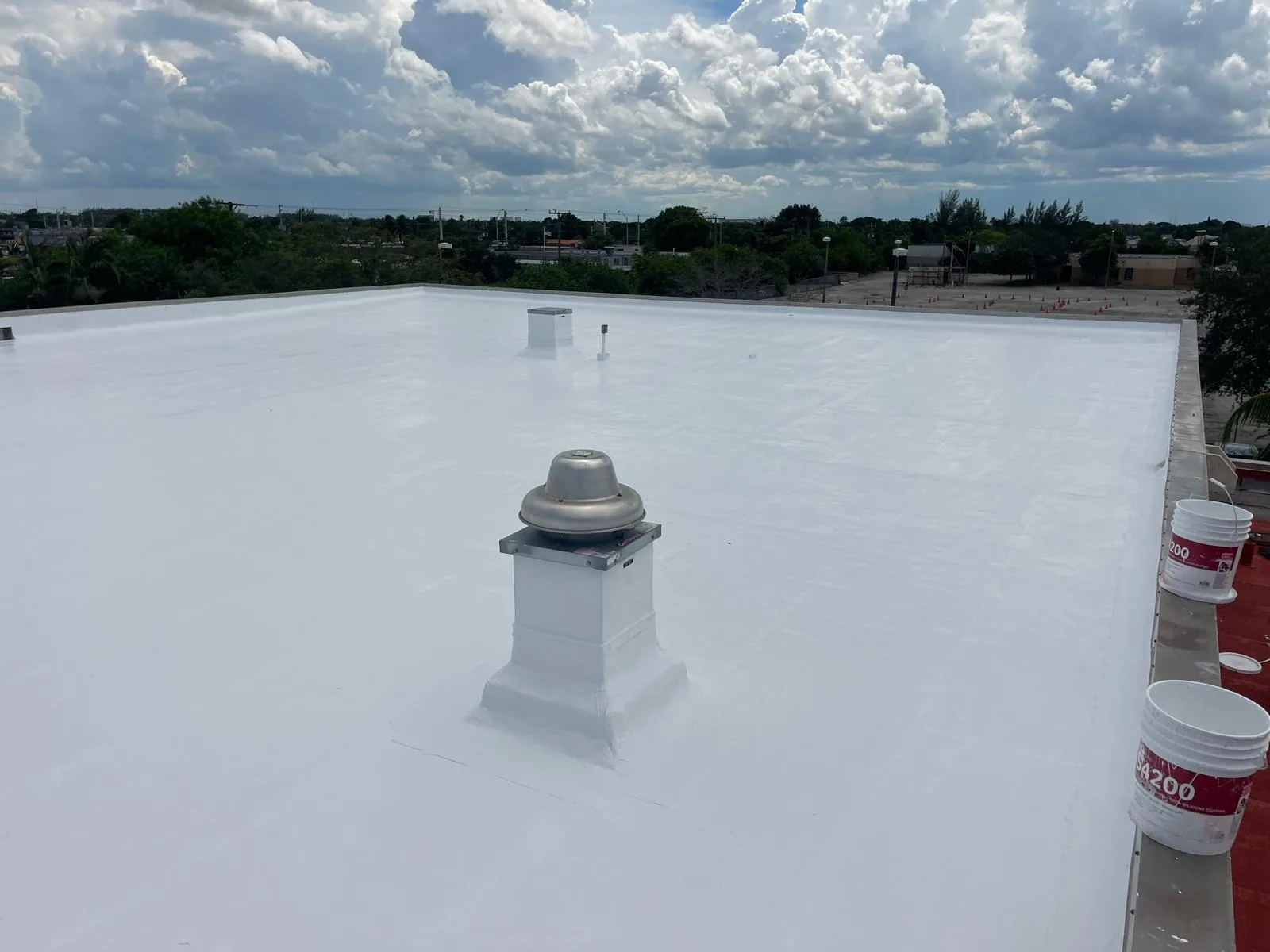
Where a sound roof has only surface wear, a reflective coating can extend its life. We compare silicone coatings and acrylic systems against the real condition of the substrate, because a coating over wet insulation only hides a problem that comes back. Before the crew arrives, mark any soft spots you have felt underfoot and tell us which rooms run hottest inside, since heat inside often points to the same place the roof is failing.
Clear Snow With Plastic Tools and a Protective Layer
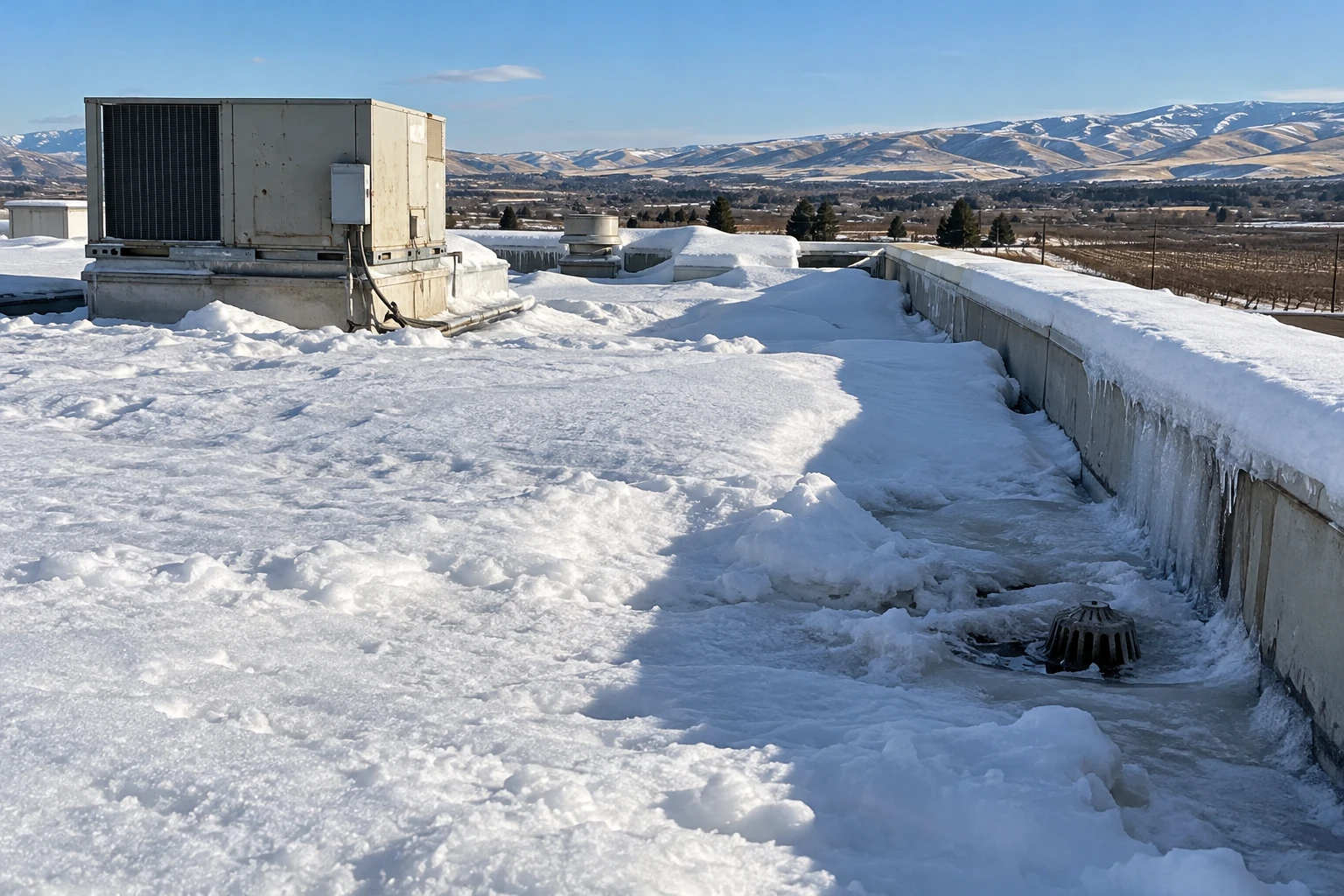
Snow falls mostly in December and January, and the county sets the design load parcel by parcel, with engineering required above 70 psf. When a building on the Reservation west of Harrah carries a heavy load, ask for the design load from the permit or drawings before anyone steps onto the roof. Snow piles deepest against parapets, penthouses and wherever a taller wall meets a lower roof, and that is where a roof deflects first.
A drift is a structural question before it is a roofing one, as the February 2019 red tag on a South Third Avenue building showed. Our crews clear with plastic tools and leave the membrane a cushion of snow. Keep steel shovels and ice picks off the roof, and call before a drift reaches a doorway. Our snow and ice repair work starts with the load, not the leak.
Stage the Visit Between Wapato and White Swan
Brownstown sits at about 853 feet, roughly three miles west of Harrah, and a crew reaching it from Yakima travels the valley road network rather than the interstate alone. Interstate 82 runs through the valley and U.S. 97 crosses the Union Gap, so material trucks and lifts come in from a direction we confirm on the first call.
For a property with several buildings, we rank them in a written condition report so a limited budget goes to the roof closest to failure. Some owners later fold that ranking into a multi-year roof capital plan. Nearby communities such as Wapato and Toppenish share the same weather, which helps when two neighbors want to schedule crews in the same week.
Commercial Roofing Questions
A gust bent the edge metal on our equipment barn, but nothing leaks. How fast should we act?
Treat it as urgent even without a leak. Edge metal that has lifted lets the next gust get under the membrane, and a peeled strip grows from a few feet to a full run in a single storm. Call with a photo from the ground and the date of the gust. We usually secure or replace the metal first, then check the nearest fasteners and seams. Keep people and equipment away from the edge until we arrive.
We store fruit in a cooled room under an older roof. What should we check before harvest?
Start with the ceiling inside the cooled room. Frost, damp spots at the corners or a compressor that never rests can point to moisture reaching the insulation. A hands-on survey and an infrared scan show where the insulation has gone wet, and core samples confirm it. Do the work before harvest, when the room is idle, because opening a roof over a loaded room needs temporary protection that costs time.
Is it better to coat the roof or replace it?
Coat it when the membrane and insulation are still sound and the wear is on the surface. Replace it when the insulation is wet, the seams have failed in many places or the roof has already been coated more than once. The decision comes from cores and a moisture scan, not from age alone. We lay out both options with the cost drivers so you can compare them on one page.
Can you work while the building keeps operating?
Yes, and most farm and packing operations require it. We stage materials away from loading lanes, close each day's tie-ins before we leave and work in sections so only part of the roof is open at a time. Tell us which doors, lines and rooms cannot stop, and we sequence the crew around them.
Who covers a night call when snow is building on the roof?
Dispatch answers all night, every day of the week. Give us the address, the design snow load if you know it, where the snow has piled and what operates below. We will tell you what to leave alone before anyone arrives, and we log each callback so the next visit starts from your building's history.