A gust lifts a corner of a tasting-room roof in Zillah on a Friday afternoon, and the manager phones with visitors due in two hours. Dispatch asks what is hanging loose and whether anything over the public side of the building can fall. That question comes before the leak question, because a flapping edge or a loose coping piece is a safety call first. Zillah lies on Interstate 82 about 15 miles southeast of Yakima, WA, and it is home to the Zillah Fruit Loop, a driving tour of orchards and vineyards in the Yakima Valley AVA. Buildings along a route like that serve visitors and production at once, so roof work has to protect both the public side and the working side of the property.
Secure the Visitor Side First, Then Chase the Cause
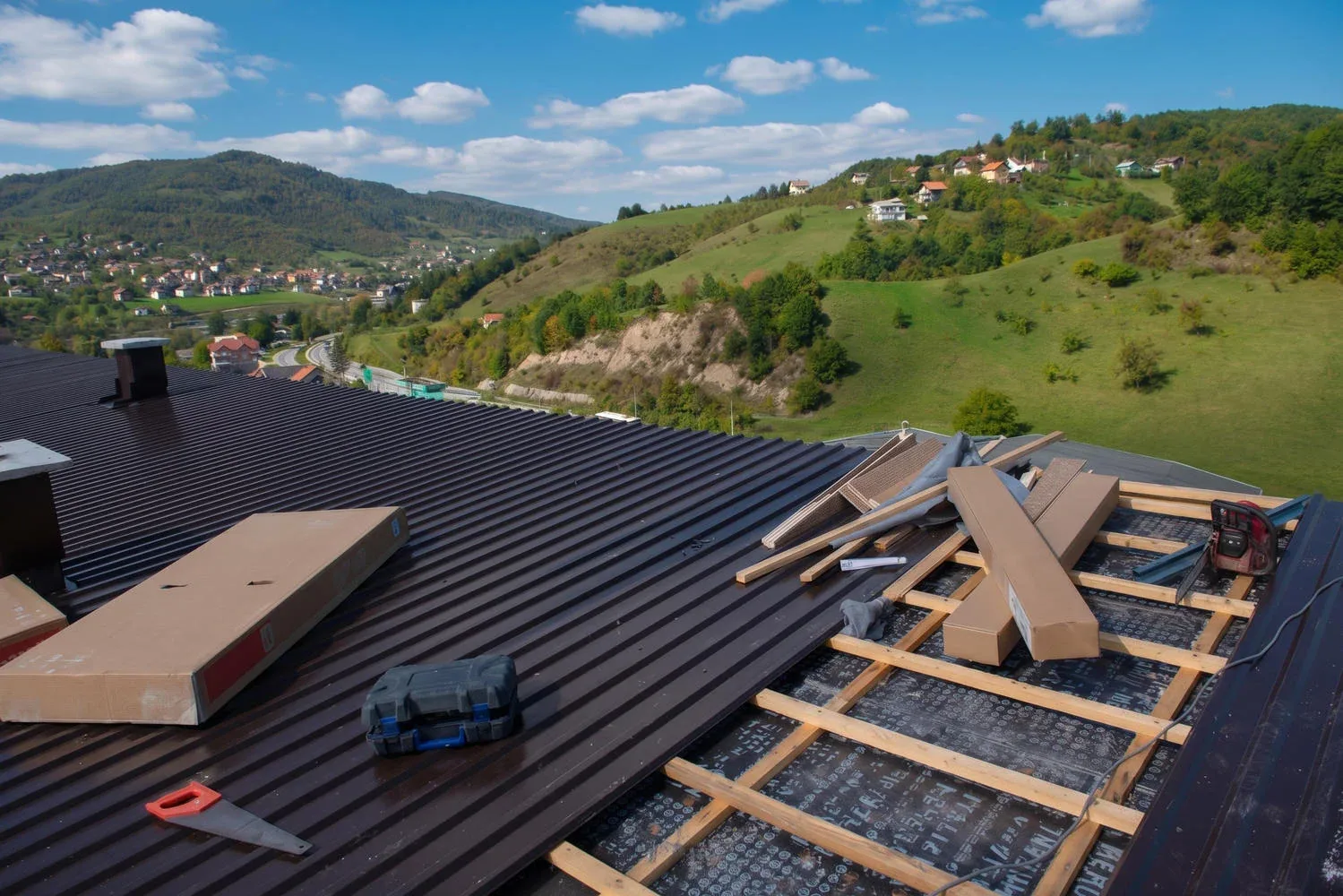
When a roof edge or accessory is loose over a walkway or entrance, the first step is to fence off the area below and remove the hazard. A lifted coping piece, a sagging gutter or a flapping membrane flap can swing into a parking lot with the next gust. We bring a crew to make it safe, and then examine why it let go.
The cause usually sits at the edge: fasteners that backed out under repeated thermal movement, sealant that dried and cracked, or a cleat that never held a long run of metal. Yakima's record gust of 69 mph came in May 1985, and the late-November 2019 windstorm was a recent proof that the valley produces gusts that find those weaknesses. We reset the metal with proper cleats, replace fasteners and reseal joints. Afterwards, wind damage repair continues inward from the edge, checking seams and field fasteners for lift.
Read a Winery Roof as Two Buildings Under One Cover
The Yakima Valley has over ninety wineries, and the AVA produces more than 40 percent of Washington's wine. A winery often combines a production building with a hospitality space, and their roofs have different jobs. The production side wants stable temperature in barrel and tank rooms and a roof that tolerates washdown moisture and fermentation vapor. The hospitality side wants clean sight lines, quiet during events and no drips over guests.
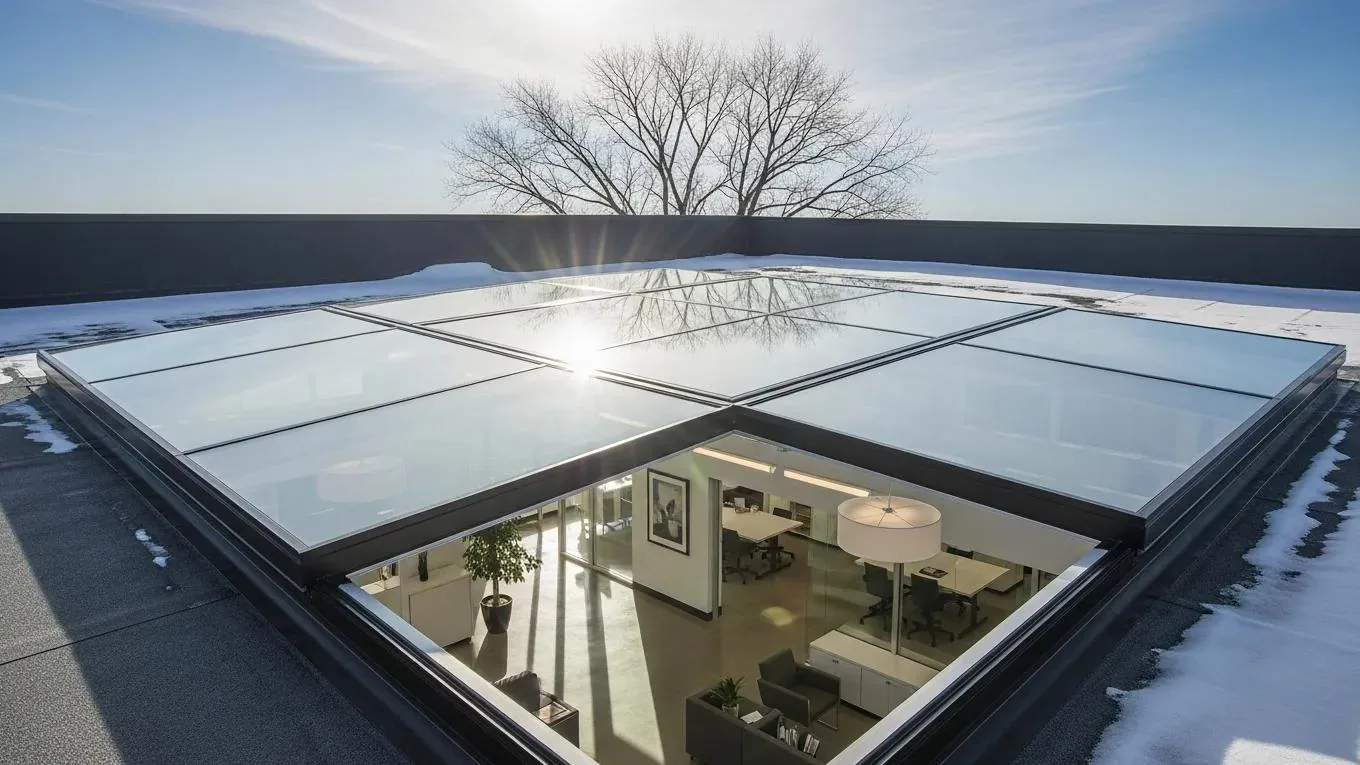
We inspect the two areas separately. In production space we look for condensation at the underside of the deck, corroded fasteners and insulation that has absorbed vapor. In hospitality space we look at skylights, roof penetrations and drains over the seating areas, since water there is both a repair and a reputation problem. Skylight and penetration flashing is often the weak point on a roof with architectural features, and we rebuild those details with new flashing, not a bead of sealant. Roof work for hospitality groups gets scheduled around events and guest hours.
Treat Every Addition Joint as a Weak Point
The Washington Irrigation Company was headquartered in Zillah, tied to the Sunnyside Canal irrigation project, but the age of a town does not give the age of any roof in it.
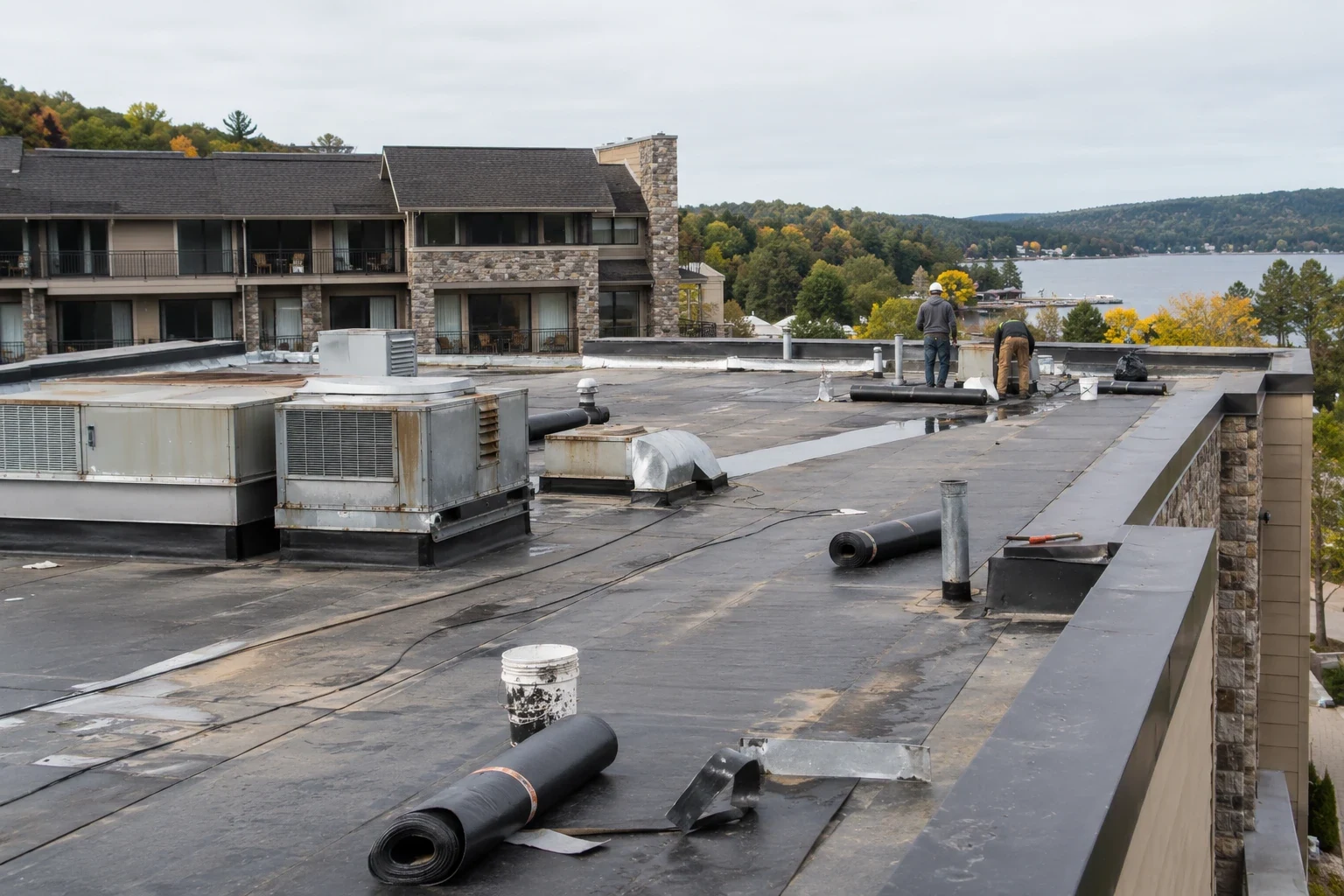
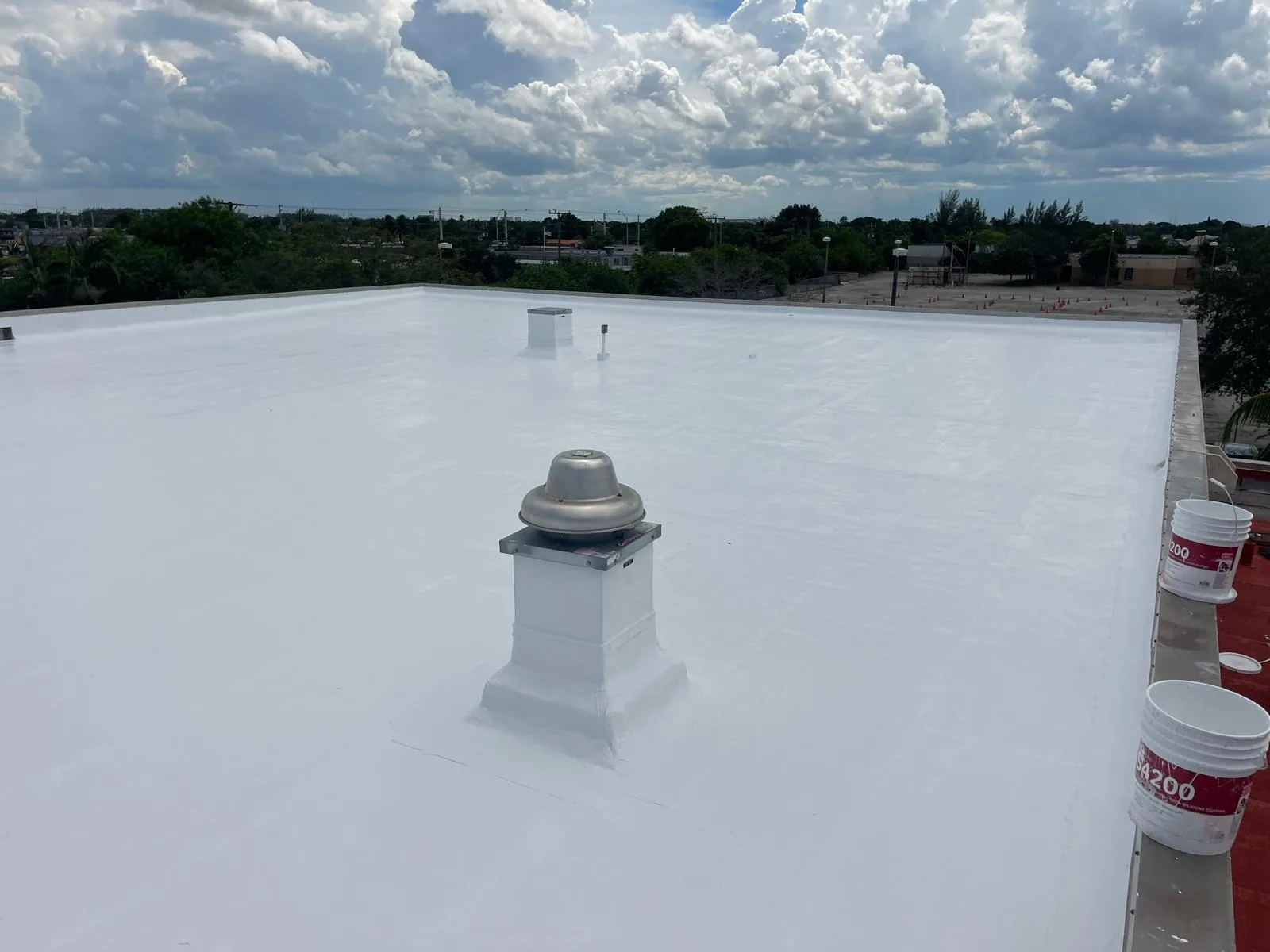
Where an older building has been added to over time, the roof often shows seams between additions, with different layers and different flashings meeting at a joint. Those joints take the most movement and collect the most debris. We map them, check how each section drains and look for patches that cover a deeper problem. If the older sections are sound, a silicone roof coating can unify the surface and extend its life, and when they are not, tear-off of the weak section followed by new membrane is cleaner. Either way, the written scope lists what is repaired, what is replaced and what remains for later.
Move Snow Without Scarring the Membrane
Snow arrives mostly in December and January, and the load behind it is set parcel by parcel. Winery and warehouse buildings often have long spans, and long spans feel snow differently from small ones.
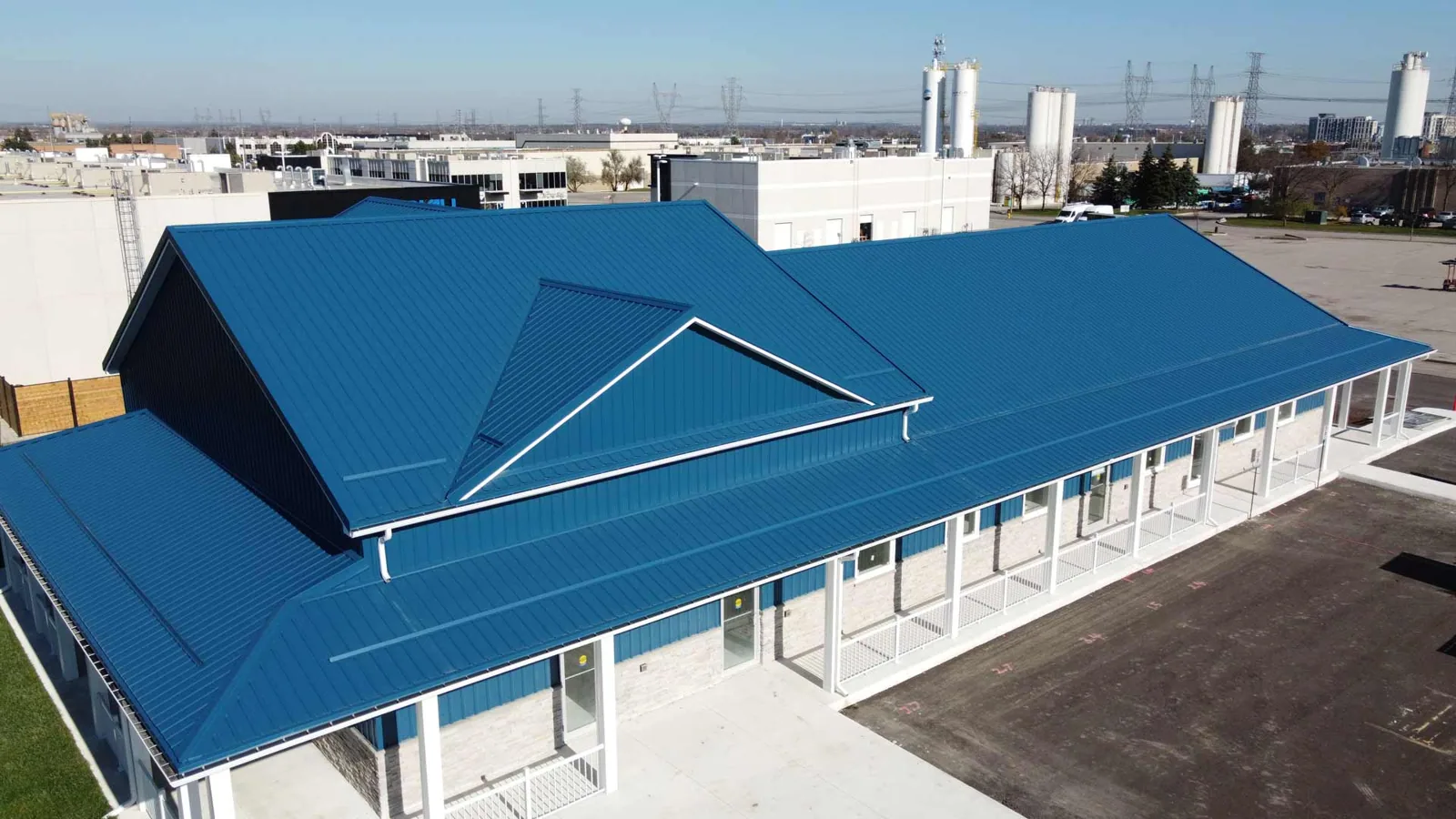
We ask for the design load from the permit, find the drift pockets and look for signs of deflection. If clearing is needed, plastic tools and a protective snow layer protect the membrane, because steel shovels cut flat membrane. Standing seam metal sheds snow differently from a membrane roof, and snow sliding off a standing seam metal roof can land on walkways and cars, so snow guards and the area below the eave matter. Stay off the roof, watch the interior for sagging and send us photographs.
Schedule Inspections Around Harvest and the Visitor Season
A winery or orchard-support building has busy weeks when no roofer is welcome, and quiet weeks when work can proceed. We ask for the calendar early: harvest, crush, bottling, visitor peaks, special events. A commercial roof inspection in the quiet season produces a repair list that can be done before the next rush.
If you own buildings in nearby Granger or Sunnyside, we can take them in one trip. Heat is the other calendar factor: Yakima's hot afternoons make cooler hours or shoulder seasons the better time for coating and membrane work. After the visit, you have the findings in writing, with photographs, and a list in priority order so the work can be spread across budgets.
Wineries that book events months ahead can share the calendar when they schedule inspections. A roof visit placed ten days before a large tasting weekend leaves time to fix what we find without closing the patio, and a closed-day repair window keeps guests out from under any open section.
Commercial Roofing Questions
Part of our Zillah tasting room roof lifted in a gust. Can we stay open while it is fixed?
Often yes, with the area below closed off. We make the edge safe first, usually within the day, and then schedule the permanent repair for a time when visitors are not underneath. Tell us the hours you want to protect and where guests walk. We can work early mornings or on closed days, and we set up barriers and signs that keep the public clear of the work zone.
How do we keep condensation off the ceiling of a barrel room?
Start at the roof deck. Condensation forms where warm humid air from the room meets a cold surface, so the fix is a continuous vapor seal and enough insulation to keep the deck above the dew point. We inspect penetrations, seams in the insulation and the deck's underside. Sometimes added insulation during a reroof solves it; sometimes a sealed ceiling or better ventilation is the answer. We explain the options with their costs.
A skylight over our dining space stains the ceiling every spring. What is wrong?
Most often the flashing around the curb has aged, or the curb itself is too low, so meltwater and rain get under the lower edge. A bead of sealant gives a short pause, not a fix. We remove the old flashing, check the curb for rot or movement, install new base flashing and counterflashing and test the seams. If the glazing itself leaks, we tell you so you can have it repaired separately.
Should we coat our roof or replace it before the next season?
The answer comes from the roof's moisture condition and surface. If the insulation scans dry and the membrane is firmly attached, coating can extend its life for less money and with less disruption. If moisture is widespread, or the membrane is split across large areas, replacement of those sections is the better value. We run the scan and take samples first, then price both choices clearly so you can decide.