Harrah is one of only two incorporated towns in Yakima County, with 585 residents in 2020 and an elevation of about 833 feet on the Yakama Indian Reservation. A commercial roof in a town this size is a single asset that someone has to keep dry, and on a call from Harrah dispatch first wants to know how much of the roof is actually failing. A small repair done in the right order can hold for years. The wrong one wastes the money. Harrah's roofs get repaired, coated, recovered or replaced by our crews as the roof demands, and the phone never goes unanswered, because the weather that hits Yakima, WA, from heavy January snow to hot afternoons and November gales, does not wait for a budget cycle.
Sort Every Defect Into Patch, Fix or Watch
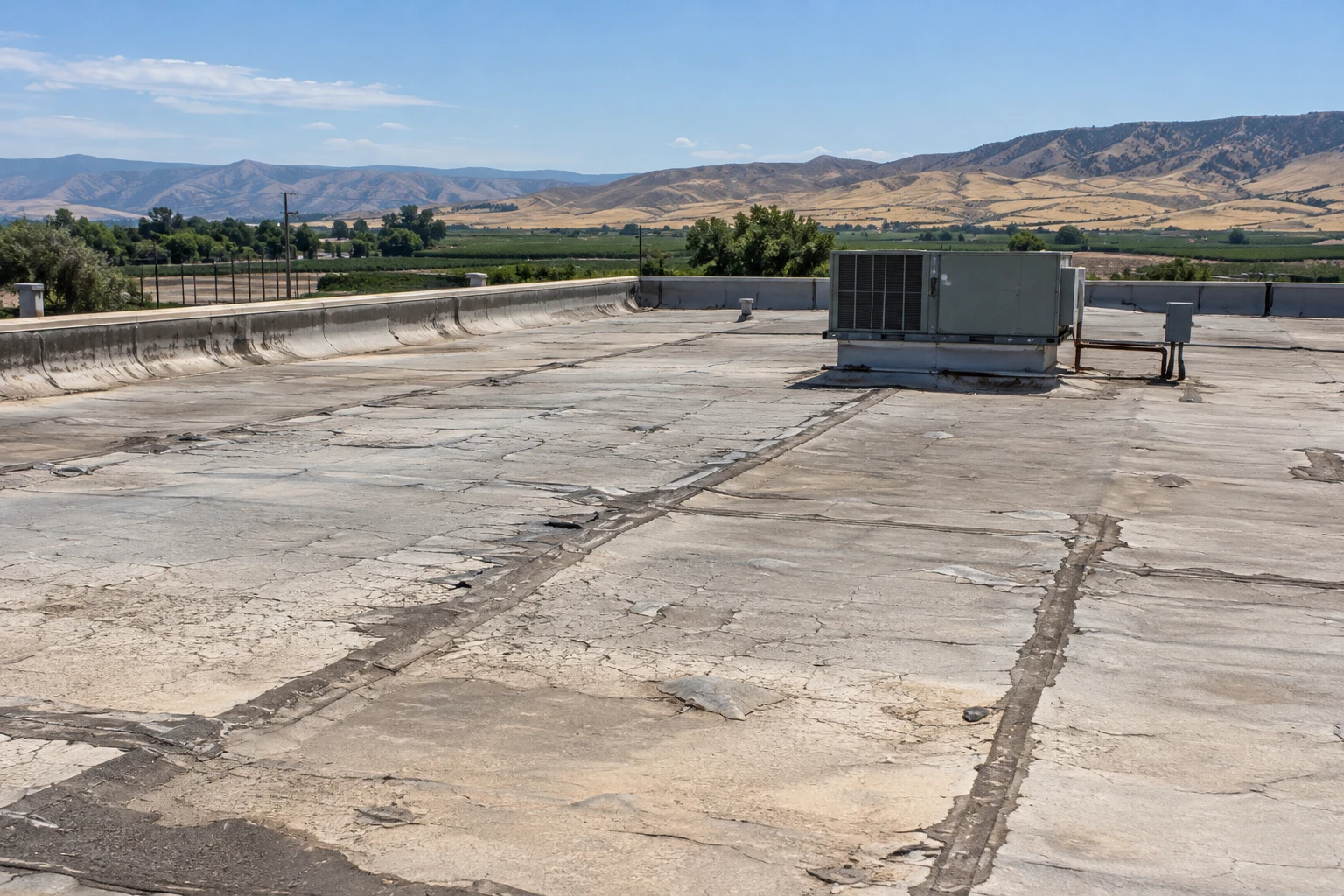
The most useful thing we hand a small owner is a ranked list. On the first walk, we mark each defect and sort it into one of three groups. A patch is a small, cheap repair that holds. A fix is a larger repair that addresses a cause, such as a rebuilt flashing or a new drain. A watch item is something that will need work later but is not urgent now.
The list comes with photographs and a price for each item, so an owner or a town clerk can decide what to do this year and what to defer. The goal is to spend on the items that protect the building first. Our commercial roof repair scope follows this order, and it keeps small problems from growing into interior damage.
The watch list gets a date. We write down when each watch item should be looked at again, usually the next spring or autumn visit, so nothing drops out of sight. If a watch item worsens before then, the owner has a photograph from the first visit to compare against.
Phase a Larger Project Across Two Seasons
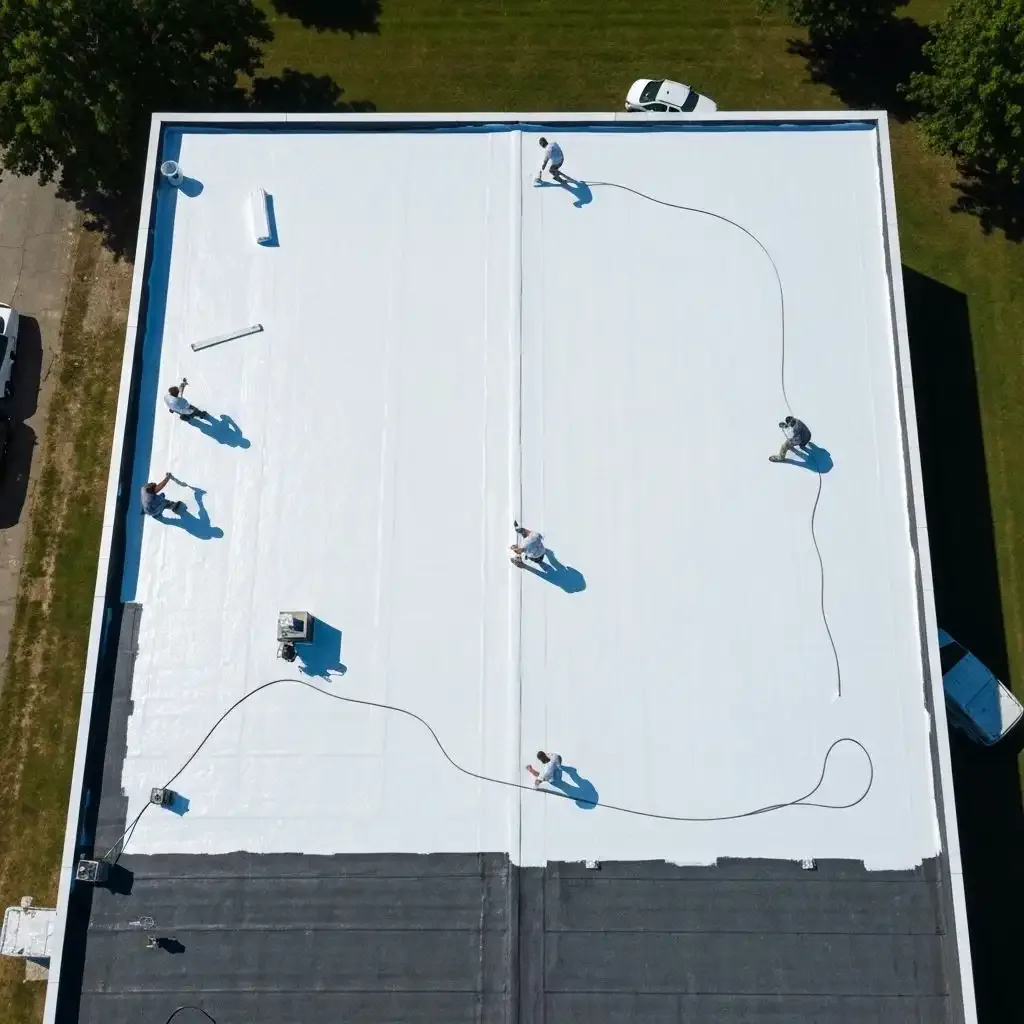
A full reroof can be a large expense for a small owner. When the roof has several sections, we can phase the work: the worst section first, the next the following year, and a plan for the rest. Each phase leaves the building watertight, with a proper tie-in between old and new roof.
Phasing works best when the sections are independent, with their own drains and flashing, and when the old and new materials are compatible. We test for moisture before deciding, because a section with wet insulation belongs in the first phase. In some cases a coating can stretch the life of a dry, sound section while a worse one is replaced, which gives the owner time to plan the next budget.
Records support the phasing. We note the age, the system and the condition of each section, with a diagram, and we update it after each phase. An owner who changes, a clerk who retires or a new board that takes over can pick up the plan without starting again.
Read the Snow Load From the Parcel, Then Clear With Care
Snow load is set by the parcel, and engineering is required above 70 psf. A building in Harrah has its own number, found on the permit or the drawings. We use it to judge whether a snow event calls for clearing, and we plan any added weight, such as a recover or new equipment, against it.
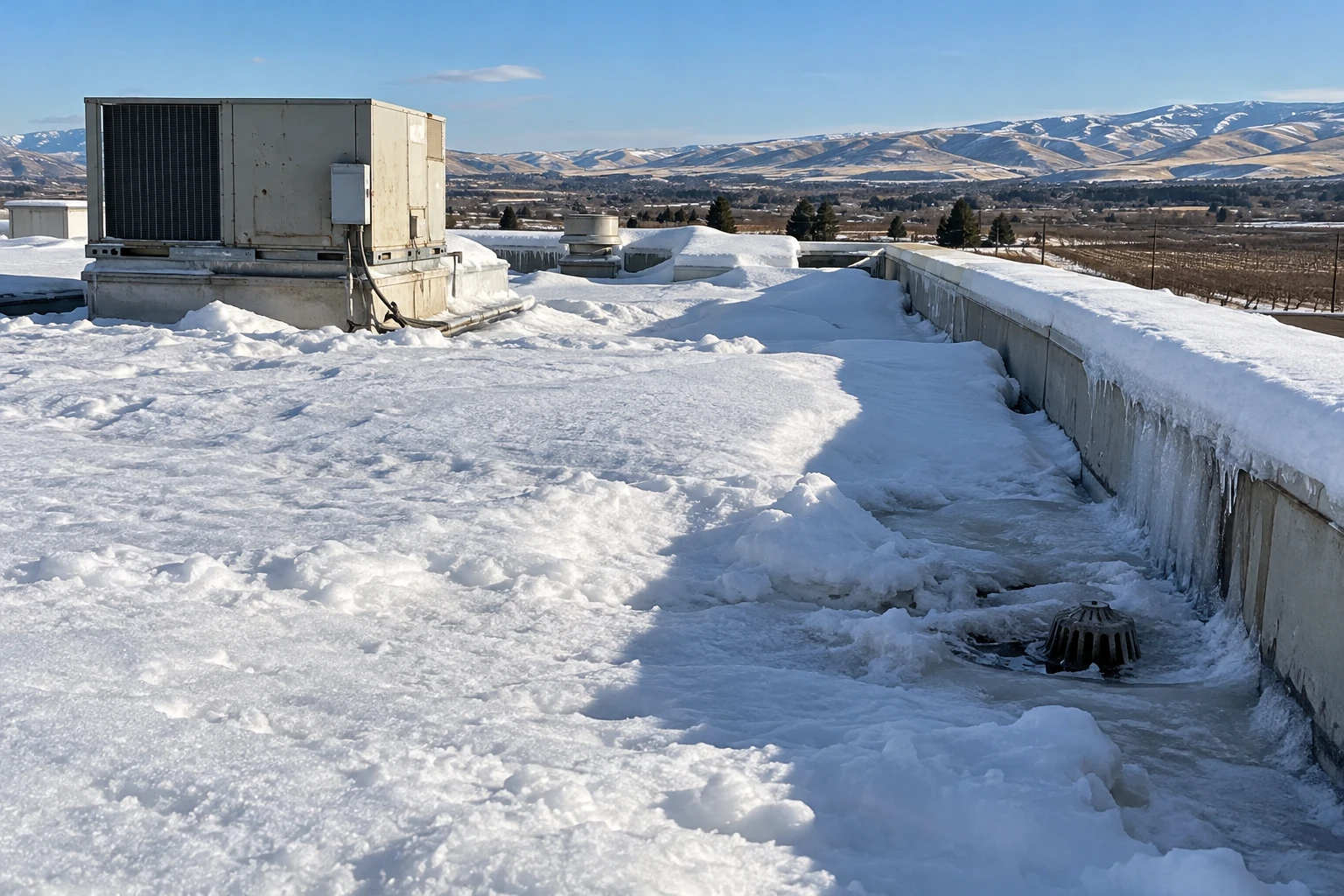
When clearing is needed, we use plastic tools, work from the drift edge inward and leave a protective layer on the membrane. A snow and ice damage call is treated as a safety issue first and a roofing issue second.
Ice is the other winter hazard. Meltwater that refreezes at a drain or scupper blocks the next thaw, so we open drains with warm water or steam and never with an open flame. Yakima has about 19 days a year when the high stays under freezing, and the nights after a warm afternoon are the ones that build ice.
Guard Against Heat Cycling and Gusts
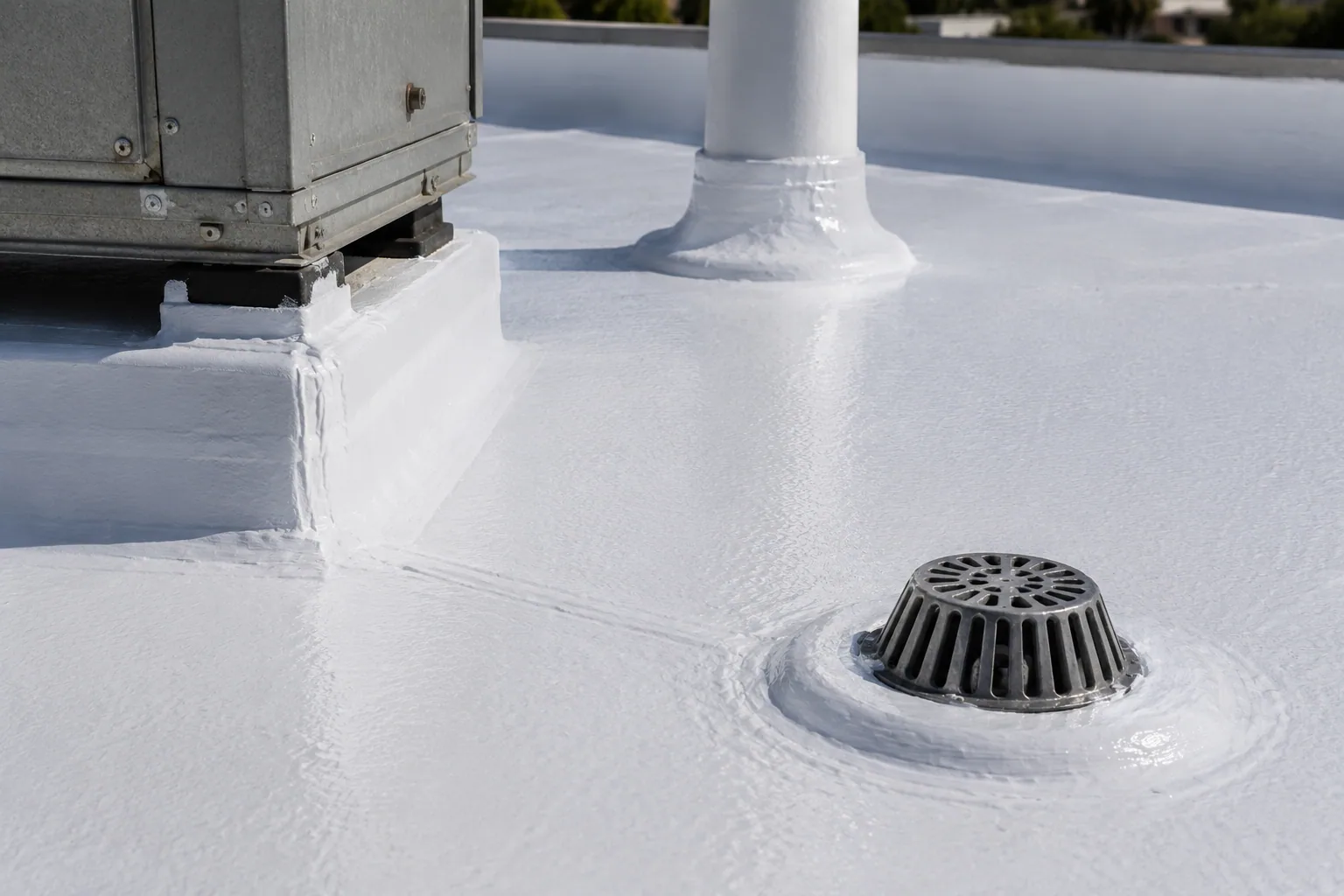
Summer in the valley peaks at a 113 F record from June 2021 and passes 90 F on many afternoons, and the swing between a hot afternoon and a cool night moves seams, flashing and sealant over and over. We press seams, replace brittle boots and renew sealant, and we look for heat and UV damage in the surface itself.
Wind matters too, and the late-November 2019 windstorm tested edges all over the valley under a county design speed of 110. We check edge metal and fasteners at the perimeter, because that is where a gale begins to take a roof apart. Fixing a loose edge is cheap. Replacing a strip of torn membrane is not.
Debris follows wind. A gale throws branches, grit and sheet metal onto a roof, and one puncture can admit water for weeks before a stain shows. After a major gust we sweep the roof, probe any scar and patch what we find, then log it with the date.
Confirm Which Office Handles the Permit
Harrah is an incorporated town, so a permit question for a reroof may go to the town and not to the county. We ask early which office applies, what drawings it wants and how long review takes. A larger reroof may have to carry more insulation, since Washington's newest code editions took effect in March 2024.
We put those requirements in the proposal, with the permit steps, so the owner sees the full scope before work begins. Owners with buildings in nearby Wapato or Toppenish can run those jobs on one schedule, and a maintenance program keeps the records in one place.
Insurance paperwork has its own timing. If a storm caused the damage, the first photographs, the dated notes and the removed materials all matter to the adjuster, and we keep them together. A clear file shortens the time between the loss and the repair.
Commercial Roofing Questions
We only have a small budget this year. Where should the money go?
Spend it on items that let water into the building: open flashing, failed seams, clogged drains and damaged edges. We rank these first on the list and price them separately. Cosmetic items and long-range replacements can wait for a later year.
Can a coating stop a roof from leaking?
A coating seals a sound, dry roof and slows wear. It does not fix wet insulation or open details. We scan for moisture, repair the seams and flashings and then coat. A coating over trapped water bubbles within a season.
How do we know the roof is worth repairing?
Set the likely repair spending for the next few years against the price of a new roof. If a moisture scan shows wet insulation across much of the field, repairs stop paying off. If the problems are at the details, a repair can last. Both numbers go into the written report.
What should the town or business do right after a storm?
Look for new stains, loose metal or debris from the ground and inside. Keep people off the roof. Photograph what you see and call with the address, the location of the damage and the rooms below it.
Do you offer an annual visit for small buildings?
Yes. Two visits a year, one before the snow and one after the thaw, cover most buildings. Each visit includes drain clearing, a check of seams and flashing and a short written report with photographs.